- Sizewell B will continue operating until 2055, extending its lifespan to 60 years.
- The extension aims to meet the UK's growing demand for low-carbon electricity.
- Government policies support a new 'golden age of nuclear' to complement renewable energy initiatives.
Key Details and Implications
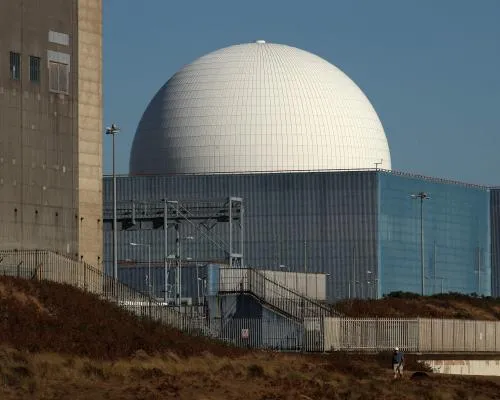
Britain’s most recently completed nuclear power plant has been granted an additional 20 years of operation. The government approved this extension, which initially set the facility to close within the next decade but is now expected to continue generating electricity until 2055.
This decision aligns with broader efforts by the UK government to increase its nuclear power capacity as part of a strategy to meet rising energy demands and climate commitments. Sizewell B, which began operations in 1995 and produces about 3% of Britain’s electricity, is one of several reactors set for life extensions. The plant will receive financial support from Centrica, the UK subsidiary of EDF Energy, through a government-backed payment scheme.
Government Support for Nuclear Power
The extension of Sizewell B follows similar agreements with older nuclear plants such as Heysham 2 and Torness. These extensions are part of a broader policy to encourage the construction of new nuclear power facilities, including Hinkley Point C in Somerset and plans for the adjacent Sizewell C reactor.
Ed Miliband, the UK’s Energy Secretary, emphasized that nuclear energy is crucial for Britain's energy security. He stated: “Nuclear power is vital for our energy security, and this extension will help produce the clean power our country needs.” Chancellor Rachel Reeves highlighted the economic benefits, noting that it provides long-term certainty to workers in Suffolk.
Broader Energy Strategy
The Sizewell B extension reflects a wider government initiative aimed at increasing nuclear energy as part of a diversified clean energy portfolio. This strategy includes support for renewable energies like onshore wind, solar power, and offshore wind farms. The government recently approved the construction of Great Britain's second-largest solar farm, One Earth Solar Farm, which could power over 200,000 homes annually.
The UK’s nuclear plans are part of a comprehensive approach to energy security, with the goal of doubling onshore wind, tripling solar power, and quadrupling offshore wind capacity by the end of this decade. Ministerial approval for this solar farm represents the 30th major clean energy project under the current Labour government since its return to power.
Under the deal, EDF will receive £70.50 for every megawatt-hour Sizewell B generates, starting from 2035, when it was originally due to close. The extra investment needed to maintain the plant will come from Centrica, which owns a 20% share in EDF’s reactors in the UK.
Sizewell B is the latest nuclear reactor to strike a deal with the government to continue running, following the decision to extend the life of four nuclear plants built across the country in the 1980s. The Heysham 2 nuclear reactor in Lancashire and the Torness nuclear plant in East Lothian, Scotland, were originally expected to shut in 2018 but will keep producing low-carbon electricity until March 2030. Meanwhile, the Heysham 1 plant and the Hartlepool nuclear plant in Teesside, which were initially expected to close in 2008, will run until March 2028.
Meanwhile, the first new nuclear power plant in a generation is under construction at Hinkley Point C in Somerset, and is expected to begin generating electricity in the early 2030s. Its successor project at a site adjacent to the Sizewell B plant, known as Sizewell C, is scheduled to start operations before 2039.
The government is also supporting a new generation of small modular reactors which are expected to begin generating in the 2030s, and promise quicker development timelines and lower costs. The government’s new nuclear ambitions are designed to complement a wider ambition for renewable energy which by the end of the decade could see onshore wind double, solar power triple and offshore wind quadruple.
Ministers approved the construction of Great Britain's second-largest solar farm on the borders of Nottinghamshire and Lincolnshire. One Earth Solar Farm could power more than 200,000 homes annually, marking the 30th major clean energy project under the current Labour government since its return to power.
Source: The Guardian

Green News
228 posts
Warning: Undefined array key "language" in /www/wwwroot/yoosight.com/assets/includes/functions_three.php on line 1879
Deprecated: strtolower(): Passing null to parameter #1 ($string) of type string is deprecated in /www/wwwroot/yoosight.com/assets/includes/functions_three.php on line 1879
-
 UK Waters Grapple with Extreme Heatwave Amid Global Marine Warming
UK waters are experiencing an extreme marine heatwave, as global sea temperatures reach record levels, raising concerns about potential mass-mortality events for marine species.
-
 A Birdwatcher's Delight: Yellowhammers Sing in Suffolk’s Summer Heat
A cyclist explores Suffolk’s summer heatwave and discovers an unexpected abundance of yellowhammers.
-
 Oil Companies Expanding Production Amidst Severe Heat Waves
Oil companies are increasing production despite the urgent need to reduce fossil fuel use, exacerbating climate change and threatening ecosystems worldwide.
-
 Europe Tackles Persistent Heat Wave as Typhoon Bavi Menaces Pacific
Europe faces a new wave of heat as Spain, Portugal, France and parts of the UK experience unusually warm temperatures, while Super Typhoon Bavi devastates the north-western Pacific.
-
 Climate Action: A Call for Responsibility Across All Nations
The article discusses the need for all nations, particularly smaller ones with high per capita emissions, to take responsibility for climate action.
-
 Bees Show 'Liking' and 'Disliking' Reactions: New Study Suggests Inner Lives for Insects
A new study reveals bumblebees exhibit 'liking' or 'disliking' behaviors when tasting different substances, suggesting their responses may reflect inner states similar to those in mammals.
-
 Bees Show ‘Liking’ and ‘Disliking’ Reactions According to New Study
A new study reveals bumblebees displaying facial expressions similar to 'liking' or 'disliking' responses observed in mammals.
-
 Historic Geoengineering Ventures: From Giant Dams to Artificial Mountains
Tim Flannery outlines five outlandish geoengineering projects from history, including the Atlantropa dam, Soviet ice-melting plans, and Project Znamya's artificial sunlight mission.
-
 Historic Projects Aimed at Altering the Climate: From Bombing Ice Caps to Building Artificial Mountains
Tim Flannery recounts five ambitious historical plans aimed at altering Earth’s climate through grand engineering projects, highlighting humanity's enduring quest to control its environment.
-
 Europe’s Air Conditioning Debate Escalates Amid Record Heat
Europe faces a new culture war over air conditioning use amid record-breaking heatwaves, with political parties using it as an issue to gain support while health experts advocate for balanced solutions.


