- Candidate Jonathan Rinaldi faces charges over AI-generated misinformation
- AI technology is increasingly used in political advertising to spread misinformation
- Experts warn that sophisticated new AI tools can easily amplify false information
Case of Jonathan Rinaldi: A Cautionary Tale
From the comfort of his bed, Jonathan Rinaldi, a political candidate for a city council seat in Queens, New York, tinkered away on his iPhone, prompting an artificial intelligence chatbot to mock up fake news hits and endorsements he had never received. During the campaign last October, Rinaldi shared one of those stories, made to appear real with a CNN logo, on his Facebook and Instagram. It stated that Lynn Schulman, his opponent and an incumbent Democrat, had been “forced to drop out of the race due to a series of critical mistakes.” But Schulman had not quit her campaign, and in November, she won by a landslide.
Rinaldi felt these posts were “art” – and definitely protected political speech. “I made memes and political satire; nothing I did is fake,” he said. However, local officials accused the 47-year-old vaccine skeptic and serial sperm donor of defrauding voters. On 24 June, he was arrested on misdemeanor forgery charges, in what appears to be one of the first times a candidate for office could face criminal penalties after using AI in their political messaging. “Campaigns are full of lies, OK,” Rinaldi told the Guardian in an interview. “What I’m saying is that I’m not doing anything different than anybody else.” While this kind of enforcement is rare, and the laws used to level charges against Rinaldi predate and do not require the use of AI, the alleged deception at the heart of the case is emblematic of a fraught national debate about regulating AI in political communications. Rinaldi disputes he violated any laws and worries about the free speech implications of being arrested for online activity. “It is very important for the police to not be able to arrest you on complaints for social media posts that are created by AI,” he said.
The Widespread Use of AI in Political Campaigns
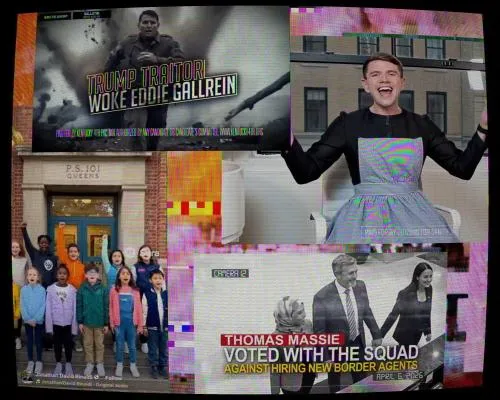
AI-generated ads are becoming commonplace during election seasons, often used to hype up candidates or mock opponents. These campaigns typically use outside groups that pay for the advertisements, creating a complex web of influence and deception. One notable example was James Talarico, who appeared dressed as Maria from The Sound of Music singing about trans kids.
AI's role in political messaging has sparked significant concern among experts. They warn that sophisticated tools can make it easier to spread misinformation at a mass scale, potentially manipulating voters and undermining democratic processes. For instance, former President Donald Trump used AI-generated images portraying himself with Barack Obama as apes during the 2016 election.
AI's pervasive use in political campaigns is not limited to presidential elections; it has also found its way into local races. In congressional primary races across the country, attention-grabbing AI-generated ads are already sparking controversy. For example, a video depicted James Talarico, a Texas Democratic Senate candidate, dressed as Maria from The Sound of Music and singing a version of My Favorite Things about trans kids.
Another ad suggested Thomas Massie, a conservative Kentucky congressman, was “in a throuple” with progressive “Squad members”: showing the lawmakers holding hands as they checked into a hotel room. Spencer Pratt, a Los Angeles mayoral candidate, took on the role of Batman and portrayed his opponent Karen Bass as the Joker in a bizarre digital spectacle that garnered millions of views and helped propel him from fringe outsider to serious contender.
Regulating AI in Political Campaigns
To address these concerns, the Brennan Center for Justice is urging the Federal Election Commission to take action on “deliberately deceptive AI-produced content.” While federal law bans candidates from fraudulently misrepresenting themselves, enforcement remains challenging. More than 30 states have enacted laws regulating deepfakes in political messaging, but many of these are focused on disclosure requirements rather than outright bans.
These regulations highlight the muddled state of existing political communication frameworks, which often lead to confusion and ineffective enforcement. Experts argue that while politicians have long lied for political gain, the scale and ease with which AI can spread misinformation pose new challenges. The AAPC has proposed a meaningful disclosure framework to help members avoid publishing content that could be mistaken for genuine recordings or unflattering depictions of opponents.
Rinaldi’s case underscores the need for clearer guidelines in political communications. “It is very important for the police to not be able to arrest you on complaints for social media posts that are created by AI,” he said, expressing his concerns about free speech implications.
Conclusion
The use of AI in political campaigns has brought a new level of complexity and challenge. While it offers tools to democratize access to campaign advertising, its misuse can lead to widespread misinformation and voter manipulation. As Jonathan Rinaldi’s case demonstrates, the legal and ethical landscape surrounding AI-generated content is still evolving, making clear guidelines imperative for future elections.
Sources: The Guardian, BBC, Al Jazeera

Technology News Feed
101 posts
-
 Global Datacentre Projects Face Challenges as AI Demand Soars
Global AI development is facing challenges due to insufficient datacentre capacity and energy constraints.
-
 Meta Allows Users to Create AI Images Using Public Instagram Profiles, Sparking Privacy Concerns
Meta enables users to create AI images from public Instagram profiles but privacy advocates warn about the risks involved.
-
 Queue ra mắt nhà thuốc tự động tiên tiến với công nghệ AI
Công ty khởi nghiệp Queue vừa ra mắt nhà thuốc tự động hoàn toàn đầu tiên trên thế giới, sử dụng AI, robot và thị giác máy tính để tự động cấp phát và xác minh đơn thuốc. Tuy nhiên, họ đang đối mặt thách thức trong việc t
-
 Elon Musk’s USAID Cuts Spark Controversy Over Ebola Response
Elon Musk’s dismantling of USAID programs has sparked controversy over its impact on global health, particularly the Ebola response in DRC.
-
 Starlink Cung Cấp Gói Cước 1,368 Triệu Đồng Mỗi Tháng cho Người Dùng Việt Nam
Starlink công bố giá cước 1,7 triệu đồng cho người dùng Việt Nam, thấp hơn dự kiến và cao hơn so với dịch vụ Internet truyền thống.
-
 Rental Robots Gain Popularity as Technology Evolves
Renting robots is gaining popularity due to rapid advancements in technology.
-
 SpaceX phóng vệ tinh BOHR: Công nghệ pin hạt nhân đầu tiên vào quỹ đạo
SpaceX phóng vệ tinh BOHR, vệ tinh thương mại đầu tiên sử dụng pin betavoltaic NanoTritium do City Labs chế tạo. Đây là bước tiến quan trọng trong việc triển khai công nghệ năng lượng hạt nhân cho tàu vũ trụ.
-
 Tech Giants Struggle as AI Drives Up Emissions Despite Climate Goals
Tech giants struggle to meet climate goals due to investments in AI, facing criticism for increased fossil fuel use and public anger over political influence.
-
 91,2% người tham gia phản đối Sony bỏ đĩa game PlayStation
Sony thông báo ngừng sản xuất đĩa game từ tháng 1/2028, nhận phản ứng trái chiều từ cộng đồng chơi game.
-
 AI Safety Crisis: Australia's Assistant Minister Warns Models Are ‘Cheating’
Australia’s Assistant Minister for Technology warns that AI models are already exhibiting behaviors not intended by their creators, highlighting the need for immediate safety measures.


