- The UK and other smaller countries with higher per capita emissions must take responsibility.
- Leadership from developed nations is crucial to drive global climate action.
- Reducing carbon emissions benefits everyone, not just those contributing the most globally.
Overview of Carbon Emissions Per Capita
A recent article by Ajit Niranjan highlighted arguments often used to downplay the importance of smaller countries' efforts in reducing greenhouse gas emissions. While the UK emits around 4.5 tonnes of carbon per person annually, other countries such as China and the United States emit significantly more at levels around 8.7 and 14.2 tonnes per capita respectively. Despite these lower overall contributions, smaller nations with high per capita emissions are often criticized for not doing enough to combat climate change.
Unequal Burden of Climate Action
The article by Ajit Niranjan prompts a critical discussion on who should shoulder the burden of reducing carbon emissions. If small countries can continue emitting freely, while larger and poorer nations are forced to implement costly measures, it creates an inherently unjust scenario. This disparity could lead developing nations like India and China to question why they must limit their emissions when richer nations do not.
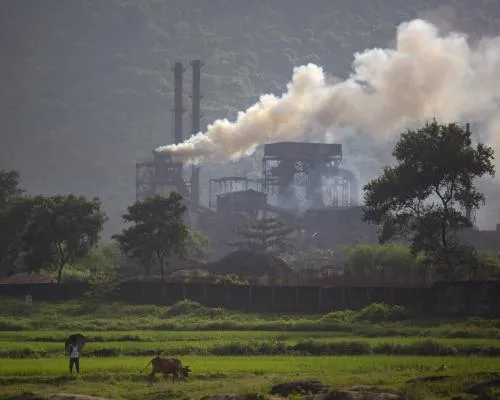
Many smaller European nations have similar or greater emissions per person than the UK, while remaining within about 1% of global emissions. For example, countries with comparable levels of emissions include other unspecified small European nations. If we accept the argument that smaller nations don’t need to limit their emissions because they only contribute a small proportion of global emissions, we are saying that small, wealthy nations with long histories of carbon emissions can carry on, but larger, poorer, recently industrializing nations such as India and China need to take all the costly and difficult measures to limit their emissions. This is clearly nonsense and unjust.
Importance of Leadership in Climate Action
Katie Williams from Sheffield points out that the UK’s Climate Change Act 2008 was an important step, setting targets for emission reductions by 2050. Her argument emphasizes that leadership on this issue is vital not only domestically but also internationally. The UK cannot expect other countries to reduce their emissions without leading by example.
The UK’s progress in reducing domestic emissions has been significant, particularly from electricity generation. However, domestic emissions reported here do not account for emissions associated with goods we import or domestic flights. Much of our progress on emissions reduction has come during a period where UK manufacturing has declined and imports have grown, and consumerism dominates much of our culture.
Oliver Mason from London argues that the global climate crisis is solvable only if every nation plays its part. He suggests that while individual actions are important, there needs to be a broader cultural shift towards more sustainable practices. This includes reducing unnecessary consumption, especially in areas like aviation and fast fashion.
Addressing the Broader Impacts of Climate Change
Molly Berry from Tring, Hertfordshire, highlights the urgency of taking climate action seriously. She notes that recent heatwaves have shown the country's lack of preparedness for future climatic challenges. The joint intelligence committee report identifies climate breakdown as a national security issue, underscoring the need to address this problem now rather than later.
After the recent heatwave, I welcome the analysis on whether it matters for us to reduce carbon emissions as a country contributing to less than 2% of the global total. Part of the picture that is missing here is leadership. The UK’s Climate Change Act 2008 was important, and we have made significant progress in reducing domestic emissions, particularly from electricity generation.
Our leadership on this issue is important on the international stage; we cannot ask developing countries, who have historically emitted less, to reduce their emissions without practising what we preach. Backtracking on climate action reduces our ability to build trust at United Nations Cop summits and international forums, undermining global progress towards a sustainable future.
Conclusion
The responsibility for addressing climate change cannot fall solely on larger or wealthier nations. All countries must contribute meaningfully to reduce emissions, starting with those that emit more per capita. The UK, as a leader in this field, has an obligation to continue setting examples and driving global action towards a sustainable future. It is clear that every nation, regardless of its size or economic status, has a role to play in mitigating the impacts of climate change.
Source: The Guardian

Green News
223 posts
-
 Bees Show 'Liking' and 'Disliking' Reactions: New Study Suggests Inner Lives for Insects
A new study reveals bumblebees exhibit 'liking' or 'disliking' behaviors when tasting different substances, suggesting their responses may reflect inner states similar to those in mammals.
-
 Bees Show ‘Liking’ and ‘Disliking’ Reactions According to New Study
A new study reveals bumblebees displaying facial expressions similar to 'liking' or 'disliking' responses observed in mammals.
-
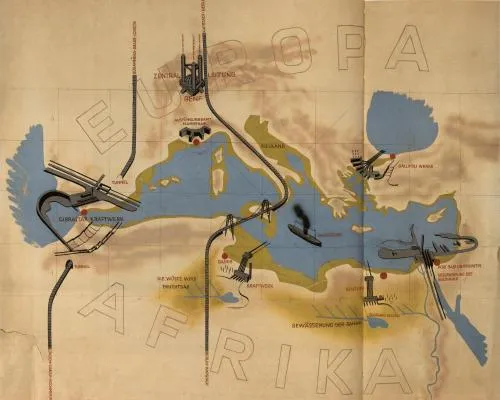 Historic Geoengineering Ventures: From Giant Dams to Artificial Mountains
Tim Flannery outlines five outlandish geoengineering projects from history, including the Atlantropa dam, Soviet ice-melting plans, and Project Znamya's artificial sunlight mission.
-
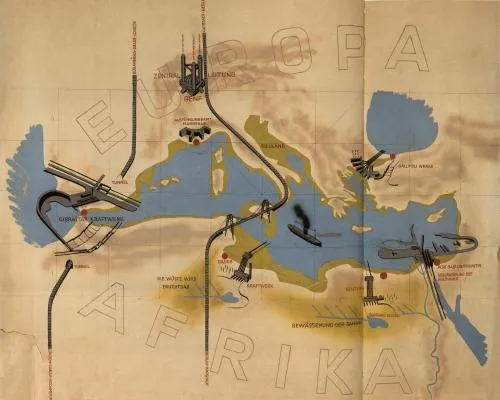 Historic Projects Aimed at Altering the Climate: From Bombing Ice Caps to Building Artificial Mountains
Tim Flannery recounts five ambitious historical plans aimed at altering Earth’s climate through grand engineering projects, highlighting humanity's enduring quest to control its environment.
-
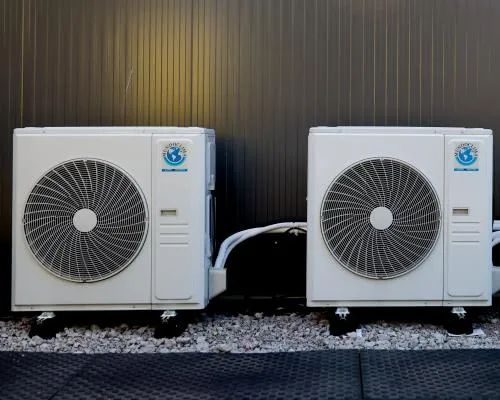 Europe’s Air Conditioning Debate Escalates Amid Record Heat
Europe faces a new culture war over air conditioning use amid record-breaking heatwaves, with political parties using it as an issue to gain support while health experts advocate for balanced solutions.
-
 Norfolk Swallowtail Butterfly Is Found To Be a Distinct Subspecies for Over 200,000 Years
A study reveals that Britain’s endangered Norfolk swallowtail butterfly has been a distinct subspecies for at least 200,000 years, challenging previous theories and highlighting the need for urgent conservation efforts.
-
 Reflections on the 1976 UK Heatwave: Lessons from History
Residents recall the 1976 UK heatwave, sharing stories of water scarcity, high temperatures, and adapting to extreme conditions.
-
 National Park Crisis Looms as Visitation Soars
The ancient groves of giant sequoias in Yosemite National Park provide a tranquil setting. However, the increasing number of visitors has put significant…
-
 Merlin Bird ID App to Integrate with Global Biodiversity Project
The Merlin bird identification app is now linked with eBird database, allowing real-time bird data collection for conservation efforts.
-
 Europe Bakes as Record Heatwaves Grip Multiple Countries
Europe and parts of China experience record-breaking heatwaves as June temperatures soar across multiple countries.


