Historic Projects Aimed at Altering the Climate: From Bombing Ice Caps to Building Artificial Mountains

- During the mid-20th century, engineers proposed ambitious geoengineering projects such as lowering sea levels and creating artificial mountains.
- These plans ranged from the scientifically plausible, like using nuclear bombs to melt ice caps, to the more fanciful, such as building a second moon with reflective satellites.
- Some of these proposals, like those for Atlantropa and Project Znamya, attempted to reshape continents or extend daylight hours, while others focused on creating new mountain ranges in Australia.
- While some projects gained traction, most were ultimately abandoned due to feasibility issues or economic constraints.
Atlantropa: The Plan for a Lowered Mediterranean
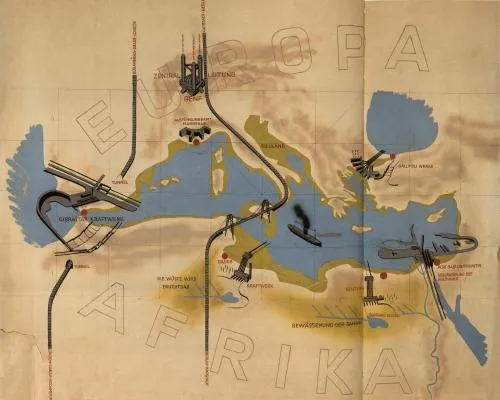
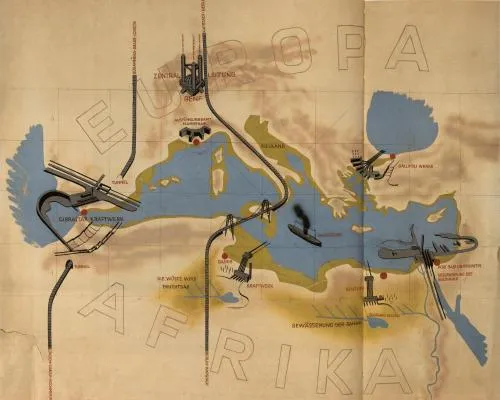
In the 1930s, German engineer Herman Sörgel envisioned an ambitious project known as Atlantropa. His idea involved constructing a dam across the Strait of Gibraltar, which would lower the Mediterranean Sea by about 656 feet (200 meters). This dramatic change in sea levels was expected to create vast new lands and provide Europe with endless hydroelectric power.
The project received significant support from engineers and experts, who designed detailed plans for the dam. However, critics raised concerns over environmental impacts, particularly on cities like Venice that relied on their canals. Despite surviving World War II, Atlantropa never moved beyond the drawing board due to various logistical challenges.
Modifying Nature in Soviet Russia
Russia’s climate was often a source of frustration for its inhabitants, leading Soviet engineers like PM Borisov to propose radical solutions. One such idea involved building a dam across the Bering Strait to melt Arctic ice and raise global temperatures by several degrees. Another, more audacious plan suggested excavating a small area under the Thompson-Wyville Ridge to achieve similar results.
These ideas aligned with the “Great Stalin Plan for the Transformation of Nature,” which aimed to drastically alter Russia’s environment through massive engineering projects. Although such plans were discussed well into the 1960s, economic and practical considerations eventually put an end to them.
Nuclear Bombs and Arctic Ice
The discovery of atomic energy brought a new wave of optimism in the mid-20th century. American scientist Harry Wexler proposed using nuclear bombs to melt the Arctic ice cap, believing that 10 carefully placed hydrogen bombs could significantly warm up the region. Similarly, Soviet scientists envisioned using nuclear devices to divert rivers and control climate patterns.
These ideas were put into practice, with the Soviets detonating three atomic bombs in an attempt to redirect a river but found that only minor changes occurred. The environmental impact, including radiation, made further attempts impractical.
New Mountains in Australia
Australian engineer Laurie Hogan dreamed of transforming his country by building new mountain ranges. In 1979, he published “Man Made Mountain,” which proposed creating a massive range stretching 1,243 miles (2,000 kilometers) across Western Australia. The project envisaged a series of cities and fish farms along the slopes.
Although Hogan’s plan garnered some attention, it ultimately failed to gain widespread support. His efforts culminated in the establishment of an “Engineered Australia Plan party,” which contested the 1983 federal election but found little traction among voters.
A Recap and Conclusion
These historical projects, while ambitious and at times absurd, reflect a persistent human desire to control and manipulate our environment. From lowering seas to creating artificial mountains, these ideas represent the intersection of science fiction and practical engineering. As we face new challenges in climate change, it is essential to consider both the potential benefits and the risks associated with geoengineering.
Source: The Guardian
Green News
220 posts
-
 Historic Geoengineering Ventures: From Giant Dams to Artificial Mountains
Tim Flannery outlines five outlandish geoengineering projects from history, including the Atlantropa dam, Soviet ice-melting plans, and Project Znamya's artificial sunlight mission.
-
 Europe’s Air Conditioning Debate Escalates Amid Record Heat
Europe faces a new culture war over air conditioning use amid record-breaking heatwaves, with political parties using it as an issue to gain support while health experts advocate for balanced solutions.
-
 Norfolk Swallowtail Butterfly Is Found To Be a Distinct Subspecies for Over 200,000 Years
A study reveals that Britain’s endangered Norfolk swallowtail butterfly has been a distinct subspecies for at least 200,000 years, challenging previous theories and highlighting the need for urgent conservation efforts.
-
 Reflections on the 1976 UK Heatwave: Lessons from History
Residents recall the 1976 UK heatwave, sharing stories of water scarcity, high temperatures, and adapting to extreme conditions.
-
 National Park Crisis Looms as Visitation Soars
The ancient groves of giant sequoias in Yosemite National Park provide a tranquil setting. However, the increasing number of visitors has put significant…
-
 Merlin Bird ID App to Integrate with Global Biodiversity Project
The Merlin bird identification app is now linked with eBird database, allowing real-time bird data collection for conservation efforts.
-
 Europe Bakes as Record Heatwaves Grip Multiple Countries
Europe and parts of China experience record-breaking heatwaves as June temperatures soar across multiple countries.
-
 A blackbird with a taste for musicals
Letter: Jane Horne wonders if other readers hear well-known tunes in blackbird song
-
 Heatwave Hampers US Celebrations and World Cup Events
A heatwave exacerbated by climate change threatens US celebrations and international sports events this weekend.
-
 Donald Trump may be the accidental hero of a feelgood climate tale even as a creeping horror story plays alongside
Even as we watch a deadly heatwave sweep through Europe, the US president’s ineptness has created reason for optimism on the climate crisis


