- Bumblebees display facial expressions similar to liking or disliking responses observed in mammals.
- Scientists at Macquarie University and Southern Medical University recorded bees' reactions to different solutions using slow-motion video.
- The findings suggest that insects may have an inner life, challenging previous views of them as robots.
Understanding Bee Behavior
In a groundbreaking study published in the journal Proceedings of the National Academy of Sciences, scientists from Macquarie University and Southern Medical University in China captured the intricate reactions of bumblebees to different solutions using slow-motion video. The research provides new insights into how bees interact with their environment based on taste.
Facial Expressions Reveal Inner States
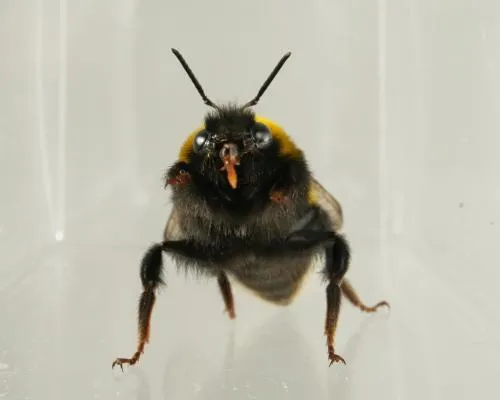
Prof Andrew Barron, a researcher at Macquarie University who co-authored the paper, explained that when bumblebees encounter sweet solutions, they engage in what he calls “post-consumption glossa” – essentially, they keep licking even after finishing the drink. This behavior is reminiscent of how mammals might react to tasty treats. In contrast, bees showed clear signs of disliking salty or quinine solutions by wiping their mouths and heads.
Behavioral Markers for Sentience
The study demonstrates that insects, like mammals, exhibit distinct behavioral markers when experiencing positive or negative sensations. Previous research on rats and primates has shown that they too display licking and tongue sticking as signs of pleasure or displeasure. These findings challenge the traditional view of insects as merely chemical robots without subjective experiences.
Context-Dependent Reactions
The bees' reactions were not always straightforward, depending on various contextual factors such as heat stress or their current state of fullness. For instance, exposure to heat caused the bees to react positively to water and salty solutions that they would normally avoid. This suggests that insects might have a more nuanced understanding of their environment than previously thought.
Implications for Insect Sentience
The study's conclusions are significant as they push towards acknowledging that many insects, including bees, may possess some capacity to experience pleasure or pain. This is an important consideration for animal welfare and ethical considerations in scientific practices involving insects.
Source: The Guardian

Green News
222 posts
-
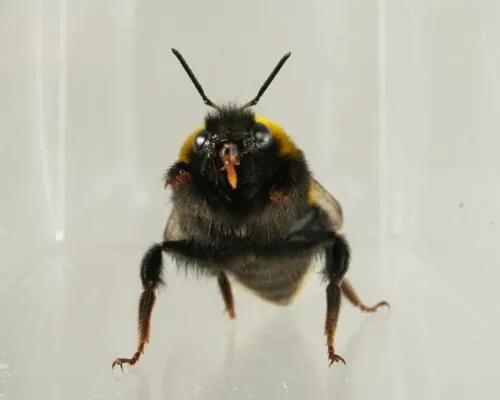 Bees Show 'Liking' and 'Disliking' Reactions: New Study Suggests Inner Lives for Insects
A new study reveals bumblebees exhibit 'liking' or 'disliking' behaviors when tasting different substances, suggesting their responses may reflect inner states similar to those in mammals.
-
 Historic Geoengineering Ventures: From Giant Dams to Artificial Mountains
Tim Flannery outlines five outlandish geoengineering projects from history, including the Atlantropa dam, Soviet ice-melting plans, and Project Znamya's artificial sunlight mission.
-
 Historic Projects Aimed at Altering the Climate: From Bombing Ice Caps to Building Artificial Mountains
Tim Flannery recounts five ambitious historical plans aimed at altering Earth’s climate through grand engineering projects, highlighting humanity's enduring quest to control its environment.
-
 Europe’s Air Conditioning Debate Escalates Amid Record Heat
Europe faces a new culture war over air conditioning use amid record-breaking heatwaves, with political parties using it as an issue to gain support while health experts advocate for balanced solutions.
-
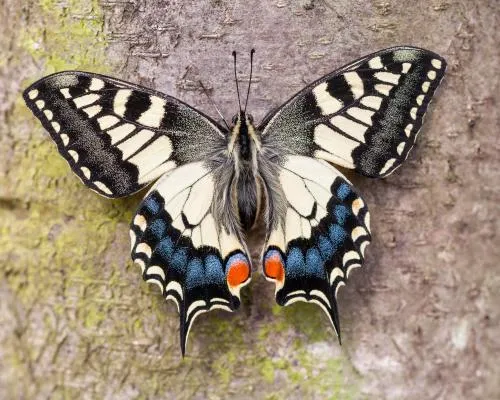 Norfolk Swallowtail Butterfly Is Found To Be a Distinct Subspecies for Over 200,000 Years
A study reveals that Britain’s endangered Norfolk swallowtail butterfly has been a distinct subspecies for at least 200,000 years, challenging previous theories and highlighting the need for urgent conservation efforts.
-
 Reflections on the 1976 UK Heatwave: Lessons from History
Residents recall the 1976 UK heatwave, sharing stories of water scarcity, high temperatures, and adapting to extreme conditions.
-
 National Park Crisis Looms as Visitation Soars
The ancient groves of giant sequoias in Yosemite National Park provide a tranquil setting. However, the increasing number of visitors has put significant…
-
 Merlin Bird ID App to Integrate with Global Biodiversity Project
The Merlin bird identification app is now linked with eBird database, allowing real-time bird data collection for conservation efforts.
-
 Europe Bakes as Record Heatwaves Grip Multiple Countries
Europe and parts of China experience record-breaking heatwaves as June temperatures soar across multiple countries.
-
 A blackbird with a taste for musicals
Letter: Jane Horne wonders if other readers hear well-known tunes in blackbird song


