- Experts urge nuanced adoption of air conditioning while governments promote long-term solutions like insulation.
- A culture war has emerged over the use of air conditioning, with political parties using it as a wedge issue to gain support.
- Europe faces criticism from some quarters for its lack of AC compared to other wealthy countries like the US.
- Health officials warn that while air conditioning can be crucial in high-risk areas, its broader adoption may come with unintended consequences.
Background to the Story
In early June, temperatures in Germany reached a significant high, with Neuzelle, a town on the German-Polish border, experiencing unusually warm weather. Mario, a 65-year-old retired handyman from this area, recalls dealing with intense summer heat. Two years ago, he installed an air conditioning unit to better cope with such conditions, as only about 6% of households have fixed air-conditioning systems in Germany.
Emerging Culture Wars
The debate over air conditioning in Europe involves a complex interplay of environmental policies and public health needs. The World Health Organization (WHO) advocates for balanced approaches that include both short-term cooling measures and long-term infrastructure improvements. However, political parties have capitalized on this issue to align with their agendas.
Political Stances
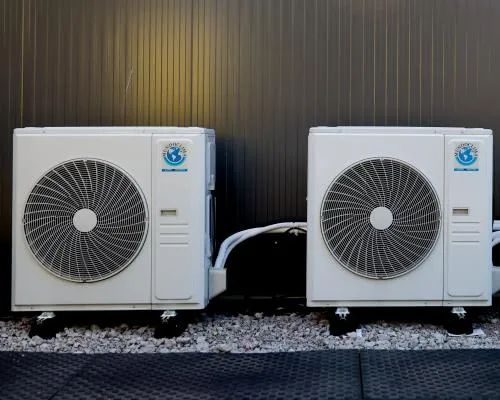
In Germany, the far-right party Alternative für Deutschland (AfD) has criticized mainstream climate policies, arguing that they hinder necessary adaptations such as installing air conditioning in vulnerable areas. The AfD’s construction spokesperson recently commented on this issue after a significant heatwave.
Global Perspective and Criticism
The situation in Europe has drawn comparisons to the United States, where over 90% of homes have air conditioning. Critics argue that Europe’s lack of AC reflects a misguided approach to addressing climate change. Meanwhile, chatbots on social media platforms have amplified calls for Europeans to embrace air conditioning as part of adapting to rising temperatures.
Expert Views and Future Implications
Climate scientists like Dr. Chloe Brimicombe support targeted use of air conditioning in social housing to address growing inequalities. However, they also caution about potential drawbacks such as increased energy consumption during peak periods. Dr. Brimicombe emphasizes the need for a balanced approach.
As global temperatures continue to rise, the debate is expected to intensify. The WHO’s Hans Kluge highlights the importance of ensuring air conditioning reaches those who need it most while continuing to build infrastructure that protects everyone. The focus should be on ensuring AC is available for medical necessities and not just for private use, as this can exacerbate inequalities between those with cooling and those without.
Concrete Details and Context
In recent years, temperatures in regions like Italy and Spain have seen a rapid increase in the use of air conditioning. In France, 48% of people in hot southern provinces now own one, compared to just 10% in cooler northern areas. In Germany, where renter populations are common, the June record-breaking heat was deemed not severe enough by some to justify purchasing an AC unit.
Although planning laws make it difficult to install air conditioning in private households across Europe, there is little evidence that climate concerns or red tape drive low rates of adoption. Instead, as carbon emissions have heated the continent twice as fast as the global average, increasing heat has increasingly prompted people in warm regions to mechanically cool their homes.
The WHO’s Kluge emphasizes the importance of ensuring air conditioning reaches those who need it most while continuing to build infrastructure that protects everyone. The focus should be on ensuring AC is available for medical necessities and not just for private use, as this can exacerbate inequalities between those with cooling and those without.
Conclusion
The debate over air conditioning in Europe highlights a complex interplay of environmental policies, public health needs, and political motivations. As global temperatures continue to rise, the need for balanced solutions becomes more urgent. While air conditioning can save lives during extreme heatwaves, its widespread adoption must be carefully managed to avoid further exacerbating energy consumption issues.
Source: The Guardian

Green News
218 posts
-
 Norfolk Swallowtail Butterfly Is Found To Be a Distinct Subspecies for Over 200,000 Years
A study reveals that Britain’s endangered Norfolk swallowtail butterfly has been a distinct subspecies for at least 200,000 years, challenging previous theories and highlighting the need for urgent conservation efforts.
-
 Reflections on the 1976 UK Heatwave: Lessons from History
Residents recall the 1976 UK heatwave, sharing stories of water scarcity, high temperatures, and adapting to extreme conditions.
-
 National Park Crisis Looms as Visitation Soars
The ancient groves of giant sequoias in Yosemite National Park provide a tranquil setting. However, the increasing number of visitors has put significant…
-
 Merlin Bird ID App to Integrate with Global Biodiversity Project
The Merlin bird identification app is now linked with eBird database, allowing real-time bird data collection for conservation efforts.
-
 Europe Bakes as Record Heatwaves Grip Multiple Countries
Europe and parts of China experience record-breaking heatwaves as June temperatures soar across multiple countries.
-
 A blackbird with a taste for musicals
Letter: Jane Horne wonders if other readers hear well-known tunes in blackbird song
-
 Heatwave Hampers US Celebrations and World Cup Events
A heatwave exacerbated by climate change threatens US celebrations and international sports events this weekend.
-
 Donald Trump may be the accidental hero of a feelgood climate tale even as a creeping horror story plays alongside
Even as we watch a deadly heatwave sweep through Europe, the US president’s ineptness has created reason for optimism on the climate crisis
-
 Brutal heatwave scorches eastern US ahead of Fourth of July weekend
National Weather Service warns heat index could reach 115F as heat grips midwest, Ohio valley and east coast
-
 A bargain price for reaching net zero in Britain
Letters: Dr Charlie Gardner says the public are vastly overestimating the cost of net zero. Plus letters from Moira Gommon and Diana Francis


