Historic Geoengineering Ventures: From Giant Dams to Artificial Mountains

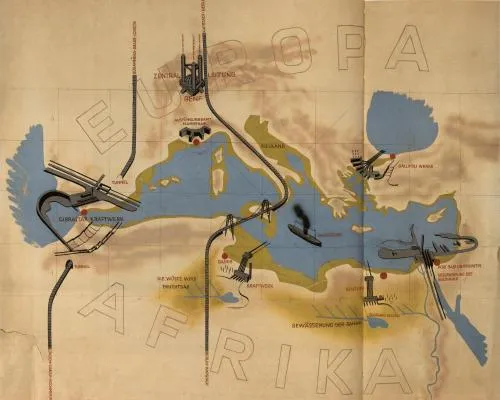
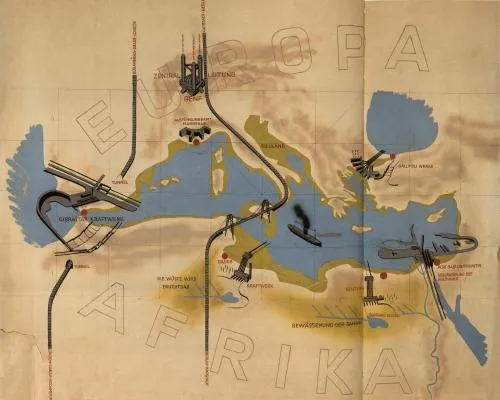
- Herman Sörgel proposed a grand dam project across the Strait of Gibraltar in the 1930s, aiming to lower sea levels and provide new fertile lands.
- The Soviet Union explored plans to melt Arctic ice caps using nuclear bombs or by digging through underwater ridges to alter the climate.
- In the 1990s, Project Znamya aimed to create a ‘second moon’ of sunlight for Russia’s arctic regions by launching reflective satellites.
- Australian engineer Laurie Hogan suggested building new mountain ranges to transform the country's landscape and improve its environment.
Historical Ambitions: The Atlantropa Project
In the 1930s, German engineer Herman Sörgel envisioned a colossal dam across the Strait of Gibraltar. This ambitious project was designed to lower the Mediterranean Sea by two hundred meters, creating vast new lands for agriculture and energy production. Despite initial excitement, including detailed engineering designs, the plan struggled with logistical challenges and environmental concerns.
The Soviet Climate Manipulation Plans
Russia's history of climatic challenges inspired its engineers to propose radical solutions. PM Borisov suggested melting the Arctic ice cap by building a dam across the Bering Strait or excavating an underwater ridge. These projects, rooted in the “great Stalin plan for the transformation of nature,” aimed to make the Soviet Union more hospitable but faced economic and practical obstacles.
Nuclear Bombs and Arctic Ice
The 1940s brought a surge of techno-optimism, leading to ideas like Harry Wexler's proposal that carefully placed hydrogen bombs could melt Arctic ice caps. The Soviets went further, attempting to use nuclear explosions to redirect rivers. However, the environmental impact and technical difficulties led to these schemes being shelved.
Artificial Sunlight for Russia
In the 1990s, Project Znamya sought to provide additional daylight to Russia's arctic regions by launching reflective satellites. While this idea seemed promising on paper, it struggled with financial constraints and technical issues. The project managed to create a small patch of light but ultimately failed due to economic challenges.
A Vision for New Mountain Ranges
Australian engineer Laurie Hogan proposed creating new mountain ranges in 1979, arguing that such landscapes could dramatically improve the environment. His ambitious plan included constructing forty-nine cities and numerous fish farms. Although Hogan wrote a book advocating his idea, it never gained widespread support or funding.
Source: The Guardian
Green News
220 posts
-
 Historic Projects Aimed at Altering the Climate: From Bombing Ice Caps to Building Artificial Mountains
Tim Flannery recounts five ambitious historical plans aimed at altering Earth’s climate through grand engineering projects, highlighting humanity's enduring quest to control its environment.
-
 Europe’s Air Conditioning Debate Escalates Amid Record Heat
Europe faces a new culture war over air conditioning use amid record-breaking heatwaves, with political parties using it as an issue to gain support while health experts advocate for balanced solutions.
-
 Norfolk Swallowtail Butterfly Is Found To Be a Distinct Subspecies for Over 200,000 Years
A study reveals that Britain’s endangered Norfolk swallowtail butterfly has been a distinct subspecies for at least 200,000 years, challenging previous theories and highlighting the need for urgent conservation efforts.
-
 Reflections on the 1976 UK Heatwave: Lessons from History
Residents recall the 1976 UK heatwave, sharing stories of water scarcity, high temperatures, and adapting to extreme conditions.
-
 National Park Crisis Looms as Visitation Soars
The ancient groves of giant sequoias in Yosemite National Park provide a tranquil setting. However, the increasing number of visitors has put significant…
-
 Merlin Bird ID App to Integrate with Global Biodiversity Project
The Merlin bird identification app is now linked with eBird database, allowing real-time bird data collection for conservation efforts.
-
 Europe Bakes as Record Heatwaves Grip Multiple Countries
Europe and parts of China experience record-breaking heatwaves as June temperatures soar across multiple countries.
-
 A blackbird with a taste for musicals
Letter: Jane Horne wonders if other readers hear well-known tunes in blackbird song
-
 Heatwave Hampers US Celebrations and World Cup Events
A heatwave exacerbated by climate change threatens US celebrations and international sports events this weekend.
-
 Donald Trump may be the accidental hero of a feelgood climate tale even as a creeping horror story plays alongside
Even as we watch a deadly heatwave sweep through Europe, the US president’s ineptness has created reason for optimism on the climate crisis


