Resistance spot welding is one of the most widely used joining processes in modern manufacturing, especially in automotive, appliance, sheet metal fabrication, and industrial assembly lines. Known for its speed, efficiency, and ability to join sheet metals without filler material, this process remains a backbone technology for high-volume production environments.

For OEMs, manufacturing engineers, and automation integrators, understanding how resistance spot welding works and how to optimize it is critical for achieving consistent weld quality, reducing production costs, and improving overall manufacturing efficiency.

As a global manufacturer of advanced welding and metal-joining systems, Heron Welder specializes in resistance welding technologies, including spot welding machines, MFDC systems, and automated production line solutions designed for industrial-scale applications.


What Is Resistance Spot Welding?

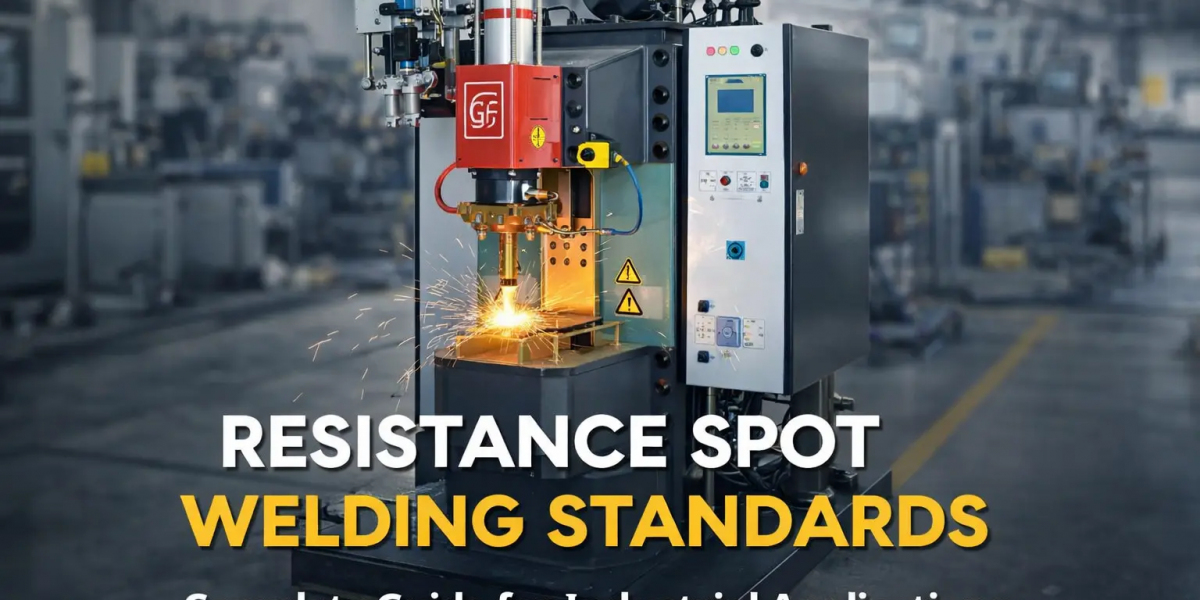
Resistance spot welding (RSW) is a welding process that joins two or more overlapping metal sheets by applying pressure and electrical current through copper electrodes.

The heat required for welding is generated by the electrical resistance of the metal itself when current passes through the contact point. This localized heating causes the metal to melt and form a weld nugget, which solidifies under pressure to create a strong joint.

Key Characteristics:

  • No filler material required
  • Extremely fast cycle times (milliseconds to seconds)
  • Suitable for thin sheet metals
  • Highly repeatable and automation-friendly
  • Minimal distortion when properly controlled

This makes resistance spot welding ideal for mass production industries where speed and consistency are essential.


How Resistance Spot Welding Works

The process of resistance spot welding follows a precise sequence:

1. Electrode Positioning

Copper alloy electrodes clamp the metal sheets together with controlled force.

2. Current Application

A high electrical current passes through the electrodes and workpieces.

3. Heat Generation

Due to electrical resistance, heat is generated at the interface of the metal sheets.

4. Nugget Formation

The localized heat melts the metal at the contact point, forming a molten weld nugget.

5. Cooling and Solidification

Pressure is maintained while the current is stopped, allowing the nugget to solidify and form a strong joint.

The entire cycle is typically completed in a fraction of a second in modern automated systems.


Key Parameters in Resistance Spot Welding

Achieving high-quality welds depends on precise control of process parameters:

1. Welding Current

Resistance Spot Welding: Principles, Process, Applications, and Industrial Best Practices

Higher current increases heat generation but must be controlled to avoid expulsion or burn-through.

2. Weld Time

The duration of current flow directly affects nugget size and strength.

3. Electrode Force

Proper force ensures good electrical contact and prevents excessive spatter.

4. Electrode Geometry

Electrode shape and size influence current density and heat distribution.

5. Material Type and Thickness

Different metals (steel, stainless steel, aluminum) require tailored welding settings.

Modern systems such as MFDC (Medium Frequency Direct Current) controllers offer highly precise control over these variables, improving consistency and reducing energy consumption.


Advantages of Resistance Spot Welding in Manufacturing

Resistance spot welding offers several advantages that make it indispensable in industrial production:

High Production Speed

Spot welding cycles are extremely fast, making it ideal for assembly lines producing thousands of units per day.

Low Operational Cost

No consumables like filler wire or shielding gas are required.

Automation Compatibility

Easily integrated into robotic arms and automated production systems.

Clean and Efficient Process

Produces minimal fumes, sparks, or post-processing requirements.

Consistent Quality

With proper control systems, weld quality is highly repeatable.

For industries like automotive manufacturing, where thousands of welds are performed per vehicle, these benefits are critical.


Applications of Resistance Spot Welding

Resistance spot welding is used across a wide range of industries:

Automotive Industry

  • Car body panels
  • Door assemblies
  • Chassis components
  • Battery packs for EVs

Appliance Manufacturing

  • Refrigerators
  • Washing machines
  • Air conditioning units
  • Metal cabinets

Electrical and Electronics

  • Battery terminals
  • Metal enclosures
  • Busbars

Industrial Fabrication

  • Sheet metal structures
  • HVAC systems
  • Steel furniture

Its versatility makes it one of the most important joining processes in modern industrial production.


Resistance Spot Welding vs Other Welding Methods

Understanding how spot welding compares with other welding processes helps manufacturers choose the right solution.

Spot Welding vs MIG Welding

  • Spot welding: Faster, cleaner, automated
  • MIG welding: More flexible for thicker materials and structural joints

Spot Welding vs Laser Welding

  • Spot welding: Cost-effective, robust, widely used
  • Laser welding: Higher precision but higher equipment cost

Spot Welding vs Riveting/Mechanical Fastening

  • Spot welding: Permanent, faster, no additional hardware
  • Riveting: Easier disassembly but slower and more expensive per joint

For high-volume production, resistance spot welding remains the most economical and efficient solution.


Common Challenges in Resistance Spot Welding

Despite its advantages, resistance spot welding requires careful process control to avoid defects:

Inconsistent Weld Quality

Caused by variations in material surface condition, electrode wear, or incorrect parameters.

Electrode Wear

Frequent welding leads to electrode degradation, affecting current distribution.

Expulsion (Spatter)

Occurs when excessive heat forces molten metal out of the weld zone.

Poor Nugget Formation

Often due to insufficient current or incorrect weld time.

Advanced welding systems with real-time monitoring and adaptive control can significantly reduce these issues.


Best Practices for High-Quality Spot Welding

To achieve reliable and repeatable welds, manufacturers should follow these best practices:

  • Maintain clean and properly prepared metal surfaces
  • Regularly dress or replace electrodes
  • Use optimized welding schedules for each material type
  • Implement real-time process monitoring
  • Ensure proper cooling systems for electrodes
  • Train operators on parameter control and inspection techniques

Automation and digital welding controllers can further improve consistency and reduce human error.


Advanced Solutions from Heron Welder

Modern manufacturing demands more than basic welding machines. It requires integrated systems that combine precision, automation, and data control.

Heron Welder provides advanced resistance spot welding solutions designed for industrial-scale production, including:

  • MFDC resistance spot welding machines
  • Capacitor discharge welding systems
  • Automated welding production lines
  • Robotic welding integration solutions
  • Custom welding guns and controllers
  • Multi-process metal joining systems

These solutions are engineered for OEMs and manufacturers who require high throughput, stable quality, and long-term operational reliability.

With a strong focus on automation and smart manufacturing, Heron systems help factories reduce downtime, improve weld consistency, and increase production efficiency.


Future of Resistance Spot Welding

The future of resistance spot welding is closely tied to automation and digital transformation.

Key trends include:

  • AI-based weld quality monitoring
  • Real-time adaptive welding control
  • Integration with Industry 4.0 systems
  • Energy-efficient MFDC technology
  • Smart predictive maintenance systems

As manufacturing becomes more data-driven, resistance spot welding systems are evolving into intelligent production assets rather than standalone machines.


FAQs About Resistance Spot Welding

1. What materials can be welded using resistance spot welding?

Common materials include low-carbon steel, stainless steel, and certain aluminum alloys, depending on machine capability.

2. Is resistance spot welding suitable for thick metals?

It is primarily designed for thin sheet metals, typically used in automotive and appliance industries.

3. How long does a spot weld take?

Most spot welds are completed in milliseconds to a few seconds depending on material thickness and machine settings.

4. What causes weak spot welds?

Common causes include incorrect current settings, poor electrode condition, contamination, or improper pressure.

5. Can resistance spot welding be automated?

Yes, it is one of the most automation-friendly welding processes and is widely used in robotic production lines.


Conclusion

Resistance spot welding remains a foundational technology in modern manufacturing due to its speed, efficiency, and adaptability to automation. From automotive production to appliance manufacturing, it enables high-volume production with consistent quality and low operational cost.

For manufacturers seeking to improve productivity, reduce defects, and upgrade to advanced automated welding systems, selecting the right technology partner is essential.

Heron Welder delivers industrial-grade resistance spot welding solutions designed to meet the evolving demands of global manufacturing environments.


Request a Consultation

If you are looking to upgrade your welding production line, improve weld consistency, or implement automated resistance spot welding solutions, Heron Welder can provide customized engineering support tailored to your application.

Contact Heron Welder to discuss your requirements and receive a tailored solution for your manufacturing needs.


harry brook

6 posts

Related post