- Guatemala's Maya Biosphere Reserve demonstrates sustainable logging that enhances forest cover.
- Community forestry concessions have maintained near-zero deforestation, acting as 'green islands' within the region.
- Efforts include nursery programs and restoration of degraded land with diverse tree species.
- Sustainable practices have improved local incomes and contributed to community development.
Establishing the Maya Biosphere Reserve
The Maya Biosphere Reserve (MBR), established by the Guatemalan government, covers an expansive area of over 5.2 million acres or approximately 2.1 million hectares and is recognized by UNESCO as a vital natural forest region in Central America.
Management Zones and Concessions
The MBR is divided into three distinct zones: the buffer zone (23%), which acts as a protective barrier; the core zone (39%), including national parks and conservation areas; and the multiple-use zone (38%), where communities can sustainably harvest resources under strict management guidelines.
Sustainable Logging in Action
In the multiple-use zone, 12 community forestry concessions manage over 400,000 hectares. For instance, a cooperative takes two trees from each of their plots every year, adhering to strict Forestry Stewardship Council (FSC) standards. This process involves meticulous planning and execution, with every tree being mapped, logged, and numbered.
The first concession was established following the end of Guatemala’s civil war in 1997. Over the past two decades, these community concessions have played a crucial role in ending decades of deforestation in Central America's most illegally logged jungle. While the reserve as a whole has lost nearly 13% of its natural cover over 24 years, the community concessions have maintained near-zero deforestation.
At one logging site, a harvester crashes into an open clearing to drag a 15-metre trunk of mahogany. The tractor then manoeuvres and shovels the lumber onto a pile before returning to the forest. According to forestry engineer Hedy Godinez Pulido, this brutal yet controlled process allows nature to reclaim the land for at least four years as part of a strict management plan that aims to preserve the MBR.
Community Involvement and Benefits
The village of La Pasadita has seen significant improvements due to sustainable practices. For example, in 2009, Conap suspended their community concession after discovering illegal logging within the 18,000-hectare area. To regain Conap’s trust, they partnered with the Rainforest Alliance through its Prosperous and Resilient Landscape programme. The project involved establishing a large nursery where over 120,000 seedlings from 23 different species were nurtured.
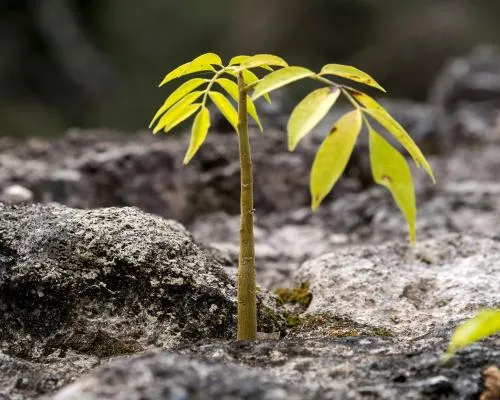
These trees are used to restore degraded pastureland, bringing back tree cover and reducing the threat of wildfires. In La Pasadita, tall cedar and mahogany saplings now grow above maize and beans, which will be grown for just two years to improve soil health.
Uaxactún, a concession in the northern part of Petén province, has seen forest cover increase by 113 hectares due to strict management. Non-timber products like xate palms are harvested sustainably and generate substantial income. According to Francisco Aldana, vice-president of Uaxactún, this product is now sold for $60,000 annually, compared to a few hundred dollars before sustainable practices were implemented.
Restoration Efforts
Drones are used to monitor the landscape and ensure that restoration projects are on track. According to José Román Carrera from the Rainforest Alliance, there has been a net increase in forest coverage of 105 hectares.
The success of these restoration initiatives is being recognized by Conap, which is now considering how it can use this approach to guide national policies for productive reforestation. In Uaxactún, the village hopes to capitalize on its proximity to ancient Maya ruins and is working with The Nature Conservancy (TNC) on a tourism offering that includes tours of nearby archaeological sites and mountain biking.
Conclusion
Source: The Guardian

Green News
271 posts
-
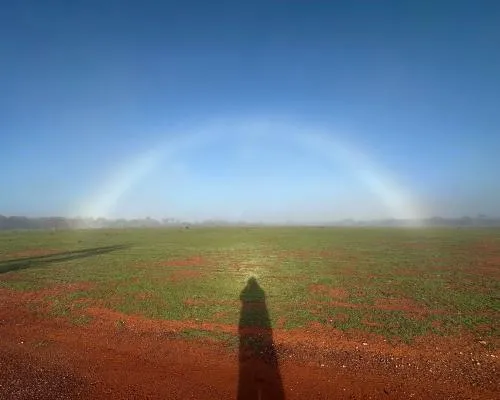 Rare Fogbows: A Meteorological Rarity in Australia
Fogbows are rare optical illusions seen in Australia during specific weather conditions. Learn about their formation and the factors required for them to appear.
-
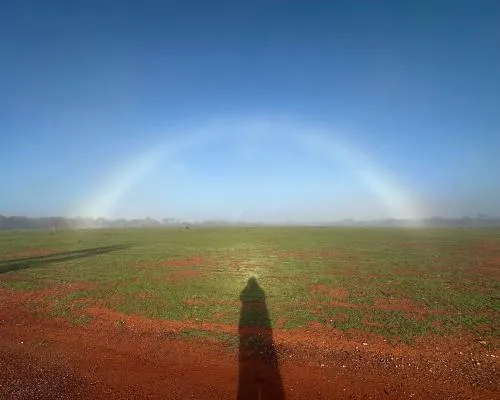 Mysterious Fogbows Emerge in Australia: A Rare Optical Illusion
Fogbows, rare atmospheric phenomena similar to rainbows but appearing in foggy conditions, have been observed in Australia. These fleeting illusions require precise alignment of sun and dense yet not too thick fog for visibility.
-
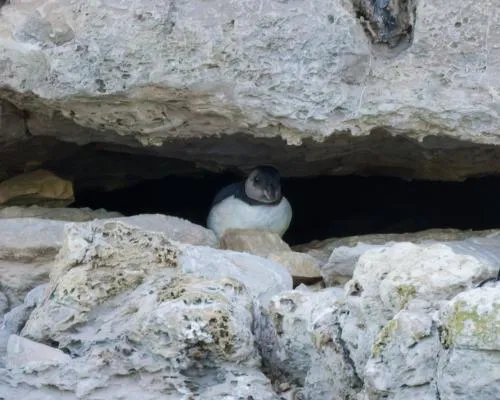 Rare Puffling Sighted After Three Decades on Dorset Coast
A rare puffling has been spotted on Dorset's coast after three decades, renewing hopes for the local puffin population.
-
 Water Leaks Outstrip Hosepipe Ban Savings in England and Wales
A new study reveals that water companies in England and Wales are losing five times more water through leaks than they could save with a hosepipe ban. Environmental campaigners warn of increasing droughts due to climate change.
-
 U.S. Voters Link Extreme Weather to Climate Crisis, Despite Trump’s Denials
A new survey reveals that the majority of American voters link extreme weather events, including heatwaves and floods, to the climate crisis. Despite Republican skepticism, the findings indicate growing public concern that surpasses political polarization on this issue.
-
 Carbon Capture as a Shield for Fossil Fuel Expansion Contested
An analysis of the arguments against using carbon capture as a shield for fossil fuel expansion, highlighting methane emissions and the superiority of renewable energy sources.
-
 UK Poultry Expansion Plan Met with Environmental and Food Security Concerns
Campaigners argue that the UK's proposed poultry growth plan could undermine national security due to its resource-intensive nature and reliance on imported feed.
-
 Critics Argue Carbon Capture Is a Deceptive Tool for Fossil Fuel Expansion
A letter in The Guardian discusses the high costs and limited effectiveness of carbon capture technologies compared to renewable energy sources, while critics argue these measures may merely serve as a cover for expanding fossil fuel industries.
-
 Topless Trends: The Scottish Custom of Taps Aff
Letters from readers discuss traditional Scottish practices like 'taps aff' and related debates on attire, prison conditions, and educational methods.
-
 Rare Sight: Red-Necked Phalarope Returns to Irish Marsh
A rare sighting of the red-necked phalarope, last seen breeding in Annagh Marsh for over 30 years, adds wonder and significance to a magical Irish coastal habitat.


