- Young great white sharks are returning to California shores, driven by warmer waters.
- Experts believe this could be the sharkiest summer in a decade but advise against unnecessary panic.
- Sharks differentiate between humans and prey based on appearance, sound, and smell.
- Research indicates that despite increased sightings, incidents involving humans remain rare.
Surge of Juvenile Great White Sharks
This summer, California is experiencing a significant influx of young great white sharks. These sharks are moving up the coast from warmer waters in Mexico due to strong El Niño conditions. Researchers have noted that this could potentially be one of the most active years for shark sightings in a decade.
Expert Assurances and Reassurance
Despite the growing presence of these apex predators, marine biologists like Dr. Chris Lowe from California State University Long Beach stress that beachgoers should not feel alarmed. Over 20 years of research has shown that sharks do not consider humans as prey, due to our distinct lack of similarity in appearance and behavior.
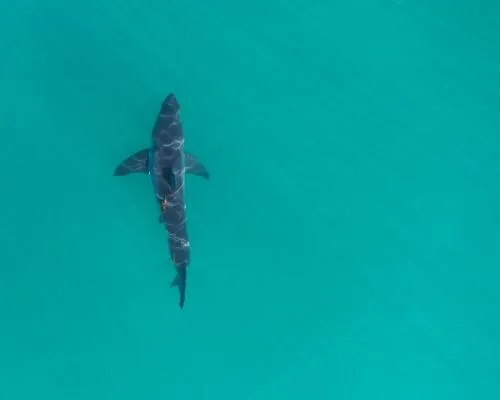
Dr. Lowe explains, 'Humans don’t look like prey; they don’t sound like prey. If it doesn’t feel like prey to a white shark, they ignore it. It’s not a threat, it’s not food.' His team recorded audio of swimmers, surfers, and kayakers in the ocean to test how sharks respond. The results showed that while sharks might investigate swimmers due to their unique sounds, they quickly move away.
Behavioral Studies and Insights
Dr. Lowe’s research indicates that young white sharks between 6ft and 9ft in length are making regular appearances off the California coast. These juvenile sharks are attracted to areas with ample prey like fish, rays, and squid. They stay close to shore for safety as they grow before venturing into deeper waters.
According to data compiled by the California Department of Fish and Wildlife, shark incidents in the state remain exceedingly rare, with only 250 incidents since 1950 and just 17 fatalities. This stability suggests that despite their presence, sharks are generally not a threat to human life.
Comparisons Across Regions
The behavior of sharks differs significantly between regions, highlighting the importance of context in understanding shark-human interactions. For instance, Dr. Gavin Naylor from the University of Florida points out that while white sharks are common off California’s coast, they should not be compared with the more prevalent blacktips found in Florida.
Dr. Naylor emphasizes, 'A white shark is about as different from a blacktip shark as a kangaroo is from a dog. You cannot compare bites in California with bites in Florida.' In Australia, where bull sharks are also present, there have been more incidents linked to these species near populated areas.
Conclusion: Safety and Understanding
While the presence of young great white sharks may initially alarm beachgoers, the evidence suggests that human safety remains a priority. Continued research and public education can help ensure that both humans and sharks coexist peacefully in California’s coastal waters.
Source: The Guardian

Green News
270 posts
-
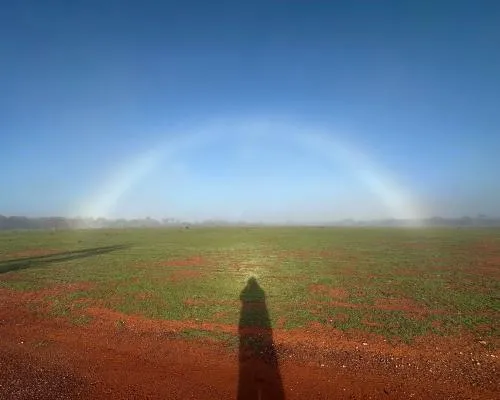 Rare Fogbows: A Meteorological Rarity in Australia
Fogbows are rare optical illusions seen in Australia during specific weather conditions. Learn about their formation and the factors required for them to appear.
-
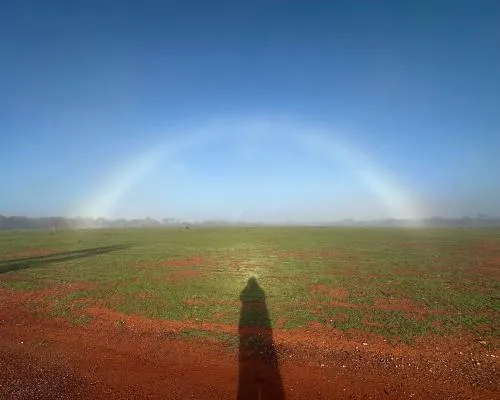 Mysterious Fogbows Emerge in Australia: A Rare Optical Illusion
Fogbows, rare atmospheric phenomena similar to rainbows but appearing in foggy conditions, have been observed in Australia. These fleeting illusions require precise alignment of sun and dense yet not too thick fog for visibility.
-
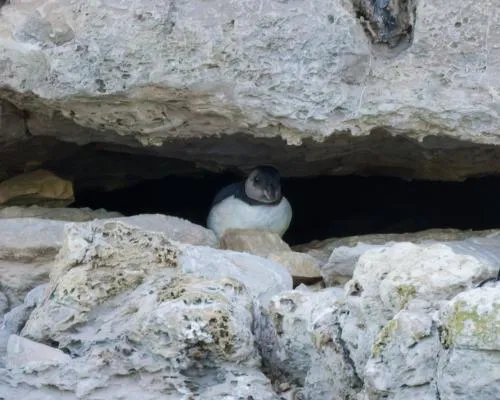 Rare Puffling Sighted After Three Decades on Dorset Coast
A rare puffling has been spotted on Dorset's coast after three decades, renewing hopes for the local puffin population.
-
 Water Leaks Outstrip Hosepipe Ban Savings in England and Wales
A new study reveals that water companies in England and Wales are losing five times more water through leaks than they could save with a hosepipe ban. Environmental campaigners warn of increasing droughts due to climate change.
-
 U.S. Voters Link Extreme Weather to Climate Crisis, Despite Trump’s Denials
A new survey reveals that the majority of American voters link extreme weather events, including heatwaves and floods, to the climate crisis. Despite Republican skepticism, the findings indicate growing public concern that surpasses political polarization on this issue.
-
 Carbon Capture as a Shield for Fossil Fuel Expansion Contested
An analysis of the arguments against using carbon capture as a shield for fossil fuel expansion, highlighting methane emissions and the superiority of renewable energy sources.
-
 UK Poultry Expansion Plan Met with Environmental and Food Security Concerns
Campaigners argue that the UK's proposed poultry growth plan could undermine national security due to its resource-intensive nature and reliance on imported feed.
-
 Critics Argue Carbon Capture Is a Deceptive Tool for Fossil Fuel Expansion
A letter in The Guardian discusses the high costs and limited effectiveness of carbon capture technologies compared to renewable energy sources, while critics argue these measures may merely serve as a cover for expanding fossil fuel industries.
-
 Topless Trends: The Scottish Custom of Taps Aff
Letters from readers discuss traditional Scottish practices like 'taps aff' and related debates on attire, prison conditions, and educational methods.
-
 Rare Sight: Red-Necked Phalarope Returns to Irish Marsh
A rare sighting of the red-necked phalarope, last seen breeding in Annagh Marsh for over 30 years, adds wonder and significance to a magical Irish coastal habitat.
-
 Innovative Energy Storage Solutions Revolutionize Clean Power
New battery technologies like cryobatteries, molten salt storage, sand batteries, and sweat-powered wearables are transforming the way we store and use renewable energy.


