- Funding cuts could lead to the closure of Jodrell Bank, jeopardizing decades of scientific research.
- UK researchers are facing significant reductions in funding for various astronomy and physics projects.
- The crisis is part of a wider £684m cost overrun by science facilities over four years.
Origins and Significance of Jodrell Bank
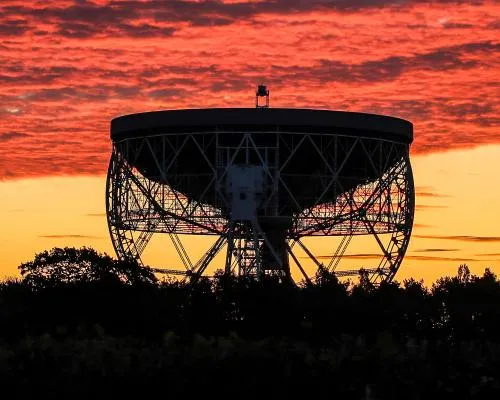
On a chilly day in December 1945, Bernard Lovell, a physicist at the University of Manchester, struck out for the Cheshire countryside to study cosmic rays, the streams of high-energy particles that crisscross the universe. Peering at the signals from his army surplus radar, he made an unexpected discovery: radio reflections from the ionised trails of shooting stars. The work marked the birth of radio astronomy at Jodrell Bank. A year later, engineers at the site mounted a radar on the base of a searchlight, providing sweeping access to speeding meteors. When Sputnik launched in 1957, they had just completed the Lovell telescope, the largest radio telescope in the world, the only one capable of tracking the Soviet satellite. With decades of upgrades, Jodrell Bank has remained world-class, at the heart of a seven-telescope network called e-Merlin, the UK’s national radio astronomy capability. But as of Monday, the network, and Jodrell Bank itself, are threatened with closure. The Science and Technology Facilities Council (STFC) plans to pull funding in March 2028. All observations will stop unless alternative support can be found.
Radio astronomy is not an obscure endeavour producing esoteric data. It has changed our view of the universe. Armed with the technique, astronomers have spotted spinning neutron stars that emit powerful beams, illuminating space like a lighthouse. They have watched matter swirling around supermassive black holes and glimpsed the faint afterglow of the big bang.
The situation is particularly alarming for early-career physicists. A recent survey indicated that nearly 80% of them are considering leaving the UK due to the funding crisis. This exodus would be detrimental not only to UK science but also to national growth, as the best scientists move to where research opportunities and financial support are more robust.
Other fields of physics have not been spared the axe. The Diamond synchrotron and the Isis muon and neutron source, both in Oxfordshire, face cuts but will remain operational. The Clara facility in Cheshire, which tests next-generation particle accelerator technologies, is being mothballed. The operating budget for Boulby mine, the only deep underground science facility in the UK, is being slashed by 40%. There is no funding for the LHCb experiment on the Large Hadron Collider, which could terminate it early, leaving 80% of data uncollected.
The task now is to persuade young researchers to stay in a country facing such significant challenges. The future of Jodrell Bank and other scientific facilities hangs in the balance, with their closure imminent.
Source: The Guardian

Science Daily
142 posts
-
 Experts Warn of Catastrophic Impact of Space Datacenters
Tech giants propose millions of space data centers, but experts warn of potential catastrophic impacts including pollution and ozone layer damage.
-
 GLP-1 Medications: Exploring the Known and Controversial Side-Effects
GLP-1 medications have gained popularity in weight management but come with known and debated side-effects like digestive issues, eye conditions, pregnancy risks, facial changes, hair thinning, and foot pain.
-
 Cyclosporiasis Outbreak: Is It Slowing Down?
A popular test-maker reports a decline in cyclosporiasis positivity rates, raising hopes that the U.S. outbreak might be slowing.
-
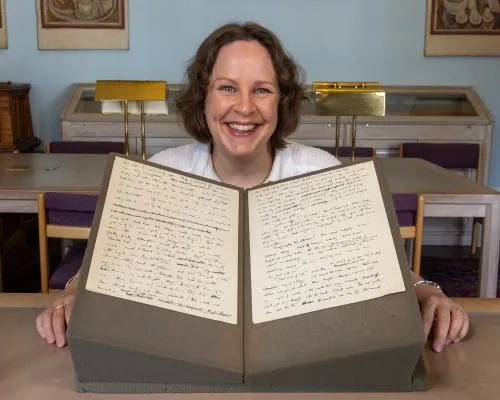 Alan Turing's Racy Short Story Reveals His Playful Side
A Cambridge academic has uncovered insights from an unpublished short story by Alan Turing, challenging the traditional view of him as an isolated mathematician and highlighting his playful, literary, and social sides.
-
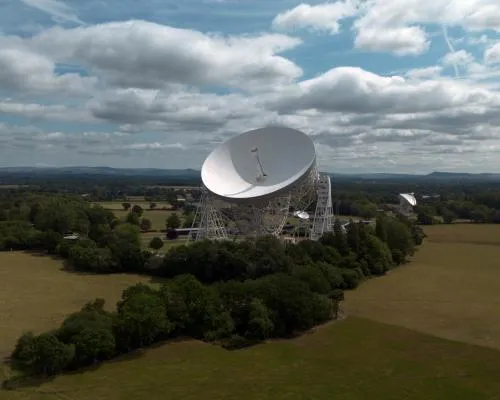 Public Urges Preservation of Jodrell Bank Observatory Amid Funding Cuts
Citizens urge government to reconsider funding cuts that could lead to the closure of the historic Jodrell Bank Observatory.
-
 Ancient Collision Caused Milky Way to Flip 10 Billion Years Ago
Astronomers have found evidence that a dwarf galaxy named Gaia Sausage struck the Milky Way 10 billion years ago, causing its disc to be flipped by more than 90 degrees. This significant event reshaped the Milky Way's structure and is crucial for understanding our galaxy’s history.
-
 The Precision of Fossil Dating: A Matter of Accuracy
Letters to The Guardian discuss fossil dating precision, an amusing museum tale, using soap for hair washing, George Harrison's 'Taxman,' and rating Marmite.
-
 Solving the Heatwave Puzzle: How Effective Are Double Layers of Curtains and Blinds?
A mathematical puzzle by Alex Bellos explores how double layers of curtains and blinds can reduce heat entering a room during a heatwave.
-
 GLP-1 Drugs: Losing Weight, Gaining Insights into Relationships
The impact of GLP-1 weight-loss drugs extends beyond physical changes, affecting personal relationships and emotional connections.
-
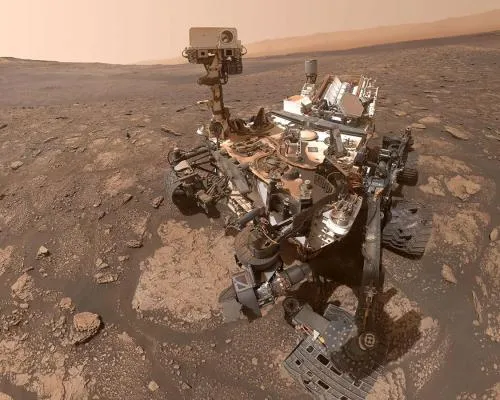 Mars Had Extensive Magma Plumbing, Suggesting Potential for Life
Research suggests Mars once had extensive magma plumbing beneath its crust, potentially making it more habitable than previously thought.
-
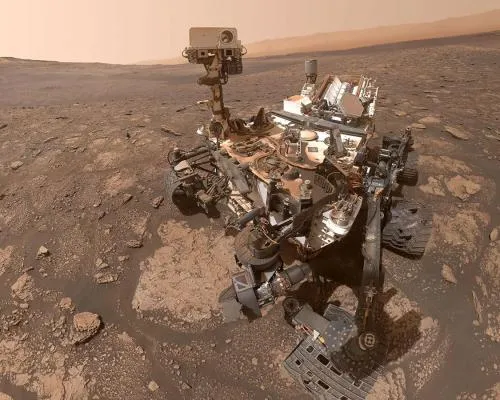 New Study Suggests Mars Had Extensive Magma Rivers Beneath Its Surface
New research based on data from NASA’s Insight Lander suggests Mars once had extensive magma rivers beneath its surface, potentially widening the scope of planets that may have supported early life.


