- A popular test-maker reports a decline in cyclosporiasis positivity rates.
- The outbreak has reached over 18,000 suspected and confirmed cases, with the Midwest hit particularly hard.
- Public awareness may be influencing test-takers' behavior and results.
- Further investigation is needed to confirm if the outbreak is genuinely slowing.
Current Status of Cyclosporiasis Outbreak
The cyclosporiasis outbreak in the United States has grown significantly. The midwest has been hit particularly hard in the outbreak, where public health officials have linked infections to iceberg lettuce from Taylor Farms’ Mexico operations. The Centers for Disease Control and Prevention (CDC) has confirmed 6,707 cases of cyclosporiasis acquired in the U.S., while they are waiting on data, including interviews, to confirm additional suspected cases.
Test Maker's Perspective
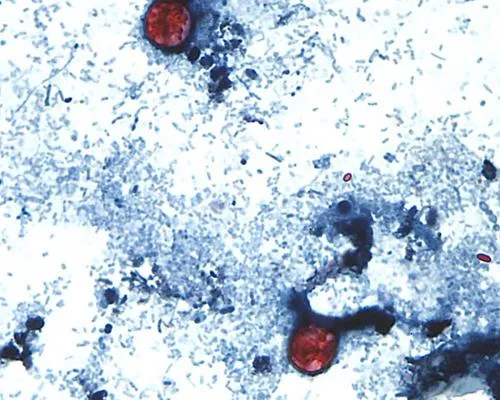
The French company bioMérieux, which produces a panel testing for 22 gastrointestinal illnesses, claims the outbreak might be slowing. Their data shows a decline in total test positivity rates, but this trend could be influenced by increased public awareness leading more people to take these tests.
Confidence and Caveats
John Osiecki, vice-president of medical affairs at bioMérieux, expressed cautious optimism. 'I’m feeling confident we’re heading in that direction,' he said, adding that continued monitoring is necessary. He noted that the company's data, published as Syndromic Trends, shows a peak parasite positivity rate of 15.6% in mid-July, significantly higher than previous years.
Osiecki highlighted the importance of public awareness: 'I’ve been in a lot of social settings, and I've heard people request not to have lettuce just because they’re aware of cyclospora.' However, he also pointed out that the test panel checks for four parasites, not just cyclospora, and is only covered by Medicare for immunosuppressed individuals. The tests are more prevalent in urban areas than rural ones.
Despite these concerns, Osiecki remains hopeful: 'If a large number of people take the tests and have negative results, it could be pushing down positivity rates even as the outbreak continues.' However, the data from bioMérieux has some limitations. The panel tests for four parasites, not just cyclospora; Medicare, one of the nation’s largest insurers, only covers the panel for people who are immunosuppressed (the test costs $417); and the tests are more likely to be available in population centers than in rural areas.
By contrast, CDC data takes longer but is published with a high degree of certainty. The same week in 2025 had a parasite positivity rate of 2.9%, compared to the peak of 15.6% seen in mid-July this year. This stark increase suggests cyclosporiasis is more prevalent than previously known.
Additionally, some food safety researchers have warned that the outbreak may be larger than currently known. The Food and Drug Administration (FDA) is investigating several outbreaks which do not yet have a known cause, and the lettuce was sold in 27 states. In New Hampshire, not currently considered part of the outbreak, the state’s department of health identified cases of people sickened by Taylor Farms lettuce from Mexico as recently as mid-July, linked to a hospital cafeteria in Keene.
Public health officials continue to monitor the situation closely, emphasizing the need for ongoing vigilance and comprehensive testing. The cyclosporiasis outbreak remains a significant public health concern, with potential implications for food safety practices across the country.
Source: The Guardian

Science Daily
142 posts
-
 Experts Warn of Catastrophic Impact of Space Datacenters
Tech giants propose millions of space data centers, but experts warn of potential catastrophic impacts including pollution and ozone layer damage.
-
 GLP-1 Medications: Exploring the Known and Controversial Side-Effects
GLP-1 medications have gained popularity in weight management but come with known and debated side-effects like digestive issues, eye conditions, pregnancy risks, facial changes, hair thinning, and foot pain.
-
 Alan Turing's Racy Short Story Reveals His Playful Side
A Cambridge academic has uncovered insights from an unpublished short story by Alan Turing, challenging the traditional view of him as an isolated mathematician and highlighting his playful, literary, and social sides.
-
 Public Urges Preservation of Jodrell Bank Observatory Amid Funding Cuts
Citizens urge government to reconsider funding cuts that could lead to the closure of the historic Jodrell Bank Observatory.
-
 Ancient Collision Caused Milky Way to Flip 10 Billion Years Ago
Astronomers have found evidence that a dwarf galaxy named Gaia Sausage struck the Milky Way 10 billion years ago, causing its disc to be flipped by more than 90 degrees. This significant event reshaped the Milky Way's structure and is crucial for understanding our galaxy’s history.
-
 The Precision of Fossil Dating: A Matter of Accuracy
Letters to The Guardian discuss fossil dating precision, an amusing museum tale, using soap for hair washing, George Harrison's 'Taxman,' and rating Marmite.
-
 Solving the Heatwave Puzzle: How Effective Are Double Layers of Curtains and Blinds?
A mathematical puzzle by Alex Bellos explores how double layers of curtains and blinds can reduce heat entering a room during a heatwave.
-
 GLP-1 Drugs: Losing Weight, Gaining Insights into Relationships
The impact of GLP-1 weight-loss drugs extends beyond physical changes, affecting personal relationships and emotional connections.
-
 Mars Had Extensive Magma Plumbing, Suggesting Potential for Life
Research suggests Mars once had extensive magma plumbing beneath its crust, potentially making it more habitable than previously thought.
-
 New Study Suggests Mars Had Extensive Magma Rivers Beneath Its Surface
New research based on data from NASA’s Insight Lander suggests Mars once had extensive magma rivers beneath its surface, potentially widening the scope of planets that may have supported early life.


