- The Upton Lovell Shaman, initially believed to be male, is revealed as a woman through ancient DNA analysis.
- This discovery challenges previous assumptions about the roles of women in bronze age metalworking societies.
- Exhibition 'We Go Way Back' at the Francis Crick Institute highlights how genetic techniques are reshaping our understanding of prehistoric times.
Who Was the Upton Lovell Shaman?
The Upton Lovell Shaman, a significant figure from around 4,000 years ago who was displayed as a male in museum exhibits, has been reclassified thanks to recent ancient DNA analysis. This revelation comes from the extensive remains found at a burial site near Stonehenge, dating back to approximately 1801.
Discovered in Upton Lovell, Wiltshire, this bronze age individual's grave contained an array of artifacts linked to metalworking and shamanistic practices, including stone axes, metal tools, and a ceremonial cloak. David Dawson, director of the Wiltshire Museum, expressed surprise at the findings: 'It completely tears up previous assumptions.' The analysis confirmed that the remains belonged to a woman who was likely a skilled metalworker, challenging the prevailing view that such roles were reserved for men.
Archaeological Evidence and Analysis
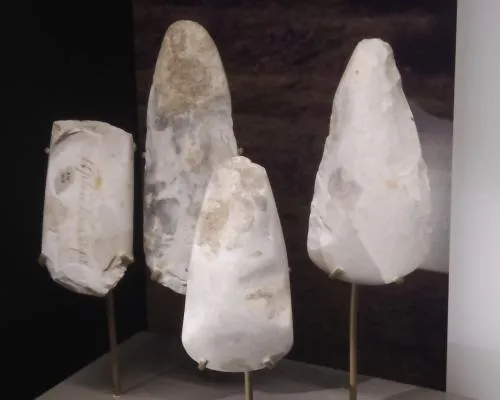
The grave provided insights into the individual's lifestyle and status. Alongside the skeleton were animal bones arranged around the neck, suggesting a ceremonial cloak, and a touchstone used to assess metal quality. The presence of gold traces on some stones hints at intricate craftsmanship.
Other items included a pouch decorated with boar tusks, fossil sponges hollowed into cups, flints, and metalworking tools. Dawson noted: 'The people she left behind wanted her to take her tool kit into the afterlife.' A battle axe made from greenstone from Cornwall was also found, adding to the mystery surrounding its purpose.
Genetic Insights and Broader Implications
The analysis of the Upton Lovell Shaman's remains using advanced genetic techniques has shed light on her ancestry and lifestyle. Pontus Skoglund, senior group leader at the ancient genomics laboratory at the Francis Crick Institute, emphasized: 'It feels really good to give this to archaeologists.' The team also examined two other bones, confirming the findings.
Professor Mary Beard of the exhibition steering group explained the significance of such genetic analyses. 'So often we have assigned the sex of an ancient skeleton partly on the basis of our own assumptions about sex and gender roles – if it is buried with a sword, it’s male, with a necklace, it’s female.' The Upton Lovell shaman's case highlights the need to rethink historical narratives based on modern interpretations.
What Comes Next?
The findings are part of an exhibition called 'We Go Way Back,' which opens at the Francis Crick Institute on 16 July. This event aims to showcase how genetic techniques are transforming our understanding of prehistoric times, offering new perspectives on ancient communities and their roles.
David Dawson concluded that the discovery is a testament to the power of scientific methods in uncovering truths about our past: 'It’s a fantastic revelation of the position of women in society.'
Source: The Guardian

Science Daily
113 posts
-
 New Insights Suggest Mars Once Had Extensive Subsurface Magma
New research reveals Mars once had extensive subsurface magma reservoirs, challenging previous assumptions and expanding the potential habitability of similar planets.
-
 Mars Had Extensive Magma Rivers Under Its Surface, Research Suggests
Mars once had extensive magma rivers beneath its surface, expanding our understanding of its potential habitability.
-
 Solving the Coin Flip Puzzle: A Strategy That Boosts Your Chances
A game show scenario improves participants' chances from 25% to 50% by sharing one simple strategy.
-
 Puzzle Solution Reveals Surprising Strategy
A game show presents a coin-flipping challenge with an unusual winning strategy that increases the chances of success from 25% to 50%. The puzzle highlights simple probability rules and strategic thinking.
-
 Mystery Mushroom in China Prompts Hallucinations of Tiny People
A rare bolete mushroom from China can induce hallucinations of tiny people lasting for days. Researchers are studying its unique properties.
-
 Gene Editing Debate Excludes Deaf Community
A letter from Tom Lichy of the British Deaf Association highlights the exclusion of deaf people from gene-editing debates, advocating for more inclusive policy making.
-
 David Armstrong: Shaping Organisational Psychology Through Systems Psychodynamics
David Armstrong, a psychologist who spent over six decades shaping systems psychodynamics, passed away at 91. His work emphasized workplace democracy as key to innovation and efficiency.
-
 David Armstrong: A Pioneering Psychologist Who Transformed Organisational Thinking
Pioneering psychologist David Armstrong spent six decades researching systems psychodynamics, developing a practical language for understanding unconscious dimensions of work.
-
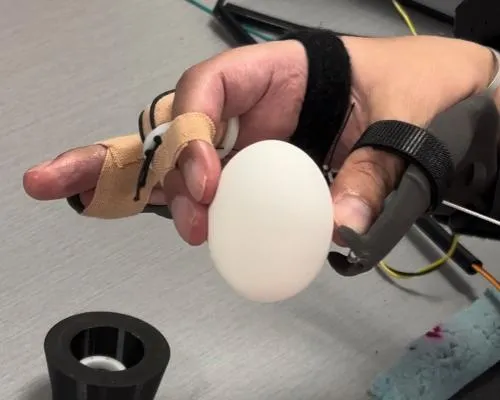 Innovative Brain Implant Restores Functionality in Paralyzed Man
A paralyzed man regains movement and touch sensation through a brain implant that bypasses his spinal cord injury, opening new possibilities for neurorehabilitation.
-
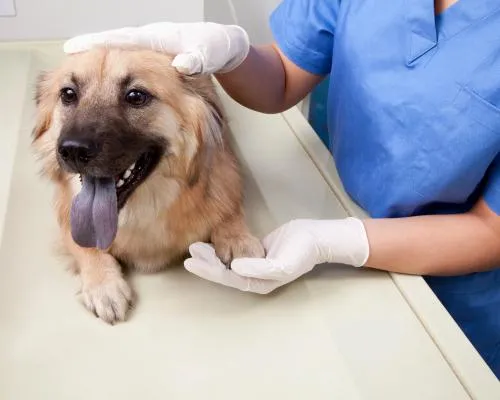 UK Vet Industry Reforms May Include Prescription Caps, Licensing
The UK government is considering reforms to the veterinary sector, including prescription caps and mandatory licensing, aiming to address rising costs for pet owners.
-
 First Confirmed Atmosphere Around Rocky Exoplanet in Habitable Zone Discovered
Scientists have confirmed an atmosphere around LHS 1140b, a rocky exoplanet in the habitable zone outside our solar system.


