- The public supports gene editing for life-threatening conditions but not for non-life-threatening ones like deafness.
- UK policy discussions on gene editing lack meaningful participation from the Deaf community.
- There is a risk that decisions regarding gene therapy will be made without involving Deaf signers.
Public Support and Gene Editing
A recent poll reported by The Guardian has shed light on a significant public divide regarding gene editing, with the findings indicating that while there is majority agreement for correcting life-threatening genetic conditions, such consensus does not extend to non-life-threatening issues like deafness. This divergence of opinion highlights the complex ethical and societal challenges associated with advancements in genetic technology.
The poll revealed that 72% of respondents supported gene editing to address severe genetic disorders. However, only 31% agreed with the use of such techniques for less critical conditions, including deafness, which is not considered life-threatening. The results underscore a growing awareness among the public about the need for careful consideration and regulation in the application of gene-editing technologies.

The approval by the US Food and Drug Administration (FDA) for gene therapy to treat deafness, as mentioned in a New England Journal of Medicine publication, has brought this issue into sharp focus. The FDA’s decision to act swiftly on this matter has raised concerns about the inclusivity and representation of different communities in policy discussions.
The Exclusion of Deaf Community
Tom Lichy, Head of Policy and Research at the British Deaf Association, argues that current gene-editing debates often exclude a significant portion of society. He points out that medical and scientific circles frequently fail to consider the needs and perspectives of the deaf community, which could lead to significant gaps in understanding and representation.
Lichy highlights that discussions surrounding gene therapy for deafness are rarely accessible in signed languages, making it difficult for Deaf signers to engage meaningfully with these important conversations. This lack of inclusivity poses a risk that decisions related to such therapies will be made without the informed participation of this community.
The familiar refrain “nothing about us without us” is highly relevant here, emphasizing the importance of ensuring that the Deaf community is involved in all aspects of policy making and decision-making processes. Lichy urges policymakers in the UK to work consistently with this principle to ensure that decisions related to gene therapy are inclusive and representative.
According to the poll results from The Guardian, public opinion is increasingly concerned about the lack of dialogue on gene-edited humans, as highlighted by your editorial. Your article offers a compelling argument for initiating a national conversation about what happens next in this rapidly evolving field.
The approval of specific gene therapy for deafness by the US FDA not only marks a significant step forward in medical innovation but also raises important questions about the inclusivity and transparency of such decisions. It is crucial that policymakers work collaboratively with communities like the Deaf to ensure that their voices are heard and considered.
In conclusion, the ongoing debate around gene editing highlights the need for comprehensive public dialogue and inclusive policy making. The involvement of all stakeholders, including those from marginalized communities, is essential in shaping policies that balance scientific advancement with ethical considerations and social inclusivity.
Source: The Guardian

Science Daily
113 posts
-
 New Insights Suggest Mars Once Had Extensive Subsurface Magma
New research reveals Mars once had extensive subsurface magma reservoirs, challenging previous assumptions and expanding the potential habitability of similar planets.
-
 Mars Had Extensive Magma Rivers Under Its Surface, Research Suggests
Mars once had extensive magma rivers beneath its surface, expanding our understanding of its potential habitability.
-
 Solving the Coin Flip Puzzle: A Strategy That Boosts Your Chances
A game show scenario improves participants' chances from 25% to 50% by sharing one simple strategy.
-
 Puzzle Solution Reveals Surprising Strategy
A game show presents a coin-flipping challenge with an unusual winning strategy that increases the chances of success from 25% to 50%. The puzzle highlights simple probability rules and strategic thinking.
-
 Mystery Mushroom in China Prompts Hallucinations of Tiny People
A rare bolete mushroom from China can induce hallucinations of tiny people lasting for days. Researchers are studying its unique properties.
-
 David Armstrong: Shaping Organisational Psychology Through Systems Psychodynamics
David Armstrong, a psychologist who spent over six decades shaping systems psychodynamics, passed away at 91. His work emphasized workplace democracy as key to innovation and efficiency.
-
 David Armstrong: A Pioneering Psychologist Who Transformed Organisational Thinking
Pioneering psychologist David Armstrong spent six decades researching systems psychodynamics, developing a practical language for understanding unconscious dimensions of work.
-
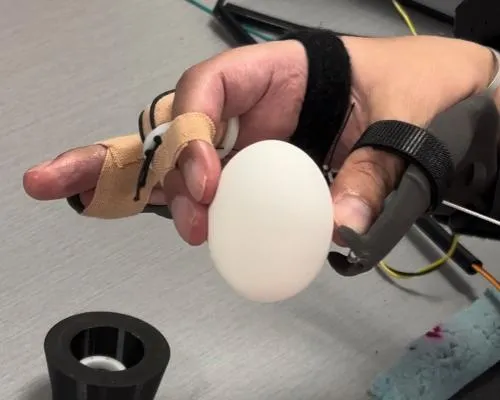 Innovative Brain Implant Restores Functionality in Paralyzed Man
A paralyzed man regains movement and touch sensation through a brain implant that bypasses his spinal cord injury, opening new possibilities for neurorehabilitation.
-
 UK Vet Industry Reforms May Include Prescription Caps, Licensing
The UK government is considering reforms to the veterinary sector, including prescription caps and mandatory licensing, aiming to address rising costs for pet owners.
-
 First Confirmed Atmosphere Around Rocky Exoplanet in Habitable Zone Discovered
Scientists have confirmed an atmosphere around LHS 1140b, a rocky exoplanet in the habitable zone outside our solar system.


