- Mars may have had extensive subsurface magma reservoirs.
- These findings expand the potential habitability of rocky planets beyond Earth-like features.
- The research challenges previous assumptions about Martian volcanoes and their underlying structures.
Key Findings from Mars Seismic Data
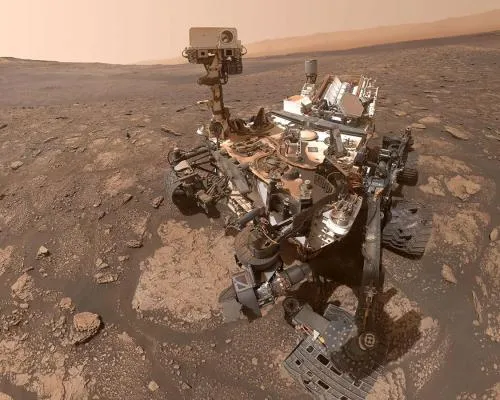
Mars once had rivers of magma bubbling beneath its crust, new research suggests. The surprise find makes it more probable that Mars could have supported life and widens the selection of rocky planets that may once have been habitable. Researchers at the University of Oxford studied data gathered by NASA’s Insight Lander, which recorded seismic waves caused by meteorite impacts and Martian quakes. They used the seismic data to analyze a mysterious boundary 15 miles (24km) below the surface of Mars.
Their findings, published in Nature Astronomy, showed that the most likely cause for this boundary was molten rock pooling deep underground and stretching sideways for hundreds or even thousands of miles. Scientists had previously assumed that the volcanoes on Mars were underlain by simple isolated magma chambers, but the new finding suggests a more complex interconnected plumbing system.
Such a system would have the potential to make a chemically complex crust, capable of recycling elements and supporting the kind of processes needed to generate an atmosphere and ocean on the surface. This would also help to regulate the climate – previously thought only to be possible on planets with plate tectonics.
And that means rocky planets previously dismissed as uninhabitable because of their lack of plate tectonics now deserve a second look.
Source: The Guardian

Science Daily
113 posts
-
 Mars Had Extensive Magma Rivers Under Its Surface, Research Suggests
Mars once had extensive magma rivers beneath its surface, expanding our understanding of its potential habitability.
-
 Solving the Coin Flip Puzzle: A Strategy That Boosts Your Chances
A game show scenario improves participants' chances from 25% to 50% by sharing one simple strategy.
-
 Puzzle Solution Reveals Surprising Strategy
A game show presents a coin-flipping challenge with an unusual winning strategy that increases the chances of success from 25% to 50%. The puzzle highlights simple probability rules and strategic thinking.
-
 Mystery Mushroom in China Prompts Hallucinations of Tiny People
A rare bolete mushroom from China can induce hallucinations of tiny people lasting for days. Researchers are studying its unique properties.
-
 Gene Editing Debate Excludes Deaf Community
A letter from Tom Lichy of the British Deaf Association highlights the exclusion of deaf people from gene-editing debates, advocating for more inclusive policy making.
-
 David Armstrong: Shaping Organisational Psychology Through Systems Psychodynamics
David Armstrong, a psychologist who spent over six decades shaping systems psychodynamics, passed away at 91. His work emphasized workplace democracy as key to innovation and efficiency.
-
 David Armstrong: A Pioneering Psychologist Who Transformed Organisational Thinking
Pioneering psychologist David Armstrong spent six decades researching systems psychodynamics, developing a practical language for understanding unconscious dimensions of work.
-
 Innovative Brain Implant Restores Functionality in Paralyzed Man
A paralyzed man regains movement and touch sensation through a brain implant that bypasses his spinal cord injury, opening new possibilities for neurorehabilitation.
-
 UK Vet Industry Reforms May Include Prescription Caps, Licensing
The UK government is considering reforms to the veterinary sector, including prescription caps and mandatory licensing, aiming to address rising costs for pet owners.
-
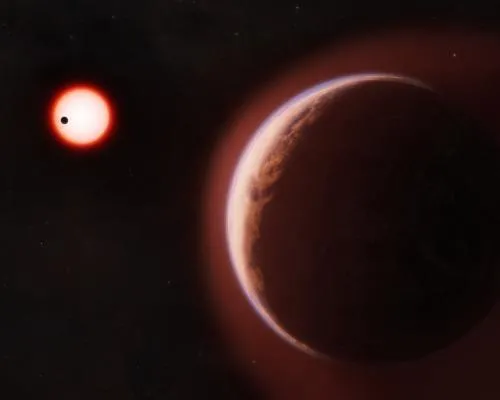 First Confirmed Atmosphere Around Rocky Exoplanet in Habitable Zone Discovered
Scientists have confirmed an atmosphere around LHS 1140b, a rocky exoplanet in the habitable zone outside our solar system.


