A Clever Strategy Unlocks Over 25% Chance of Winning in a Coin-Flipping Game Show

- Participants can use a specific strategy to increase their chances of winning the game show.
- The probability of both guessing correctly is normally 25%, but with this strategy, it increases significantly.
- This puzzle challenges viewers' understanding of probability and encourages strategic thinking.
- Henk Tijms, an expert in operations research, provided the original problem.
The Game Show Dilemma
Imagine yourself on a TV game show where two participants are selected to compete. Each contestant is placed in a separate booth and flips a fair coin out of sight from their opponent but visible to the audience. Afterward, each must guess what the other person flipped – heads or tails. The challenge: if both guesses are correct, they win a prize.
At first glance, it might seem that the probability of both guessing correctly is 25%. However, this perception changes when you and your friend are called to play. With a strategic approach, you can increase your chances of winning beyond these odds. The question is: what strategy should be used?
Strategic Thinking Unlocks Higher Chances

The key to this game lies in communication before the coin flips. You and your friend whisper a strategy to each other that significantly increases your probability of success. Here’s how it works:
- You decide that one person will always guess 'heads', while the other will guess the opposite of their own flip.
For example, if you choose to be the one guessing 'heads', and your friend flips heads, you correctly guess heads. However, if your friend flips tails, you would still guess heads since you are instructed to always choose the opposite of your own coin flip. Your friend follows a similar logic but with the opposite strategy.
This approach ensures that at least one person will always guess correctly – either both guessing 'heads' or one guessing their own flip and the other guessing the opposite. Thus, the probability of winning becomes greater than 25% under this strategy.
Expert Insights
The puzzle was proposed by Henk Tijms, an Emeritus Professor of Operations Research at VU Amsterdam and a renowned author on probability. He has been setting puzzles for The Guardian since 2015, offering enthusiasts the chance to engage with mathematical challenges.
Conclusion
This game show puzzle not only tests your understanding of basic probability but also highlights the power of strategic thinking and communication in decision-making scenarios. It serves as a reminder that sometimes, simple strategies can unlock better outcomes than expected probabilities suggest.
Source: The Guardian
Science Daily
113 posts
-
 New Insights Suggest Mars Once Had Extensive Subsurface Magma
New research reveals Mars once had extensive subsurface magma reservoirs, challenging previous assumptions and expanding the potential habitability of similar planets.
-
 Mars Had Extensive Magma Rivers Under Its Surface, Research Suggests
Mars once had extensive magma rivers beneath its surface, expanding our understanding of its potential habitability.
-
 Solving the Coin Flip Puzzle: A Strategy That Boosts Your Chances
A game show scenario improves participants' chances from 25% to 50% by sharing one simple strategy.
-
 Puzzle Solution Reveals Surprising Strategy
A game show presents a coin-flipping challenge with an unusual winning strategy that increases the chances of success from 25% to 50%. The puzzle highlights simple probability rules and strategic thinking.
-
 Mystery Mushroom in China Prompts Hallucinations of Tiny People
A rare bolete mushroom from China can induce hallucinations of tiny people lasting for days. Researchers are studying its unique properties.
-
 Gene Editing Debate Excludes Deaf Community
A letter from Tom Lichy of the British Deaf Association highlights the exclusion of deaf people from gene-editing debates, advocating for more inclusive policy making.
-
 David Armstrong: Shaping Organisational Psychology Through Systems Psychodynamics
David Armstrong, a psychologist who spent over six decades shaping systems psychodynamics, passed away at 91. His work emphasized workplace democracy as key to innovation and efficiency.
-
 David Armstrong: A Pioneering Psychologist Who Transformed Organisational Thinking
Pioneering psychologist David Armstrong spent six decades researching systems psychodynamics, developing a practical language for understanding unconscious dimensions of work.
-
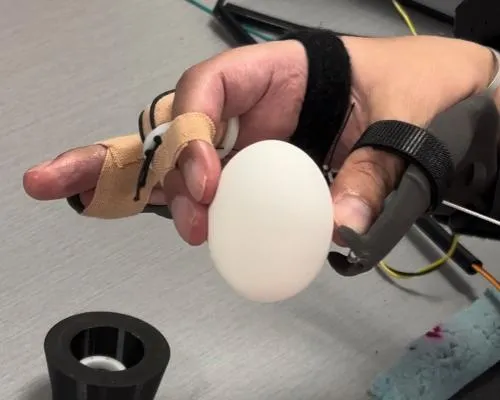 Innovative Brain Implant Restores Functionality in Paralyzed Man
A paralyzed man regains movement and touch sensation through a brain implant that bypasses his spinal cord injury, opening new possibilities for neurorehabilitation.
-
 UK Vet Industry Reforms May Include Prescription Caps, Licensing
The UK government is considering reforms to the veterinary sector, including prescription caps and mandatory licensing, aiming to address rising costs for pet owners.
-
 First Confirmed Atmosphere Around Rocky Exoplanet in Habitable Zone Discovered
Scientists have confirmed an atmosphere around LHS 1140b, a rocky exoplanet in the habitable zone outside our solar system.


