- Fire Point manufactures 100 long-range Flamingo cruise missiles per month.
- FP-1 and FP-2 drones produced in large numbers support Ukraine’s deep strike capabilities.
- The startup has grown significantly, employing over 6,000 people across multiple factories.
- Development of new ballistic missiles and air defence systems marks an evolution in the war.
Mass Production of Long-Range Missiles
The Ukrainian company Fire Point is currently manufacturing approximately 100 long-range Flamingo cruise missiles each month, according to chief executive Iryna Terekh. These missiles are capable of hitting targets hundreds of miles inside Russia and have been a key component in Ukraine's deep-strike strategy. The Flamingo missile can carry 1,150kg of explosive, enough to penetrate concrete walls, making it an effective weapon against hardened military targets. In June, for instance, the Flamingo missiles were used to attack a Russian military components factory at Cheboksary, more than 600 miles from Kharkiv, in Ukraine's northeast. Their actual flight distance, Terekh said, was among 'the longest recorded in the history of cruise missile missions,' due to the complexity of the flight path.
Drone Production at Scale
In addition to the long-range missiles, Fire Point is producing FP-1 and FP-2 fixed-wing drones. Terekh mentioned that thousands of these fixed-wing drones are being manufactured daily, making them a vital part of Ukraine's military operations. The FP-1 drones in particular are used to attack less well-defended Russian oil refineries in a campaign that has cut their production by 20%. This has led to long queues at petrol pumps across Russia. These drones cost between $55,000 and $75,000 each.

Growth and Impact
Fire Point has seen significant growth over the past few years. The startup now operates from 83 factories within Ukraine and another in Denmark, employing more than 6,000 people. This expansion demonstrates the rapid maturing of Ukraine's homegrown defence industry.
Development of New Systems
In its ongoing development efforts, Fire Point is working on Ukraine's first ballistic missiles. Terekh hopes these will be launched by the end of the year and forms part of an international initiative aimed at creating a new air defence system to complement existing Patriot systems.
Significance of the War Effort
The Ukrainian war effort has spurred rapid modernization within the country. Iryna Terekh, who joined Fire Point in 2023 when it had just 18 employees, emphasized that Ukraine must now focus on exporting high-value products.
‘Ukraine, in a postwar economy, will need to be an exporter of things with a high additional added value. We do not want to be like a breadbasket any more for the world,’ Terekh stated. For now, however, the demands of the war mean that Fire Point’s weapons are primarily intended for domestic use.
Fire Point is largely owned by its founder, businessman Denys Shtilerman. Though Shtilerman held talks about selling a stake to Timur Mindich, a friend and former business associate of the president, Volodymr Zelenskyy, accused last year of running an energy corruption scheme, the founder says no deal went through.
What we’re seeing now is the result of several years of effort by the Ukrainian side,” said Ben Hodges, a former general who commanded the US army in Europe. 'They can not only reach deep inside Russia with precision and get past Russian air defences, their weapons also carry a payload big enough to achieve effect.' The result is an evolution in the long-running war, where Ukraine is closing in on Russia’s ability to conduct deadly long-range attacks.
Each month Russia produces up to 70 air-launched Kh-101 cruise missiles, 25 sea-launched Kalibrs, according to Ukrainian estimates, plus a further 60 Iskander M ballistic missiles. Fire Point is also developing Ukraine’s first ballistic missiles, which Terekh hopes will be first launched by the end of the year. A variant of the short-range FP-7, meanwhile, will form the basis of the separate Freyja initiative, an international effort aimed at creating an alternative air defence system to the US Patriot, involving Ukraine and nine other European countries.
Fire Point will make the launchers and interceptors, with a target cost of $1m per interceptor. “We adore Patriot,” Terekh said, but added that global manufacturing is nowhere near the current level of demand. Only Patriot systems are able to stop Russian ballistic missiles hitting Kyiv and elsewhere, but Ukraine’s stocks are out. “The whole Pac-3 missile production, the worldwide production rate is around 600-700 missiles per year; and this is exactly the amount of Patriot missiles that were consumed in the Middle East in two weeks,” she added. It is now hoped the technology can be first tested by July next year.
Fire Point is largely owned by its founder, businessman Denys Shtilerman. Though Shtilerman held talks about selling a stake to Timur Mindich, a friend and former business associate of the president, Volodymr Zelenskyy, accused last year of running an energy corruption scheme, the founder says no deal went through.
Source: The Guardian

Guardian News World
589 posts
-
 India’s Cockroach Protests Spark Youth Rebellion Against Modi Regime
Thousand-strong protests in Delhi against India's Education Minister Dharmendra Pradhan mark a significant moment of public defiance against the ruling BJP government.
-
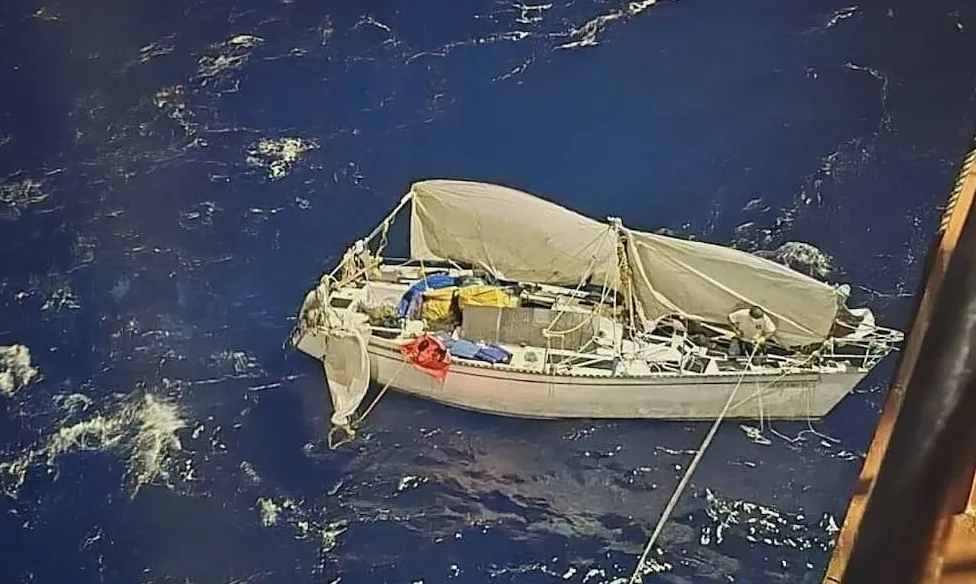 Sinh tồn kỳ diệu của Kai Sato sau 28 ngày trôi dạt trên Thái Bình Dương
Kai Sato, 39 tuổi, mất tích trên Thái Bình Dương hơn một tháng và được cứu sống sau 28 ngày trôi dạt. Trải qua nhiều khó khăn, anh đã xốc lại tinh thần để duy trì sự sống.
-
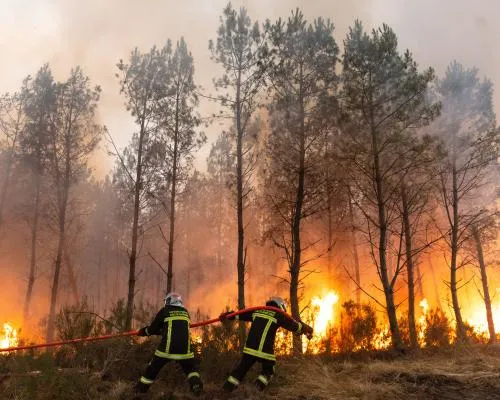 Europe Faces Intense Wildfire Crisis: Spain and France Battle Major Blazes
Europe grapples with intense wildfires in Spain and France, exacerbated by extreme weather conditions. Emergency measures are being implemented amid concerns about future threats.
-
 Water Supply Restoration at Gatwick Airport After Hours of Disruption
Gatwick Airport’s water supply issues led to closed toilets and food outlets, causing inconvenience to passengers during a critical travel period.
-
 Families of RAF Chinook Crash Victims Call for Prime Minister's Review
Families of RAF Chinook crash victims in 1994 are calling on the new Prime Minister to initiate an independent review amid concerns over potential cover-ups and misinformation.
-
 Taylor Farms' Request for White House Delay Raises Questions During Cyclospora Outbreak
Taylor Farms sought White House intervention during its recall of potentially contaminated iceberg lettuce, raising questions about standard operating procedures in managing food safety outbreaks.
-
 Pentagon Updates Casualty Database Amid Iran Conflict
The Pentagon updated its casualty database, adding over 140 wounded service members, sparking disputes over how casualties are counted.
-
 ICE Officer's Background Raises Questions Amid Maine Shooting
Tom Homan, former ‘border czar,’ questions the vetting of an ICE officer involved in a fatal shooting in Maine, raising concerns about the agency's hiring practices.
-
 Iran tuyên bố ngừng tập kích, Mỹ hé lộ lý do dừng không kích
Iran tuyên bố ngừng tập kích trả đũa, trong khi Mỹ quyết định tạm dừng không kích để thúc đẩy ngoại giao. Tác động cụ thể đến khu vực Trung Đông và xung đột giữa Iran và Mỹ.
-
 Prediction Markets Gaining Traction in the UK Amid US Boom
UK residents are exploring prediction markets like Polymarket, driven by events such as the World Cup and local political elections, despite regulatory challenges.


