Study Reveals Link Between Early Social Media Use and Lower School Performance

- Children who open social media accounts at the start of secondary school tend to score lower in mathematics and reading tests compared to those who delay.
- The performance gap is equivalent to about six months of learning, with the effect more pronounced in math than in Italian.
- Researchers suggest that constant checking of updates on smartphones may be a significant distraction for students.
- Experts recommend focusing on making social media less addictive rather than implementing age bans.
Key Findings from the Study
A new study, published in Nature Human Behaviour, reveals that children who open social media accounts at the start of secondary school tend to perform worse in mathematics and reading tests compared to their peers who delay opening such accounts. The research found that these students scored lower by the equivalent of approximately six months of schooling at age 16.
The study does not conclusively prove causation, but Dr. Marco Gui, the first author of the study from the University of Milano-Bicocca in Italy, suggests that social media platforms may be problematic during pre-adolescence. He explains that one potential mechanism could involve the constant state of alertness social media creates on young users.
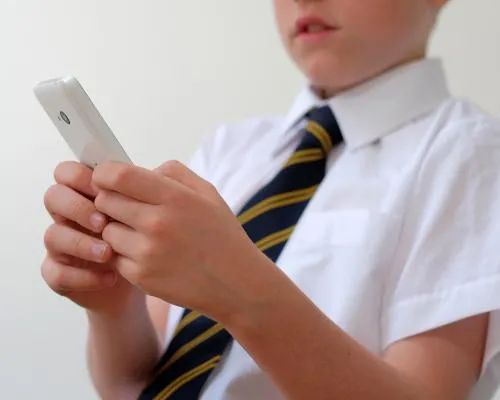
Gui notes, 'One of the mechanisms is the continuous state of alert that social media used on a smartphone exerts on minors’ lives. The continuous need to check messages can mean being less present in physical spaces and less engaged in tasks like homework.'
The performance gap was more pronounced in mathematics than in Italian, which the students were learning as a foreign language. According to Gui, this difference might be due to greater exposure to English on social media platforms.
Policy Implications
The findings come at a time when policymakers are considering measures such as age limits or bans. In the UK, there is a push to introduce a ban on social media use for under-16s, following similar actions in Australia last year. Dr. Gui suggests that while an age limit might be necessary, efforts should also focus on making these platforms less addictive and more user-friendly.
Dr. Dennis Ougrin, a professor of child and adolescent psychiatry at Queen Mary University of London, agrees with the need for healthy habits when interacting with social media. He advises, 'The message for parents, educators, and policymakers is not necessarily to ban social media but to support young people in developing healthy habits.'
The study comes as part of a broader trend of research highlighting the potential negative impacts of early social media use on academic performance. The work by Gui and his colleagues analysed surveys on the social media habits of more than 5,000 Italian schoolchildren and their results in standardised maths, Italian and English exams.
When tested at age 13 to 14, those who had opened their first social media account at 11 or 12 scored worse than those who waited until at least 14 years old. The score gap at age 15 to 16 remained the same for Italian and widened for maths. Writing in Nature Human Behaviour, the researchers say the difference in scores is roughly equivalent to the early adopters falling behind by six months of schooling.
One of the best predictors of the performance gap was how often children picked up their phones throughout the day and night, suggesting that constantly checking social media was at least partly to blame. Gui favours an age limit on social media but believes a ban is an 'emergency policy' and that work should focus on making platforms less addictive and more user-friendly.
The researcher stresses the need for ongoing efforts in educating young people about healthy habits when using these platforms, emphasizing that while an age limit might be necessary, it alone may not solve the underlying issues.
Source: The Guardian
Science Daily
145 posts
-
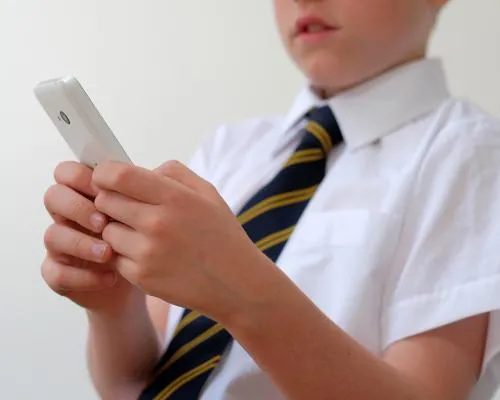 Estudio Revela Relación entre el Uso Temprano de las Redes Sociales y Peor Rendimiento Académico
Un estudio descubre que los niños que comienzan a usar las redes sociales tempranamente tienden a obtener peores calificaciones académicas, sugiriendo una conexión entre el uso constante del teléfono móvil y el desarrollo educativo.
-
 UK Science Funding Cuts Spark Keputusan
 -
 Cortes en Fondos Científicos del Reino Unido Provocan Miedo por Su Posición Global
 -
 Krisis Dana Penelitian di Inggris Memicu Ketidakpuasan Luas
Surat dari pembaca dan ahli kritik keputusan untuk mengurangi dana penelitian di Inggris, menekankan kerusakan jangka panjang potensial pada penelitian dan inovasi.
-
 UK Science Funding Cuts Spark Concerns About Global Standing
Critics argue that recent funding cuts in UK science could harm global standing and stunt research advancements.
-
 Crisis de Financiamento Científico no Reino Unido Gera Consequências Largas
Cartas de leitores e especialistas criticam a decisão de cortar os fundos para pesquisa científica no Reino Unido, enfatizando os danos potenciais a longo prazo na inovação.
-
 British Science Funding Crisis Sparks Wide-Spread Concern
Letters from readers and experts critique the decision to cut science funding in Britain, emphasizing the potential long-term damage on research and innovation.
-
 Expertos advierten sobre impacto catastrófico de los data centers espaciales
Las tecnológicas SpaceX y Blue Origin proponen millones de data centers en el espacio, pero expertos advierten sobre posibles consecuencias catastróficas que incluyen contaminación y daño al capa de ozono.
-
 Expertos alertam sobre impacto catastrófico de data centers espaciais
Gigantes da tecnologia propõem milhões de data centers no espaço, mas especialistas advertem para possíveis efeitos catastróficos, como poluição e danos ao camada de ozônio.
-
 Experts Warn of Catastrophic Impact of Space Datacenters
Tech giants propose millions of space data centers, but experts warn of potential catastrophic impacts including pollution and ozone layer damage.


