- The problem involves filling a 3×3 grid with numbers such that each row and column multiplies to 30.
- There are 216 unique ways to fill the grid according to the puzzle’s conditions.
- Prime factor analysis (of 2, 3, and 5) is key in solving the problem.
Introduction
Recently, Alex Bellos from The Guardian presented a mathematical challenge that intrigued many. The question involved filling a 3×3 grid with positive whole numbers such that the product of the numbers in each row and column equaled 30. This seemingly simple task unveiled a complex puzzle involving prime factors.
The Prime Factor Solution
Alex Chui, a mathematics prodigy from Tonbridge School in Kent, provided insight into solving this problem. He highlighted that the number 30 can be broken down into its prime factors: 2 x 3 x 5. This means every row and column must include at least one of each of these numbers.

According to Chui, there are six distinct ways to place a single '2' in the grid such that it is not repeated in any row or column. Similarly, there are also six unique placements for the number 3, and an equal number of arrangements for the number 5. Since each full configuration of these numbers is independent of the others, the total possible configurations multiply to 6 x 6 x 6.
Through this method, Chui deduced that there are a total of 216 unique ways to fill the grid while satisfying the given conditions. Each number in the cell could be combined through multiplication if needed, and empty cells would default to '1' due to their non-participation in the product.
Example Grid
To illustrate this solution, one possible configuration might look like this:
- (2, 3, 5)
- (5, 6, 1)
- (10, 1, 3)
Each of the above configurations can be shifted and re-arranged in various ways to fill the grid, leading to a total of 216 unique solutions.
Conclusion
The puzzle not only showcased the elegance of mathematical problem-solving but also highlighted the importance of prime factor analysis. As Alex Bellos mentioned, he has been setting such puzzles since 2015 and remains open to suggestions for future challenges. This intriguing problem serves as a reminder that complex solutions often emerge from simple principles.
Source: The Guardian

Science Daily
146 posts
-
 Study Reveals Link Between Early Social Media Use and Lower School Performance
A study finds that children who start using social media early tend to perform worse academically, suggesting a link between constant smartphone use and educational development.
-
 UK Science Funding Cuts Spark Concerns About Global Standing
Critics argue that recent funding cuts in UK science could harm global standing and stunt research advancements.
-
 British Science Funding Crisis Sparks Wide-Spread Concern
Letters from readers and experts critique the decision to cut science funding in Britain, emphasizing the potential long-term damage on research and innovation.
-
 Experts Warn of Catastrophic Impact of Space Datacenters
Tech giants propose millions of space data centers, but experts warn of potential catastrophic impacts including pollution and ozone layer damage.
-
 GLP-1 Medications: Exploring the Known and Controversial Side-Effects
GLP-1 medications have gained popularity in weight management but come with known and debated side-effects like digestive issues, eye conditions, pregnancy risks, facial changes, hair thinning, and foot pain.
-
 Cyclosporiasis Outbreak: Is It Slowing Down?
A popular test-maker reports a decline in cyclosporiasis positivity rates, raising hopes that the U.S. outbreak might be slowing.
-
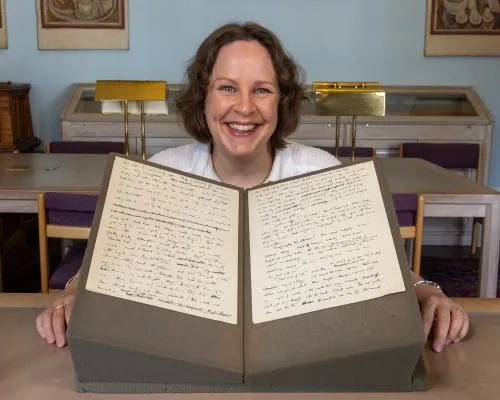 Alan Turing's Racy Short Story Reveals His Playful Side
A Cambridge academic has uncovered insights from an unpublished short story by Alan Turing, challenging the traditional view of him as an isolated mathematician and highlighting his playful, literary, and social sides.
-
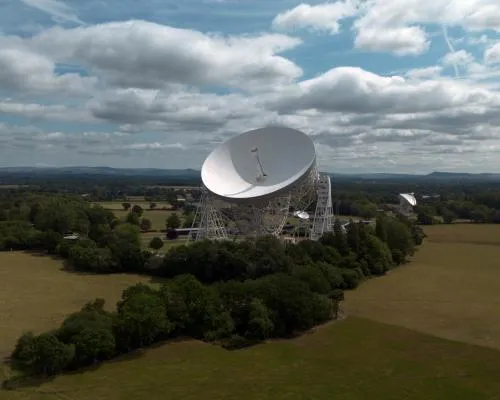 Public Urges Preservation of Jodrell Bank Observatory Amid Funding Cuts
Citizens urge government to reconsider funding cuts that could lead to the closure of the historic Jodrell Bank Observatory.
-
 Ancient Collision Caused Milky Way to Flip 10 Billion Years Ago
Astronomers have found evidence that a dwarf galaxy named Gaia Sausage struck the Milky Way 10 billion years ago, causing its disc to be flipped by more than 90 degrees. This significant event reshaped the Milky Way's structure and is crucial for understanding our galaxy’s history.
-
 The Precision of Fossil Dating: A Matter of Accuracy
Letters to The Guardian discuss fossil dating precision, an amusing museum tale, using soap for hair washing, George Harrison's 'Taxman,' and rating Marmite.


