- Chinese memory chipmaker CXMT's debut and advancements in deep-ultraviolet lithography tools raise concerns among western investors.
- Analysts argue that while the developments are significant, they may not pose an immediate threat to key players like Nvidia.
- The global memory chip shortage is expected to continue for years, providing opportunities for domestic production in China.
- Investor anxiety reflects a broader concern about the dominance of Nvidia and the opaque nature of AI market dynamics.
Market Reaction to New Developments
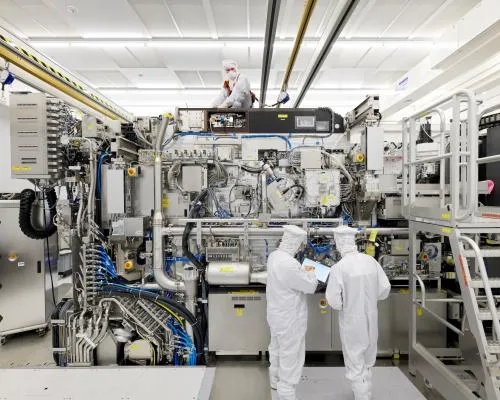
The past week saw unprecedented volatility in the global stock markets, particularly affecting companies involved in artificial intelligence (AI). On Monday, CXMT, a Chinese memory chipmaker, launched its shares on the Shanghai stock exchange, soaring by an impressive 466% to 3.3tn yuan (£365bn). This was coupled with reports that China had developed tools for deep-ultraviolet lithography, traditionally dominated by ASML.
Impact on Key Players
The news sent shockwaves through the AI sector, especially among chipmakers like Nvidia and Samsung Electronics. South Korea's main stock index, the Kospi, experienced a dramatic fall of 11.5% on Tuesday and a further 6% on Wednesday, with major companies SK Hynix and Samsung Electronics being heavily impacted. In the United States, the Nasdaq entered correction territory after losing over 10% from its peak value.
Analysts’ Perspectives
Despite the upheaval, analysts are largely optimistic about the long-term implications of these events. Alvin Nguyen, an analyst at Forrester, noted that while CXMT’s Dram chips could potentially compete with SK Hynix and Micron, the global shortage is expected to continue until 2030 due to ongoing high demand. The development in deep-ultraviolet lithography tools might be a more serious concern for companies like Nvidia. However, Mark Boost from Civo highlighted that while these tools are crucial, it would take years to produce them at the necessary scale and reliability, maintaining ASML's current dominance.
Long-Term Implications
The events of last week underscore the opaque nature of the AI economy, heavily reliant on Nvidia. Chris Beauchamp from IG observed that Chinese chip companies are likely to follow a similar trajectory as they did in other industries, potentially outcompeting their western counterparts on price.
Investor anxiety stems from fears that Nvidia’s dominance may not be sustainable in the long run. Analysts predict that while Nvidia will still hold significant value, it might eventually lose its position of being one of the most valuable companies in the world.
Source: The Guardian

Technology News Feed
177 posts
-
 EU Rules Mandate Labeling of Artificially Generated Content
EU rules mandate labeling of artificial content to protect democracy and public trust, imposing strict compliance starting August 2nd.
-
 Atlassian Introduces AI Wallets Amid Tech Sector Cost Controversy
Atlassian has introduced monthly spending limits for its staff’s use of artificial intelligence tools, while other tech firms encourage unlimited usage. A survey shows concerns over high AI costs leading to reduced deployments.
-
 A Tech-Free Renaissance: How Digital Detox Initiatives Are Reshaping Everyday Life
Tech-free events are becoming increasingly popular as individuals seek to break away from constant screen time.
-
 Australian Booksellers Express Concerns Over Rare Titles Destruction for AI Training
Australian secondhand book sellers express worry over rare titles being destroyed for AI training by companies like Zoom Books, leading to unusual orders and ethical concerns.
-
 China's Technological Advances Stir Market Concerns and Policy Debate
China’s rapid advancements in AI, chip manufacturing, and robotics are causing significant disruptions in the US tech industry and prompting internal divisions over how to respond.
-
 UK Authorities Seize Evidence in Crackdown on Spam Text Messages
The UK's Information Commissioner's Office (ICO) has seized evidence from five companies in multiple cities as part of a crackdown on spam text messages related to car finance mis-selling scandals. Over 12 million complaints have been filed since September 2025.
-
 Tech Giants Apple and Amazon Post Solid Q2 Earnings, Amid AI Spending Concerns
Apple and Amazon reported strong second quarter earnings, with both companies exceeding Wall Street expectations. The tech industry faces growing concerns over AI spending, affecting investor sentiment and market performance.
-
 Cyber-Attack Steals Sensitive Data from UK Government and Police Databases
Over 740,000 pieces of sensitive information were stolen from government and police databases in a cyber-attack by an unknown hacking group called ExfilSquad.
-
 Meta's Earnings Disappointment Amid AI Optimism Campaign
Meta's AI optimism campaign by CEO Mark Zuckerberg failed to mitigate the negative reaction from investors following weaker-than-expected earnings and a significant stock drop.
-
 German Study Links Excessive Online Activity to Stress and Negative Mood
A German study links excessive online activity to increased stress and negative mood, emphasizing the role of temptation in internet usage.


