- Scientists warn that high-priced auctions are harming research.
- The sale of rare fossils as commodities raises ethical concerns among experts.
- Museums and universities may be priced out of acquiring such valuable fossils.
What Happened
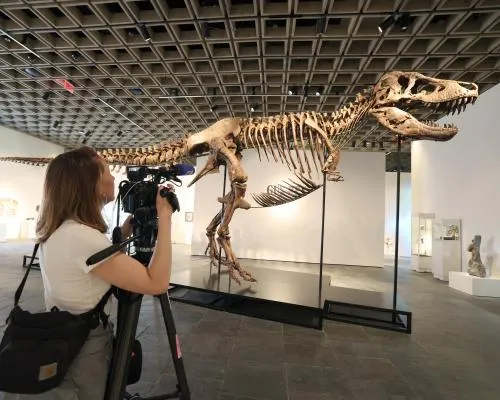
A multimillion-dollar auction is set to take place in New York, with a T-Rex skeleton expected to fetch between $20 million and $30 million. The fossil was discovered on a ranch in South Dakota by Theropoda Expeditions.
Background to the Story
The current T-Rex is particularly significant due to its size and completeness. With its dagger-like teeth and bone-crushing bite, it would have been a fearsome predator in western North America during the late Cretaceous period, approximately 67 million years ago. The auction by Sotheby’s on Tuesday could potentially fetch an even higher price; for instance, a stegosaurus called Apex previously sold at Sotheby’s for $44.6 million – 11 times its listing price in 2024.
Paleontological Concerns
The sale of such a fossil to a private collector raises concerns among paleontologists and scientists. Prof Richard Butler from the University of Birmingham emphasized that fossils not housed in recognized museums cannot be studied, thus depleting research opportunities. Similarly, Stephen Brusatte from the University of Edinburgh expressed worry about wealthy individuals buying fossils purely as status symbols or commodities. In countries like Brazil or Mongolia, all fossils belong to the state, so such sales would not be legal.
Historical Context
The first T-Rex sold at auction was a 4-meter-tall specimen found in South Dakota that was bought for an unspecified amount by the Field Museum in Chicago. Since then, fossil collecting has increasingly become a pastime of the wealthy, including celebrities such as Leonardo DiCaprio.
Commercial vs. Scientific Perspective
Experts from Sotheby’s argue that private outfits like Theropoda Expeditions are crucial for uncovering fossils that might otherwise remain buried. Cole Jacobs, a field prospector for the company, noted in a promotional video how he first saw a metatarsal poking out of the ground during the excavation process over three years.
Future Prospects
The cheery name of the T-Rex is a nod to Gary “Gus” Licking, who died before the excavation was finished. However, while Gus represents a significant discovery, experts are concerned that such commercial sales could limit access to scientific study and hinder research progress.
Expert Reactions
Michael Benton, a professor of vertebrate palaeontology at the University of Bristol, voiced concerns about museums being priced out of auctions. Dr Thomas Carr from Carthage College in Wisconsin emphasized that private collections do not guarantee the long-term availability and conservation of fossils. He suggested that public trusts are better suited to maintaining and curating such important scientific data.
Concluding Paragraph
While experts acknowledge the potential benefits of commercial fossil hunting, they urge that fossils should be available for indefinite study in public trust institutions where research can be repeated and verified. Professor Stephen Brusatte concluded by expressing hope that Gus would eventually be donated to a museum where it could contribute to scientific knowledge rather than being hoarded as a private collection. This case highlights the ongoing debate between commercial interests and the scientific community regarding the stewardship of our planet's ancient history.
Source: The Guardian

Science Daily
113 posts
-
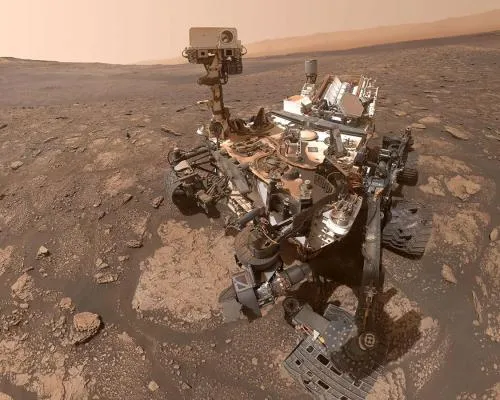 New Insights Suggest Mars Once Had Extensive Subsurface Magma
New research reveals Mars once had extensive subsurface magma reservoirs, challenging previous assumptions and expanding the potential habitability of similar planets.
-
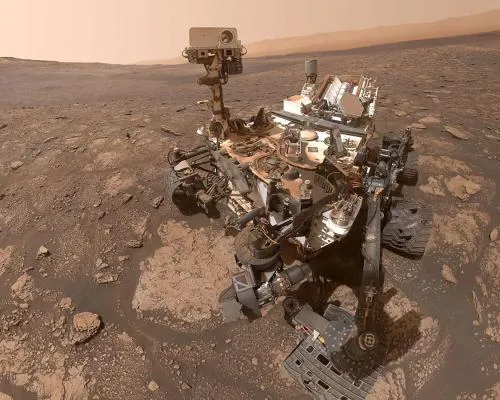 Mars Had Extensive Magma Rivers Under Its Surface, Research Suggests
Mars once had extensive magma rivers beneath its surface, expanding our understanding of its potential habitability.
-
 Solving the Coin Flip Puzzle: A Strategy That Boosts Your Chances
A game show scenario improves participants' chances from 25% to 50% by sharing one simple strategy.
-
 Puzzle Solution Reveals Surprising Strategy
A game show presents a coin-flipping challenge with an unusual winning strategy that increases the chances of success from 25% to 50%. The puzzle highlights simple probability rules and strategic thinking.
-
 Mystery Mushroom in China Prompts Hallucinations of Tiny People
A rare bolete mushroom from China can induce hallucinations of tiny people lasting for days. Researchers are studying its unique properties.
-
 Gene Editing Debate Excludes Deaf Community
A letter from Tom Lichy of the British Deaf Association highlights the exclusion of deaf people from gene-editing debates, advocating for more inclusive policy making.
-
 David Armstrong: Shaping Organisational Psychology Through Systems Psychodynamics
David Armstrong, a psychologist who spent over six decades shaping systems psychodynamics, passed away at 91. His work emphasized workplace democracy as key to innovation and efficiency.
-
 David Armstrong: A Pioneering Psychologist Who Transformed Organisational Thinking
Pioneering psychologist David Armstrong spent six decades researching systems psychodynamics, developing a practical language for understanding unconscious dimensions of work.
-
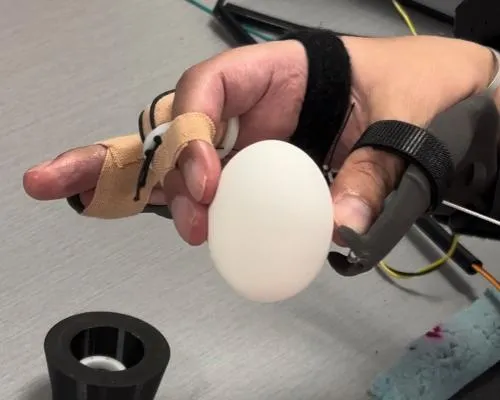 Innovative Brain Implant Restores Functionality in Paralyzed Man
A paralyzed man regains movement and touch sensation through a brain implant that bypasses his spinal cord injury, opening new possibilities for neurorehabilitation.
-
 UK Vet Industry Reforms May Include Prescription Caps, Licensing
The UK government is considering reforms to the veterinary sector, including prescription caps and mandatory licensing, aiming to address rising costs for pet owners.
-
 First Confirmed Atmosphere Around Rocky Exoplanet in Habitable Zone Discovered
Scientists have confirmed an atmosphere around LHS 1140b, a rocky exoplanet in the habitable zone outside our solar system.


