- A bill to phase out Central Park’s horse-drawn carriage trade by June 2028 has gained traction following a tragic tourist death.
- Supporters of the ban include animal rights activists and some politicians, while industry defenders argue for the tradition's historical value and benefits to workers.
- Opposition highlights potential alternatives for horses and concerns over job security for drivers.
Debate Heats Up in Central Park
New York City’s council chamber was packed last week as a heated debate raged over the future of Central Park’s iconic horse-drawn carriage trade. The issue, which has simmered for years, recently gained renewed momentum following the death of an 18-year-old tourist who fell from a carriage.
The bill, now renamed “Romanch’s law,” aims to phase out the trade by June 2028 and is set for a vote in August. Industry Defenders vs. Animal Rights Advocates
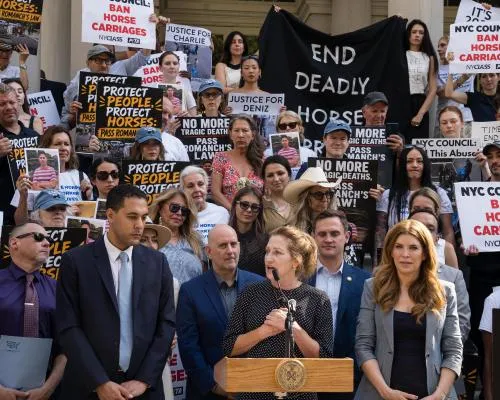
The industry's supporters include stable hands and drivers who attend to 160 horses that draw 68 carriages in the park, a business that has been operating since Central Park was created in 1858. On the other side, a vigorous gathering of animal rights advocates voiced that the carriage horse industry was a representation of man's broad subjugation of animals.
At issue: a bill before the council that would see Central Park’s famous carriage horse trade phased out by June 2028. The issue has been simmering for years, but the support for a ban has gained traction since an 18-year-old tourist was fatally injured last month when he fell from a carriage after its horse spooked and bolted while the driver was taking a photo of his family.
Last week, the council heard from members of the deceased’s family. Deepak, Romanch's father, speaking from India via Zoom, said he could not “properly describe to you the real true fear inside that carriage. It was shaking. It was speeding. There was no one holding the reins, and we could do nothing but hold on to each other and scream.” The bill has since been renamed “Romanch’s law” and comes up for a vote in August.
Advocates for the industry sense the ground is shifting against them, particularly since the council speaker, Julie Menin, voiced her support for a ban. Animals rights activists have marshaled the support of Oscar-winning actor Liam Neeson, who argued that horses are happiest when working. But in this go-around, they have also secured the support of Sopranos actress Edie Falco. She told the assembly she was “here for the horses” and emphasized their right to a dignified life.
The debate has touched on the welfare of carriage horses, with concerns about accidents involving toxic plant matter. In a hearing last year, Christopher Marte, the bill's sponsor, said that if a human or another animal like a cat or a dog was forced to pull a carriage, “we would call it inhumane.” The debate has also highlighted complex issues of tradition, animal welfare, and economic impact in the heart of New York City’s most beloved park.
Source: The Guardian

World News Today
550 posts
-
 U.S. Continues Intensified Strikes Against Iran Amid Diplomatic Fears
The United States continues its military strikes against Iran amid growing tensions and new threats from President Trump targeting key nuclear sites.
-
 US intensifies military action against Iran amid renewed threats
The US military intensifies its operations against Iran while President Trump threatens further attacks on a key nuclear site, exacerbating regional tensions.
-
 Trung Quốc, Philippines chỉ trích nhau sau vụ đụng độ ở Biển Đông: Ai là bên khiêu khích?
Một vụ đụng độ giữa hải cảnh Trung Quốc và lực lượng Philippines tại bãi Cỏ Mây đã dẫn đến sự chỉ trích lẫn nhau của hai nước. Các bên cáo buộc hành động khiêu khích và bóp méo sự thật trong các tuyên bố.
-
 Ex-Conservative Minister Ann Widdecombe Charged with Murder
Ex-Conservative Minister Ann Widdecombe was found dead after being attacked with a hammer at her home in Devon. Joshua Kerry faces murder charges following an investigation that remains under scrutiny.
-
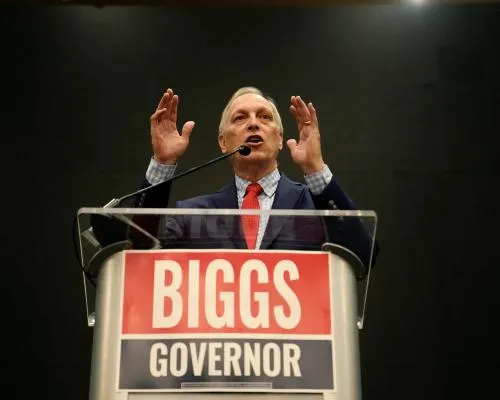 Arizona Republicans Nominate Andy Biggs for Governor in Contested Midterms
Republican Andy Biggs is set to challenge Democrat Katie Hobbs for governor in a highly contested race that reflects broader national trends and political climates.
-
 Russia Launches Major Missile Attack on Kyiv and Other Ukrainian Cities
Russia launches one of its biggest missile attacks on Kyiv and other Ukrainian cities, causing damage and casualties while continuing to target civilian infrastructure.
-
 Australian asylum seekers on Nauru face severe food shortages despite government spending
Asylum seekers in Nauru face severe food shortages despite the Australian government spending over $9 million per person annually.
-
 Giây phút Iskander-M tập kích 'tổ hợp tên lửa Thần biển' Ukraine: Video công bố từ UAV
Bài viết cung cấp thông tin chi tiết về vụ việc Nga công bố video tên lửa Iskander-M tập kích tổ hợp phòng thủ bờ Neptune của Ukraine. Đưa ra các thông số kỹ thuật của tên lửa Neptune và phân tích về tầm ảnh hưởng của sự ki??
-
 Ukraine Protests Spread After Fedorov’s Dismissal; Zelenskyy Seeks Poland Reconciliation
Protests continue against the dismissal of Ukraine’s Defence Minister, Mykhailo Fedorov, while President Volodymyr Zelenskyy seeks to mend ties with Poland. Drone attacks and Russian military strikes further escalate the conflict.
-
 Ancient Water Reservoirs Near Bethlehem Face Israeli Seizure Threat
Israel threatens to seize ancient water reservoirs near Bethlehem, a move that could set a precedent for broader erosion of Palestinian control over historical sites.


