- Israeli finance minister threatens to seize Solomon's Pools, a site with historical and archaeological significance.
- The pools, constructed in the second century BCE, have become a recreational hub for locals in Bethlehem.
- Seizing the site could set a precedent for further erosion of Palestinian control over Area A.
Threat to Historical Site
The Israeli government is facing increasing criticism after Finance Minister Bezalel Smotrich issued an explicit threat in May to seize ancient water reservoirs near Bethlehem, known as Solomon’s Pools. This development comes at a time when the ongoing conflict over Palestinian land and historical narratives is intensifying.
Historical Significance
Solomon's Pools, dating back to the second century BCE, have not only served as a critical water supply for Jerusalem but also become an integral part of local culture. The pools were constructed during Roman rule and later expanded under Ottoman authority, making them one of the largest surviving ancient water systems in the region. Despite their historical importance, the site has faced neglect due to political maneuvering.
Local Impact
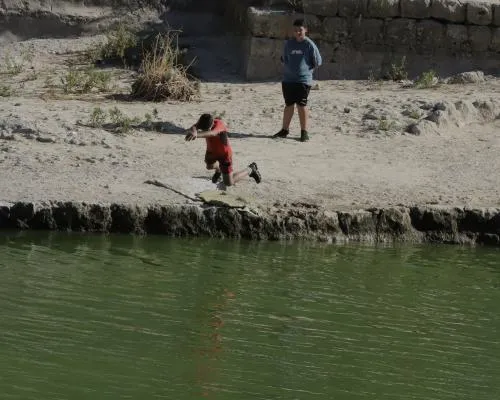
The pools have become a popular recreational area for children from nearby villages and families from Bethlehem. Mahmoud Jaber, an activist and horticulturist from Artas, expressed concern about losing access to these natural resources: 'It's the only place now in all Bethlehem that you can find somewhere to sit and enjoy the water, the shade, the green space.'
Despite being under Palestinian civil control since 1995, the site has come under increasing pressure from Israeli settlers. On July 10, Israeli soldiers carried out an unprecedented raid, firing teargas during a public swimming event, sparking outrage among Palestinians and archaeologists alike.
Fear of Erosion
The threat to Solomon's Pools goes beyond just the site itself; it represents a broader attempt by Israel to reshape historical narratives. Archaeologist Alon Arad argues that the seizure would set a precedent, suggesting parts of Area A could be taken over at will. This move could undermine the Oslo Accords and further complicate efforts towards Palestinian statehood.
The justification for such an action includes claims about poor maintenance by the Palestinian Authority (PA) and historical significance to Jews. However, the PA Waqf, which owns the site, had planned to develop it but faced funding issues due to withheld revenues from Smotrich. Additionally, the name 'Solomon's Pools' is historically inaccurate, as King Solomon lived long before the construction of these reservoirs.
For local Palestinians and archaeologists, Solomon’s Pools are more than just a site for historical disputes; they represent a shared cultural heritage that dates back centuries. Palestinian official Eman al-Titi emphasizes: 'Archaeological sites should never become instruments of political conflict.'
Conclusion
The looming threat to Solomon’s Pools highlights the complex and contentious nature of land control in the West Bank. As Israel approaches its October elections, more incursions are likely, potentially further eroding Palestinian autonomy and historical narratives.
Source: The Guardian

Guardian News World
563 posts
-
 Central Park Carriage Industry Faces Growing Pressure for Ban
A proposal to ban Central Park's horse-drawn carriages has gained momentum after a tragic accident involving a tourist.
-
 Russia Launches Major Missile Attack on Kyiv and Other Ukrainian Cities
Russia launches one of its biggest missile attacks on Kyiv and other Ukrainian cities, causing damage and casualties while continuing to target civilian infrastructure.
-
 Australian asylum seekers on Nauru face severe food shortages despite government spending
Asylum seekers in Nauru face severe food shortages despite the Australian government spending over $9 million per person annually.
-
 Giây phút Iskander-M tập kích 'tổ hợp tên lửa Thần biển' Ukraine: Video công bố từ UAV
Bài viết cung cấp thông tin chi tiết về vụ việc Nga công bố video tên lửa Iskander-M tập kích tổ hợp phòng thủ bờ Neptune của Ukraine. Đưa ra các thông số kỹ thuật của tên lửa Neptune và phân tích về tầm ảnh hưởng của sự ki??
-
 Ukraine Protests Spread After Fedorov’s Dismissal; Zelenskyy Seeks Poland Reconciliation
Protests continue against the dismissal of Ukraine’s Defence Minister, Mykhailo Fedorov, while President Volodymyr Zelenskyy seeks to mend ties with Poland. Drone attacks and Russian military strikes further escalate the conflict.
-
 Met Police Arrest Man Over Social Media Threat Against Nigel Farage
Met Police arrests man on suspicion of threatening former UKIP leader Nigel Farage on social media. Calls for increased security funding amid rising concerns over MP safety.
-
 Week in Review: School Days End and Other Stories
This week saw the end of primary school, a $5.6 million settlement in the E Jean Carroll case, critical views on a new 'Little House on the Prairie' series, and campaigns for more accurate weather forecasts.
-
 Memphis Rally Supports Progressive Democrat Amid Controversial Taskforce Shootings
Over a thousand people gathered in Memphis to rally for Justin Pearson, a Democratic candidate running for Congress amid controversial shootings by federal taskforce agents.
-
 Republican Norman Joins Race for Senate Seat Left by Lindsey Graham
Republican congressman Ralph Norman announces his candidacy for the Senate seat left by Lindsey Graham, despite Donald Trump's support of Graham's sister.
-
 Andy Burnham's Early Days as Labour Leader: A Swift Transition and Ambitious Plans
Andy Burnham's swift rise to Labour leader following Keir Starmer's resignation brings ambitious plans for devolution and decentralisation, but also challenges in managing expectations within his team.


