- Mercury reaches its greatest western elongation on Sunday.
- The next few mornings offer one of the best viewing opportunities for Mercury this year.
- An early start and an unobstructed view towards the east-northeast are essential for a clear sight.
When to See Mercury
This week offers one of the better opportunities of the year to catch a glimpse of the solar system’s innermost world. Trapped in its small orbit, Mercury never strays far from the sun, meaning it is usually lost to the light of dawn or dusk. On [specific date], however, the planet reached its greatest western elongation, marking one of the best viewing opportunities this year. The next few mornings offer a chance to observe Mercury as it steadily brightens and improves the contrast with the gathering dawn.
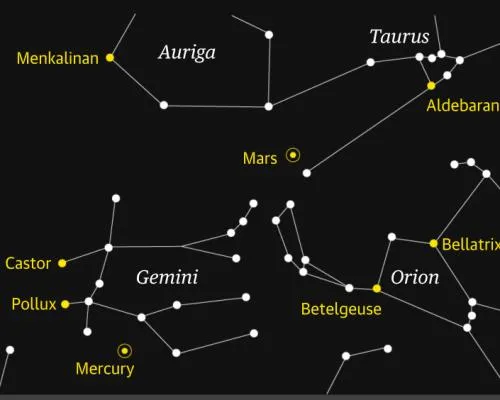
An early start and an unobstructed view towards the east-north-east will be essential for making the sighting. The chart provided shows the view looking in this direction from London at 04:30 BST on Tuesday. If your line of sight is free from obstructions, Mercury will become visible about a handspan above the horizon some time between 04:30 and 05:00 AM.
Binoculars can help in locating the small dot of light, but it's important to stop using them well before sunrise. Sunrise on Tuesday from London occurs at [sunrise time], so exercise caution and make sure to cease using binoculars about half an hour before this time.
As a bonus for early risers, Mars will also be visible during these mornings. Positioned higher in the sky and to the east of Mercury, it offers a unique celestial event for stargazers eager to observe both planets in one morning skywatch session. The view from London on Tuesday at 04:30 AM BST is particularly noteworthy, making this an ideal opportunity to see two planets in the same early morning sky.
Additional Observations
According to the accompanying chart, the optimal time for viewing Mercury from London is around 04:30 AM BST. During this period, the planet will be located about a handspan above the horizon in the east-north-east direction. Binoculars can help locate the small dot of light, but it's important to cease using them well before sunrise at [sunrise time] BST.
Mercury’s greatest western elongation is a significant event for astronomers and casual stargazers alike. The planet will be visible until about 05:00 AM, providing ample time for early risers to catch a glimpse of it before the sky brightens too much. Observing both Mercury and Mars together in the morning sky offers an opportunity for those interested in astronomy to appreciate the beauty and complexity of our solar system.
In conclusion, this week’s celestial event is not just a rare chance to see Mercury but also provides a unique opportunity to observe Mars as well. With the right conditions and equipment, stargazers can enjoy viewing these planets before dawn, making for an unforgettable experience in the early morning sky.
Source: The Guardian

Science Daily
153 posts
-
 User Experiences with GLP-1 Drugs: Share Your Stories
The Guardian invites readers to share personal experiences with GLP-1 drugs that did not work as expected, focusing on reasons and alternative treatments.
-
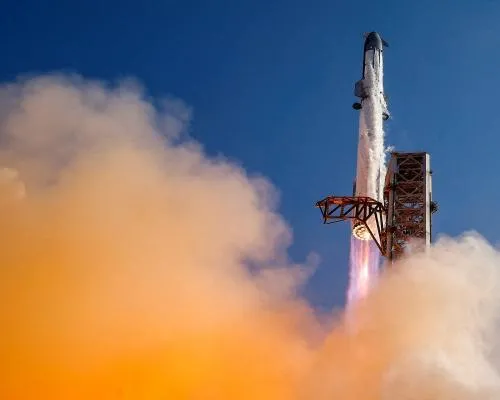 SpaceX Delivers Strong Revenue Growth but Faces Profitability Concerns
SpaceX reported a 92% increase in second-quarter revenue, but the company remains unprofitable and faces ongoing investor concerns.
-
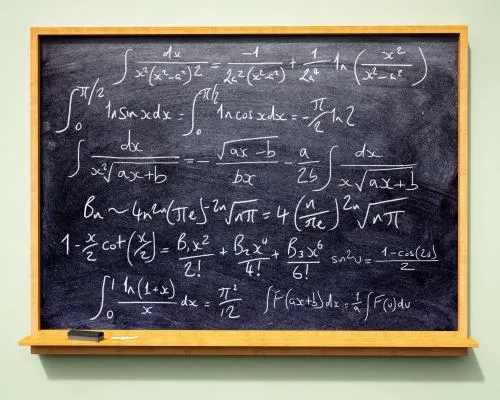 Mathematical Genius Alex Chui Solves Complex Puzzle
British student Alex Chui breaks records at the International Mathematical Olympiad with perfect scores and proposes a complex puzzle.
-
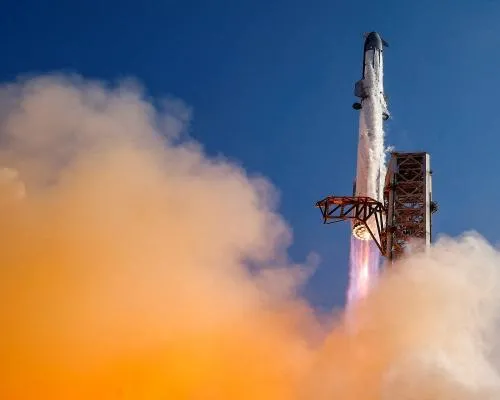 SpaceX Reports Strong Q2 Earnings Despite Stock Decline
SpaceX reported stronger-than-expected revenue but still faces significant challenges as its stock plummets post-IPO. Despite progress on key projects, investors remain uncertain about the company's long-term financial prospects.
-
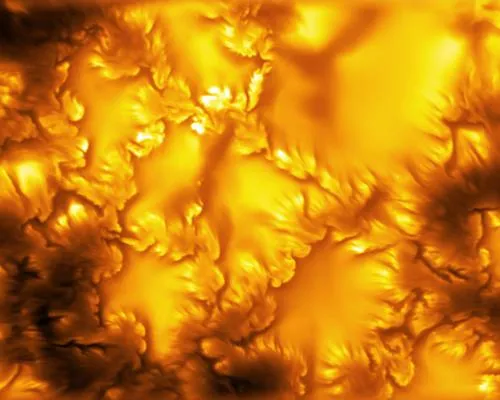 Revolutionary Telescope Unveils Sun's Mysteries in Never-Before-Seen Detail
New observations from the Inouye solar telescope provide unprecedented detail of the sun's surface, including swirling vortices that could explain coronal heating and solar flares.
-
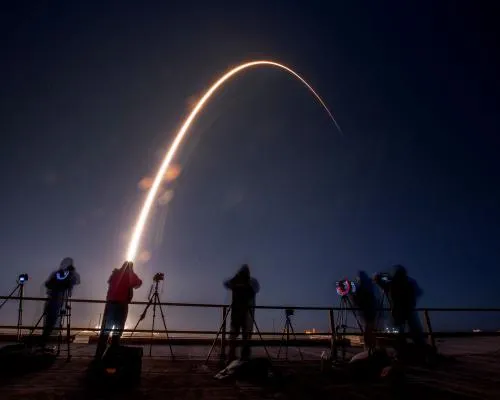 SpaceX Rocket Stage Crashes Into Moon: A Rare Incident of Lunar Impact
A four-tonne piece of a discarded SpaceX rocket crashed into the moon at high speed, creating a new lunar crater and posing no danger to Earth.
-
 Mathematical Puzzler: Exploring Grid Possibilities
A mathematical puzzle involving filling a 3×3 grid with numbers such that each row and column multiplies to 30, revealing the importance of prime factors in solving it.
-
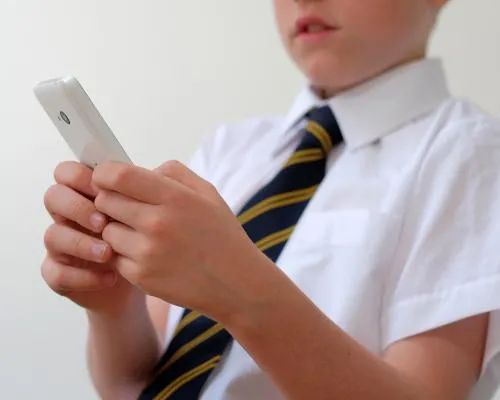 Study Reveals Link Between Early Social Media Use and Lower School Performance
A study finds that children who start using social media early tend to perform worse academically, suggesting a link between constant smartphone use and educational development.
-
 UK Science Funding Cuts Spark Concerns About Global Standing
Critics argue that recent funding cuts in UK science could harm global standing and stunt research advancements.
-
 British Science Funding Crisis Sparks Wide-Spread Concern
Letters from readers and experts critique the decision to cut science funding in Britain, emphasizing the potential long-term damage on research and innovation.


