Danny Boyle's 'Sunshine': A Sci-Fi Thriller That Challenges Our Understanding of Humanity and Existence

- 'Sunshine' shares similarities with 'Project Hail Mary,' but its dark, metal-infused tone sets it apart.
- The film features a who’s-who of talented actors, including Cillian Murphy, Rose Byrne, and Chris Evans.
- Director Danny Boyle incorporates unique visual effects and an eclectic soundtrack, creating a distinctive sci-fi experience.
- Alex Garland's screenplay explores the limits of human reason in the face of existential horror.
Overview and Comparison
Danny Boyle’s 2007 science-fiction thriller Sunshine, which shares a similar setup with contemporary blockbusters like 'Project Hail Mary,' stands out for its darker, more metal-influenced atmosphere. While both films deal with humanity's desperate attempt to save Earth by sending astronauts into space, Boyle’s take is far grittier and moody, reminiscent of his earlier works such as '28 Days Later.' The narrative is driven by a team of eight astronauts, tasked with piloting the Icarus II spacecraft towards the sun to deploy a massive bomb. This setup mirrors the plot of 'Project Hail Mary' but with an additional layer of cosmic dread and existential questioning.
Cast and Production Design
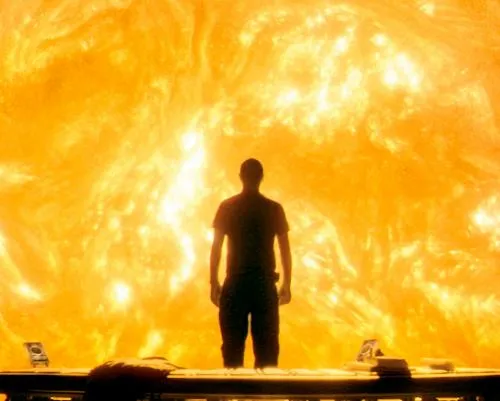
The film boasts an impressive cast, featuring Cillian Murphy as Robert Capa, the astrophysicist on board. Rose Byrne, Michelle Yeoh, Benedict Wong, Hiroyuki Sanada, and even Chris Evans round out the ensemble. Each actor's performance is a snapshot of their careers before they became global stars, adding to the film’s nostalgic charm. Production design by Mark Tildesley and costumes by Suttirat Anne Larlarb contribute significantly to the visual appeal. The iconic golden spacesuits are a standout element, often seen in sci-fi classics, yet here they serve as a symbol of humanity's fragile nature.
Visual Effects and Soundtrack
Danny Boyle’s unique directorial style is evident through his use of visually stunning effects. Interior shots of the Icarus II are reminiscent of a nightclub, while the film transitions into a communications dead zone that features double exposures, subliminal frames, and eerie gravitational architecture. These techniques create a distinct, otherworldly atmosphere that complements Boyle’s narrative. The film's soundtrack by John Murphy and Underworld adds to its distinctive character, with the opening track 'Born Slippy (Nuxx)' from their album Optimistic, providing a fitting backdrop for the intense and emotional moments.
Philosophical Depth and Existential Horror
Alex Garland's screenplay in 'Sunshine' delves into complex philosophical themes, blending highbrow concepts with raw emotion. The film questions the limits of human reason when faced with cosmic events. Dr Searle (Cliff Curtis), a psychologist, becomes fixated on the dying star, his obsession mirroring humanity’s struggle to comprehend its own insignificance in the face of celestial forces. Garland's writing often achieves an inverse Spielberg effect—where secular revelations are intertwined with existential horrors, challenging viewers' perceptions of reality and faith.
The result is a film that asks profound questions about human nature, existence, and the role of science versus spirituality. While 'Project Hail Mary' champions humanity’s indomitable spirit, 'Sunshine' suggests that as we venture deeper into space, we may lose touch with our essential humanity.
Source: The Guardian
Culture News
129 posts
-
 Mỗi vóc dáng cần một cách lựa chọn khác nhau
Các đơn vị chuyên về vest nam tphcm hiện nay thường cung cấp nhiều dòng sản phẩm khác nhau, từ vest công sở, vest dự tiệc đến vest dành cho lễ cưới, giúp khách hàng dễ dàng tìm được mẫu phù hợp với nhu cầu sử dụng. Đồng th
-
 Exploring Victorian Poverty Through an Immersive Workhouse Experience
The Ripon Workhouse Museum has reopened after a major revamp, offering visitors a more immersive experience to explore the harsh realities of Victorian workhouses and their relevance to contemporary issues.
-
 Black Women Opt for Healthcare in South Korea Amid US Disparities
Black American women are increasingly turning to South Korea for comprehensive healthcare due to perceived disparities in U.S. medical treatment.
-
 The Enduring Allure of Homer’s Odyssey: From Ancient Epic to Modern Pop Culture
The Odyssey, an ancient Greek epic, continues to influence contemporary media through various adaptations, from films like Christopher Nolan’s to literary works such as Dante's Inferno and Ulysses. Its themes resonate deeply with modern issues.
-
 Chappell Roan’s ‘Casual’ Offers Reality Check on Ambiguous Relationships
Chappell Roan's hit song ‘Casual’ helped an individual gain clarity in ambiguous relationships and led to the end of a long-distance situationship.
-
 Christopher Nolan’s Dominance Shaping Blockbuster Battles
Christopher Nolan's dominance in the film industry is reshaping blockbuster battles. His ability to consistently draw large audiences makes him unique among today’s directors.
-
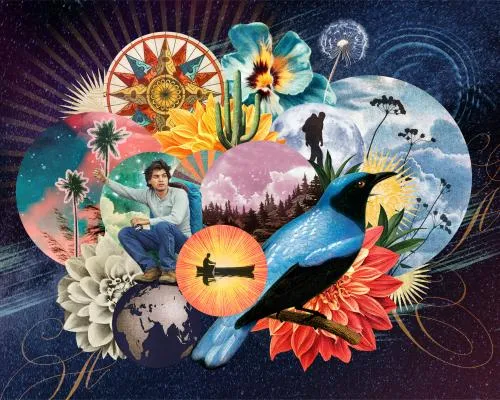 The Quest for Freedom: How a Film Inspired a Journey Through Nature
Morgan da Silva shares how 'Into the Wild' inspired him on his adventures and eventually led him to find inner peace through nature.
-
 Finding Freedom: A Hiker's Journey from Escapism to Deep Connection
A hiker reflects on how an adventure inspired by Into the Wild led to a deeper understanding of freedom and personal growth.
-
 Schomburg Center's Centennial Celebrates Black History and Culture
The Schomburg Center celebrates 100 years of collecting and showcasing Black history with exhibits and digitization projects, focusing on underrepresented artists.
-
 Seth Meyers Criticizes Trump’s Bizarre Priorities on Late Night Show
Seth Meyers on Late Night criticized Donald Trump’s focus on obscure issues like sperm counts and magnets during his presidency.
-
 The Art of Advocacy: Exploring Edvard Munch’s Freia Frieze in Oslo
Exhibition examines Edvard Munch’s Freia frieze, revealing hidden intentions behind public art commissioned for a chocolate factory.


