- Munch's Freia frieze was commissioned to decorate a women's canteen at the chocolate factory for Freia, but questions remain about its true intentions.
- The exhibition 'Edvard Munch and the Chocolate Factory' delves into the broader context of workers' rights and gender equality during Munch’s time.
- Despite claims by Freia as a progressive employer, there was significant disparity between their practices and the working conditions faced by employees.
Commissioned Art with Hidden Intentions
The 12 canvases of Edvard Munch's Freia frieze, originally commissioned in 1922 for the women’s canteen at the renowned Norwegian chocolate company Freia, present an intriguing narrative. The works feature harmonious scenes: fruit pickers’ arms reaching out, water pouring from watering cans, and couples strolling hand-in-hand along a beach.
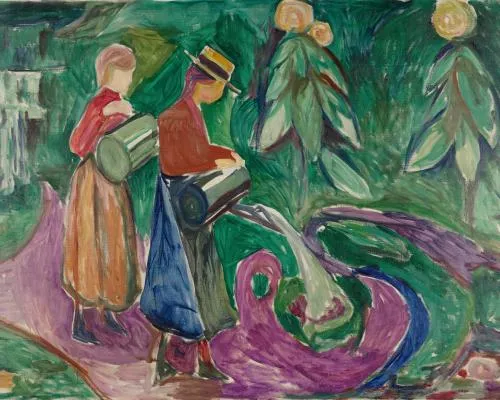
However, as curator Ana María Bresciani explains in her exhibition 'Edvard Munch and the Chocolate Factory,' there is more to these seemingly idyllic images than meets the eye. The period when Munch was creating the frieze coincided with dramatic changes for workers’ rights across Europe. Norway’s women factory workers, often referred to as 'chocolate girls,' were just beginning to gain access to modern amenities such as bathing facilities and hygiene measures. Yet, Bresciani argues that their experiences did not align with the scenes depicted in Munch's paintings.
The disparity between Freia’s investments in public art and its treatment of workers was stark. The company’s founder, Johan Throne Holst, paid 80,000 Norwegian kroner for the frieze (equivalent to about 2.5 million kroner today), while the female workers received meager wages. This economic divide was not lost on critics. A newspaper report from Arbeiderbladet noted: 'While the workers are kept on starvation wages, large capital is invested in costly paintings, which in time could be sold at a large profit.' The frieze served as a backdrop to these conditions.
Strategic Public Art
Munch was keenly aware of his desire for public recognition and strategically pursued commissions. While the Freia frieze may have been intended to foster a sense of unity among workers, it also reflected Munch's ambitions as an artist seeking broader exposure.
The exhibition at Oslo’s Munch Museum highlights these complexities, offering visitors a nuanced view of both the art and its historical context. As the Freia frieze returns to Norway after over 100 years in obscurity, this exploration provides new insights into Munch's work and the social issues of his time.
Source: The Guardian

Culture News
129 posts
-
 Mỗi vóc dáng cần một cách lựa chọn khác nhau
Các đơn vị chuyên về vest nam tphcm hiện nay thường cung cấp nhiều dòng sản phẩm khác nhau, từ vest công sở, vest dự tiệc đến vest dành cho lễ cưới, giúp khách hàng dễ dàng tìm được mẫu phù hợp với nhu cầu sử dụng. Đồng th
-
 Exploring Victorian Poverty Through an Immersive Workhouse Experience
The Ripon Workhouse Museum has reopened after a major revamp, offering visitors a more immersive experience to explore the harsh realities of Victorian workhouses and their relevance to contemporary issues.
-
 Black Women Opt for Healthcare in South Korea Amid US Disparities
Black American women are increasingly turning to South Korea for comprehensive healthcare due to perceived disparities in U.S. medical treatment.
-
 The Enduring Allure of Homer’s Odyssey: From Ancient Epic to Modern Pop Culture
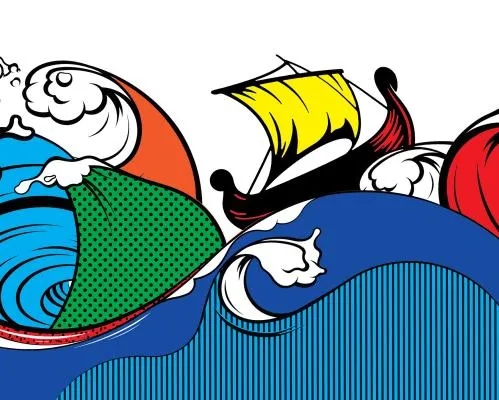
The Odyssey, an ancient Greek epic, continues to influence contemporary media through various adaptations, from films like Christopher Nolan’s to literary works such as Dante's Inferno and Ulysses. Its themes resonate deeply with modern issues.
-
 Chappell Roan’s ‘Casual’ Offers Reality Check on Ambiguous Relationships
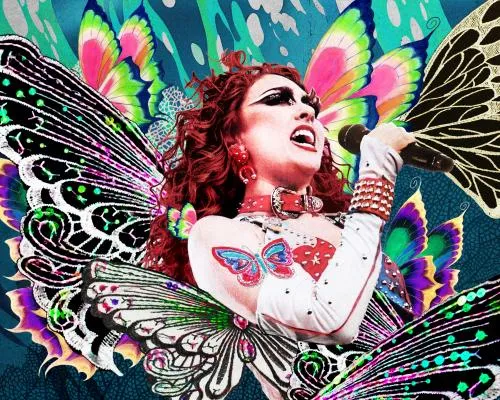
Chappell Roan's hit song ‘Casual’ helped an individual gain clarity in ambiguous relationships and led to the end of a long-distance situationship.
-
 Christopher Nolan’s Dominance Shaping Blockbuster Battles
Christopher Nolan's dominance in the film industry is reshaping blockbuster battles. His ability to consistently draw large audiences makes him unique among today’s directors.
-
 The Quest for Freedom: How a Film Inspired a Journey Through Nature
Morgan da Silva shares how 'Into the Wild' inspired him on his adventures and eventually led him to find inner peace through nature.
-
 Finding Freedom: A Hiker's Journey from Escapism to Deep Connection
A hiker reflects on how an adventure inspired by Into the Wild led to a deeper understanding of freedom and personal growth.
-
 Schomburg Center's Centennial Celebrates Black History and Culture
The Schomburg Center celebrates 100 years of collecting and showcasing Black history with exhibits and digitization projects, focusing on underrepresented artists.
-
 Seth Meyers Criticizes Trump’s Bizarre Priorities on Late Night Show
Seth Meyers on Late Night criticized Donald Trump’s focus on obscure issues like sperm counts and magnets during his presidency.


