- Jodrell Bank Observatory, a key facility for UK astronomers, is at risk of closure due to funding cuts from UK Research and Innovation.
- The decision affects 28 jobs and impacts nearly 3,000 researchers who rely on the observatory’s facilities.
- Scientists criticize the decision as it threatens significant scientific research and could undermine the UK's position in space science.
- Alternative uses for the telescope may be explored to secure funding.
Overview of Jodrell Bank Observatory
Jodrell Bank Observatory, the hub of a world-leading network of radio telescopes, is facing closure after government funding for the facility was slashed. The observatory includes the Grade I-listed Lovell telescope and several other state-of-the-art facilities that have been instrumental in studying galaxies, black holes, star formation, exoplanets, and cosmic phenomena like the afterglow of the Big Bang. Since its inception, Jodrell Bank has played a crucial role in UK astronomy, making significant contributions to scientific research.
Impact of Funding Cuts
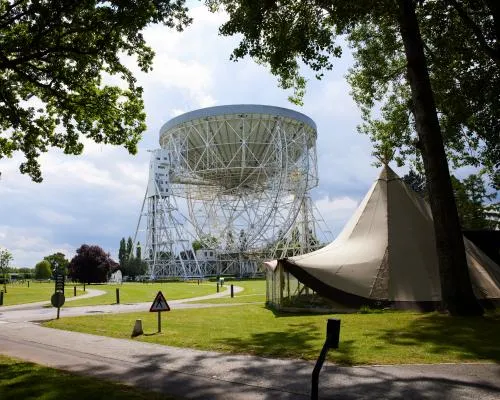
The decision by UK Research and Innovation (UKRI) to withdraw funding for the e-Merlin network—a national radio astronomy facility at Jodrell Bank—will result in the closure of the observatory by March 2028 unless alternative funding can be secured. This move will affect not only the observatory itself but also nearly 3,000 researchers who depend on its facilities for their work. The e-Merlin network is part of a larger program that supports multiple scientific endeavors and has an annual budget as needed.
According to UKRI, the decision was made due to cost overruns as a result of soaring electricity and staff costs at UK facilities and high foreign exchange rates for international collaborations. This includes projects like Cern near Geneva, which adds financial strain to the STFC (Science and Technology Facilities Council) that funds Jodrell Bank.
Reactions and Concerns
The decision has sparked strong reactions from scientists and union representatives. Professor Catherine Heymans, Scotland's astronomer royal, described the cut as devastating to UK astronomy: “Jodrell has been delivering spectacular discovery science for decades. To see this world-leading facility cut is just devastating.” Brian Cox, a renowned physicist and professor at the University of Manchester, expressed shock at the lack of cooperation between UKRI and the new government. He called for urgent measures to mitigate the impact on research and employment: “These devastating and irreversible cuts are a legacy from a series of hasty and ill-considered decisions taken by UKRI, overseen by a government department that no longer exists. I am astonished that UKRI are still ploughing ahead, and not working with the [Andy] Burnham government to find a solution.”
Sue Ferns at the Prospect trade union echoed similar concerns: “Jodrell Bank is not just an iconic site in UK science in the north-west of England; it is a facility that underpins our world-leading research capabilities. Closing it would be a tragedy that undermines the mission for the UK to be a science superpower.”
Future Prospects
While staff intend to challenge the decision, there is also hope that the observatory can find alternative uses, such as tracking satellites and space debris, which could potentially attract new funding. However, this remains uncertain in the face of significant job losses and a broader program of cuts affecting numerous scientific facilities.
Jodrell Bank was among dozens of facilities, instruments, and projects hit by the cuts on Monday. There will be a 20% cut to UK participation in the Rubin Observatory in Chile, which only began work last month to capture the largest astronomical movie of all time. Another telescope, the Next-Generation Transit Survey, which is searching for solar systems similar to Earth’s, received a 45% cut.
The Royal Astronomical Society president, Professor Jim Wild, expressed concern: “At a time when technological innovation is crucial to our country's prospects, discarding unique, globally significant observatories threatens both our scientific future and the inspiration of future generations of astronomers.”
In further cuts, funding for future instruments on the Extremely Large Telescope in Chile, which is searching for life elsewhere, has been completely cut. The UK will also withdraw from the Event Horizon Telescope that allowed astronomers to image the black hole at the heart of the Milky Way.
Source: The Guardian

Science Daily
126 posts
-
 Gunther von Hagens, Creator of Body Worlds, Passes Away at 81
Gunther von Hagens, inventor of plastination and creator of Body Worlds exhibitions, has died at 81. His innovative technique and global displays sparked fascination and controversy alike.
-
 Restricted Eating Hours May Slow Cognitive Decline in Older Adults
A preliminary study suggests that restricting mealtimes and avoiding food before bed may help slow down cognitive decline in older adults.
-
 How Have Weight-Loss Drugs Affected Relationships?
The Guardian seeks to understand how GLP-1 drugs have affected relationships, both positively and negatively.
-
 The Need for Arts and Humanities in Space Exploration Debates
An exploration of why arts and humanities are vital for addressing the complex issues in current debates about space research.
-
 New Study Reveals Four Distinct Thinking Patterns Among Modern Minds
A new study identifies four distinct types of thinkers based on their thoughts, revealing how modern minds process information differently.
-
 GLP-1 Medications: Side Effects and Concerns
Explore the common and emerging side effects of GLP-1 medications, including digestive issues, hair thinning, and potential changes in facial appearance.
-
 Zendaya Wears Controversial Ancient Jewelry at Film Premiere, Sparking Debate
Zendaya’s decision to wear ancient Iranian jewelry at The Odyssey premiere has sparked debate about cultural sensitivity and ethical use of historical artifacts in Hollywood.
-
 Stargazing Guide: Finding Scorpius in the Night Sky
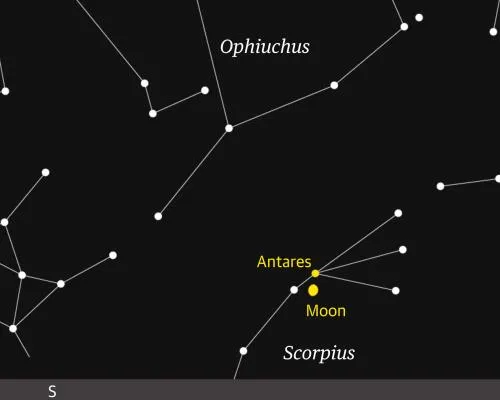
Learn how to spot the constellation Scorpius and its key star Antares from the UK, where low altitude often obscures full visibility.
-
 Alan Turing's Racy Short Story Offers New Insight into the 'Playful' Side
A Cambridge academic has transcribed Alan Turing's previously overlooked short story, revealing new insights into the playful, funny, and sexually adventurous side of one of history's most influential figures.
-
 Tech Giants’ Space Datacenters Face Criticism Over Environmental Impact
Experts warn that proposed space datacenters from tech giants could release catastrophic levels of pollution and threaten the environment. A new petition demands a review by the FCC.


