From Artistic Horrors to Medical Marvels: The Rise and Fall of Gunther von Hagens

- Gunther von Hagens revolutionized public perception of art with his Body Worlds exhibitions.
- His plastination technique transformed human corpses into controversial educational displays.
- Damien Hirst's work was overshadowed by the stark realism of von Hagens' exhibits.
The Birth of Plastination
Gunther von Hagens, a German scientist and showman, revolutionized public perception of art with his innovative plastination technique. Invented in the 1970s, this method preserves human bodies by replacing bodily fluids with polymers to create lifelike specimens that could be dissected or displayed. His Body Worlds exhibitions, which began gaining popularity in the mid-1990s, were a sensation around the world.
Artistic and Educational Divide
Von Hagens' work marked a significant shift from the conceptual art of his contemporaries like Damien Hirst. Where Hirst's pieces, such as pickled sheep and sharks, delved into themes of mortality with an artistic flourish, von Hagens displayed actual human corpses in a way that blurred the line between art and macabre spectacle. This stark realism left audiences not just disturbed but openly repulsed.
Legacy and Impact
The success of Body Worlds cannot be understated; it attracted millions of visitors worldwide, overshadowing other contemporary artists who played with carnality and horror in their work. Von Hagens' exhibitions were seen as a form of educational entertainment, yet his approach lacked the deeper philosophical inquiry that characterizes great art. His work highlighted a shift towards more visceral and less thought-provoking forms of artistic expression.
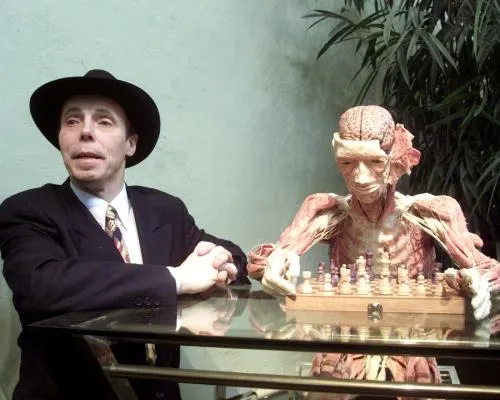
Despite his scientific pedigree and the controversial nature of his creations, von Hagens remains a figure who challenged public perceptions of what could be considered art. As with many other innovations in the intersection of science and art, his work sparked debates about the boundaries between education and exploitation. For instance, he staged a live, televised autopsy in London in 2002, reviving the kind of gory spectacle William Hogarth satirised in his print The Reward of Cruelty, which depicts the dissection of a hanged criminal.
In all honesty, I found Body Worlds repellent. Von Hagens, however, had an impeccable pedigree for what he did: he was a professor with a long association with Germany's prestigious Heidelberg University. And of course, the frontier of art and science he exploited has a long and gruesome history. Leonardo da Vinci and Michelangelo both carried out their own dissections of human bodies.
Leonardo, however, had true scientific ambition and was years ahead of university doctors in his stunning drawings and notes that dig into every part of the human machine from the brain to the genitals, the foetus to the eye. His infinitely subtle observations make the body's goriest secrets beautiful. A closer model for Von Hagens is Andrea Vesalius, the first 'modern' anatomist whose 1543 book De humani corporis fabrica (The Fabric of the Human Body) is illustrated with prints thought to have been made by a pupil of Titian.
Its combination of sculptural poses and flayed horror has a lot in common with Body Worlds: in the frontispiece, an avid (male) audience watches as Vesalius calmly cuts open a (female) corpse. After that, the art of anatomy got increasingly 'real' and disturbing. In the 18th and 19th centuries, Italian art skills produced uncanny replicas of anatomised human bodies in wax, meticulously copying colours and textures, supposedly in the service of science.
The La Specola, the natural history museum of Florence, lets you visit its vast collection of these hyperreal eviscerated bodies to look at and learn from until you feel sick. Gunther von Hagens brought this tradition into our time but also made it seem too natural, as if death could be rationalised away.
At La Specola, the weirdness is explicit—you know this is odd, macabre stuff to be looking at. Body Worlds has a false acceptance that treats death as nothing to get emotional about. This acceptance of mortality also has its artistic precedents, not least in the use of bones to create spectacular ossuaries in many parts of Europe.
In the crypt of the church of Santa Maria della Concezione in Rome you can see the bones of thousands of Capuchin friars arranged in an artistic manner that might have made Ed Gein blush—there's a grotto of skulls, a chamber of thigh bones. The Marquis de Sade was stunned. You leave with a sense of disgust and confusion, wondering why they did it, and why you went.
At the opposite pole there is Rembrandt's Anatomy Lesson of Dr Nicolaes Tulp, in which the body being dissected is seen as an infinite mystery, the pale ghost of us all. Artists, from Leonardo and Rembrandt to the young Hirst, have glimpsed the enigma of life in the relics of death. But Gunther von Hagens was no artist.
Source: The Guardian
Culture News
170 posts
-
 Late Night Host Seth Meyers Jokes About Trump’s Persistent Epstein Associations
Late-night host Seth Meyers discusses Donald Trump's enduring connection to Jeffrey Epstein and how this issue keeps resurfacing, causing trouble during recent events.
-
 Late Night Show Host Pokes Fun at Trump's Record-Low Approval Rating
Seth Meyers of The Late Show uses humor to critique President Donald Trump's record-low approval rating amid economic struggles and conflicting statements.
-
 Comedy Critic Brian Logan Addresses Questions on Edinburgh Fringe
Our comedy critic Brian Logan addresses questions about diversity at the Edinburgh Fringe, the impact of multiple festivals on costs, and his approach to reviewing comedy shows.
-
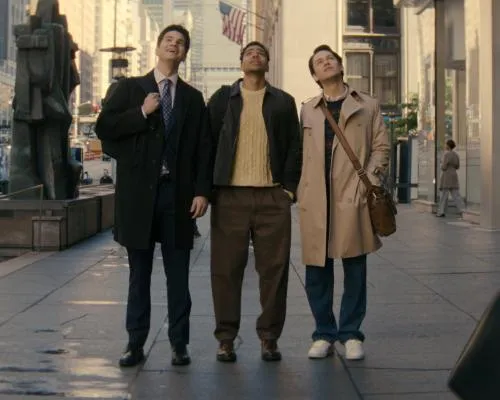 Summer TV Slump: Streaming Services Struggle with Big New Shows
This year's summer TV season has seen fewer breakout hits, leading viewers to prefer outdoor activities over binge-watching shows.
-
 Wales’ Oldest Cultural Festival Marks 850 Years at Medieval Castle
Eisteddfod y Garreg Las, marking 850 years at Cardigan castle, blends ancient traditions with modern festivities.
-
 Zendaya’s Earrings Spark Debate Over Ancient Artifacts’ Ownership
Actress Zendaya's choice of earrings at an Odyssey film premiere led to debates over the authenticity and provenance of ancient Iranian artifacts.
-
 Artists Choosing Anonymity: A Radical Act in an Age of Self-Exposure
An exploration of why artists choose anonymity in an age where self-exposure is often seen as essential.
-
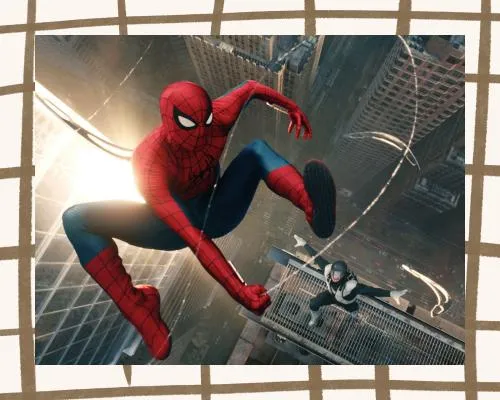 Entertainment Roundup: New Films, Albums and Stage Shows
This week features new films like '10 Days in China', upcoming concerts by Wham! and Courtney Pine, as well as stage adaptations of classic stories.
-
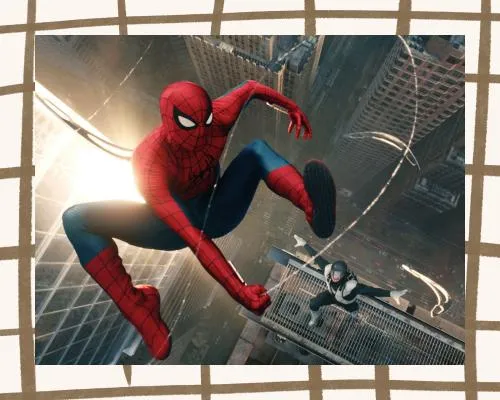 Entertainment Roundup: From Spider-Man to Ariana Grande’s New Album
This week's entertainment round-up covers new films, stage productions, exhibitions, and album releases.
-
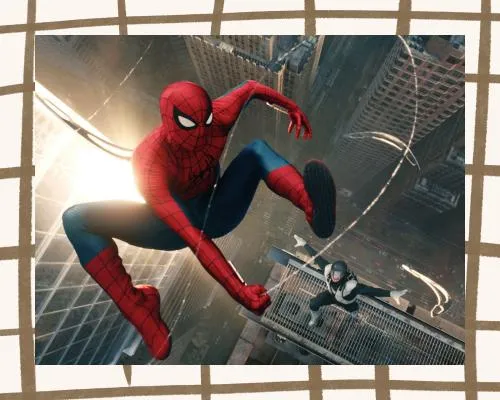 Weekend Roundup: From Superhero Films to Ariana Grande's Music
A roundup of upcoming entertainment events including films, gigs, and albums for a diverse weekend experience.


