When it comes to building a tennis court, one of the most crucial aspects is choosing the right tennis court flooring. The surface you select not only affects the performance and safety of players but also impacts the court’s durability, maintenance needs, and cost. Whether you're planning a court for a school, club, or private use, understanding your flooring options is essential.
Types of Tennis Court Flooring
There are several types of tennis court surfaces available today, each offering unique advantages. Below are the most commonly used options:
1. Acrylic Synthetic Flooring
Best for: Outdoor courts
Features: ITF-certified, UV-resistant, low maintenance
Performance: Offers medium to fast ball bounce, excellent traction, and shock absorption
Durability: 10–15 years with minimal upkeep
Installation: Applied over asphalt or concrete base in multiple layers
2. Clay Courts
Best for: Professional and training purposes
Features: Slower ball bounce, encourages longer rallies
Maintenance: Requires frequent watering and sweeping
Comfort: Soft on joints but more maintenance-intensive
3. Artificial Grass
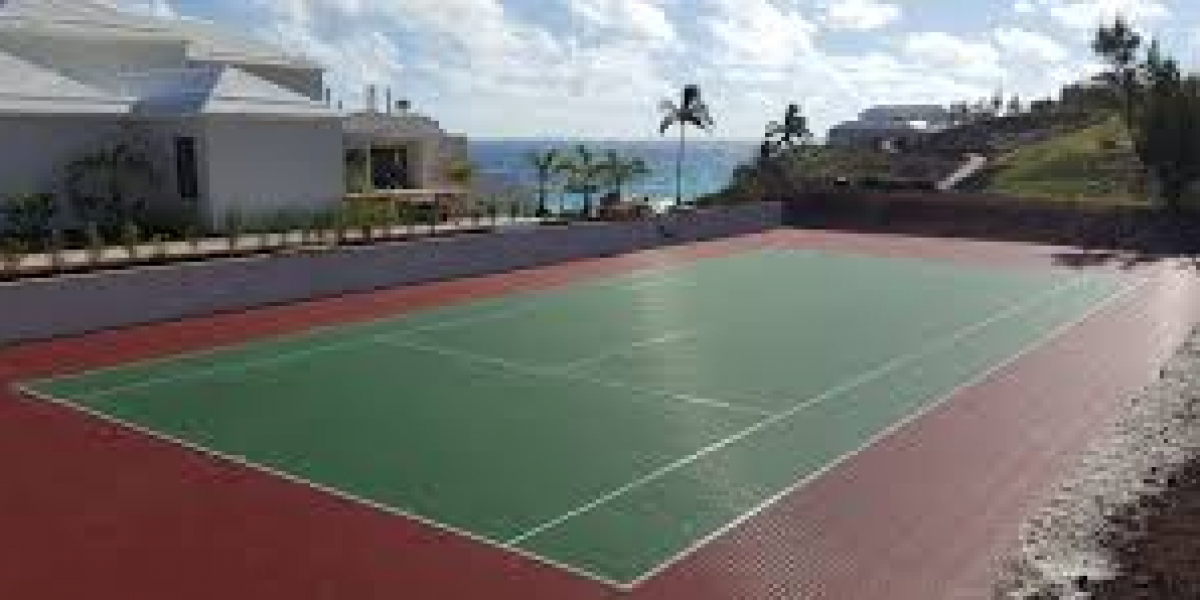
Tennis Court Flooring: A Complete Guide to Choosing the Right Surface Best for: Residential and multi-purpose sports areas
Features: Low-impact surface, attractive aesthetic
Performance: Fast pace, similar to natural grass
Maintenance: Needs regular brushing and infill replenishment
4. Hard Courts (Concrete/Asphalt)
Best for: Commercial & public courts
Features: Durable, low cost
Performance: Fast pace, high impact on joints
Improvement: Often topped with acrylic coatings for better play
5. Cushioned Courts
Best for: Indoor training facilities, senior players
Features: Added rubber layers for impact absorption
Performance: Comfortable with medium pace
Factors to Consider When Choosing Tennis Court Flooring
When selecting the right surface, consider these key factors:
Player Type: Recreational vs professional
Weather Conditions: Outdoor courts need UV- and rain-resistant coatings
Budget: Includes installation and long-term maintenance
Usage: Frequency of play, number of players
Maintenance Capability: Some surfaces require daily care
Why Choose Acrylic Tennis Court Flooring?
Acrylic flooring is a popular choice in India and globally due to its balance of performance, affordability, and low upkeep. Here's why it stands out:
ITF-approved surfaces
Customizable bounce speed (ITF Pace Ratings)
UV, algae, and mold resistant
Quick drying after rain
Excellent grip and playability
Cost of Tennis Court Flooring in India
The average cost of constructing a synthetic acrylic tennis court in India ranges from ₹10 lakh to ₹25 lakh, depending on:
Site conditions
Surface type
Drainage and fencing
Accessories (nets, poles, lighting)
Maintenance Tips for Long-Lasting Courts
Clean regularly to remove dust and debris
Reseal or resurface every 5–8 years
Inspect for cracks or water drainage issues
Avoid sharp objects or shoes with spikes
Conclusion
Choosing the right tennis court flooring is essential for ensuring long-term performance, safety, and enjoyment. Acrylic synthetic surfaces remain a top choice for modern tennis courts, offering durability, low maintenance, and excellent gameplay experience. Whether you're a school, sports club, or private owner, investing in quality flooring will ensure your court stands the test of time.
Need expert consultation or court installation?
Reach out to certified professionals at TennisFlooring.com to get started with your dream court today.

varun sharma
3 posts
-
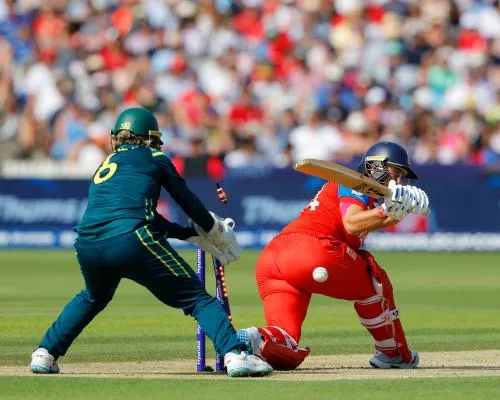 England Overcome Early Struggles to Reach 137 in T20 World Cup Final
England faces Australia in a closely contested Women's T20 Cricket World Cup Final at Lord’s. Early struggles for England are overcome by Sciver-Brunt, setting up an exciting conclusion.
-
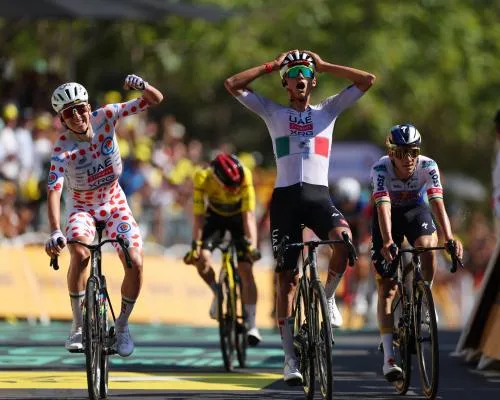 Tour de France 2026: Mexican Cyclist Isaac del Toro Claims Stage Two Victory
Mexican rider Isaac del Toro wins stage two of the 2026 Tour de France, defeating strong competitors like Tadej Pogacar.
-
 Ancelotti: Sir Alex Ferguson Là Người Đơn Vị Có Thể Dẫn Dắt Tôi
HLV Carlo Ancelotti khẳng định Sir Alex Ferguson là người duy nhất đủ kinh nghiệm để đưa ra lời khuyên về năng lực cầm quân của ông tại đội tuyển Brazil.
-
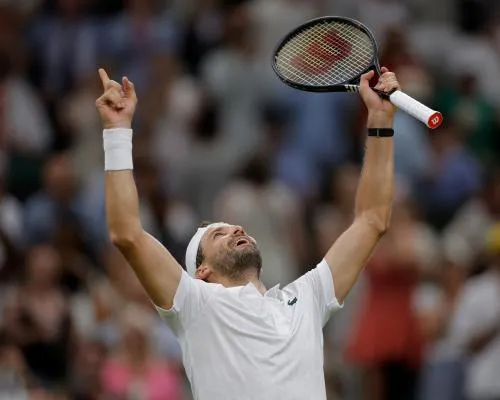 Wimbledon 2026: Unforgettable Matches and Surprising Upsets
Day six at Wimbledon sees Bublik outlast Tiafoe and Dimitrov secure his place in the fourth round amid several upsets.
-
 Paraguay - màn tra tấn thể lực và người thầy thích nhả chữ: HLV Gustavo Alfaro ép cầu thủ đến tận cùng sức lực
Các cầu thủ Paraguay miệt mài tập luyện dưới nắng gắt, trong khi HLV Gustavo Alfaro áp dụng bài tập ‘bứt tốc 15/15’ để tăng cường thể lực. Tây Ban Nha đã chia sẻ kinh nghiệm với Paraguay trước thềm vòng 32 đội World Cup 2026.
-
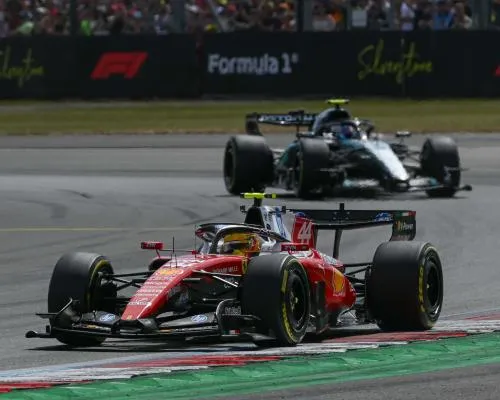 British GP Qualifying After Antonelli's Thrilling Sprint Race Victory
Antonelli won the sprint race at Silverstone, beating Hamilton and securing third place for British GP qualifying.
-
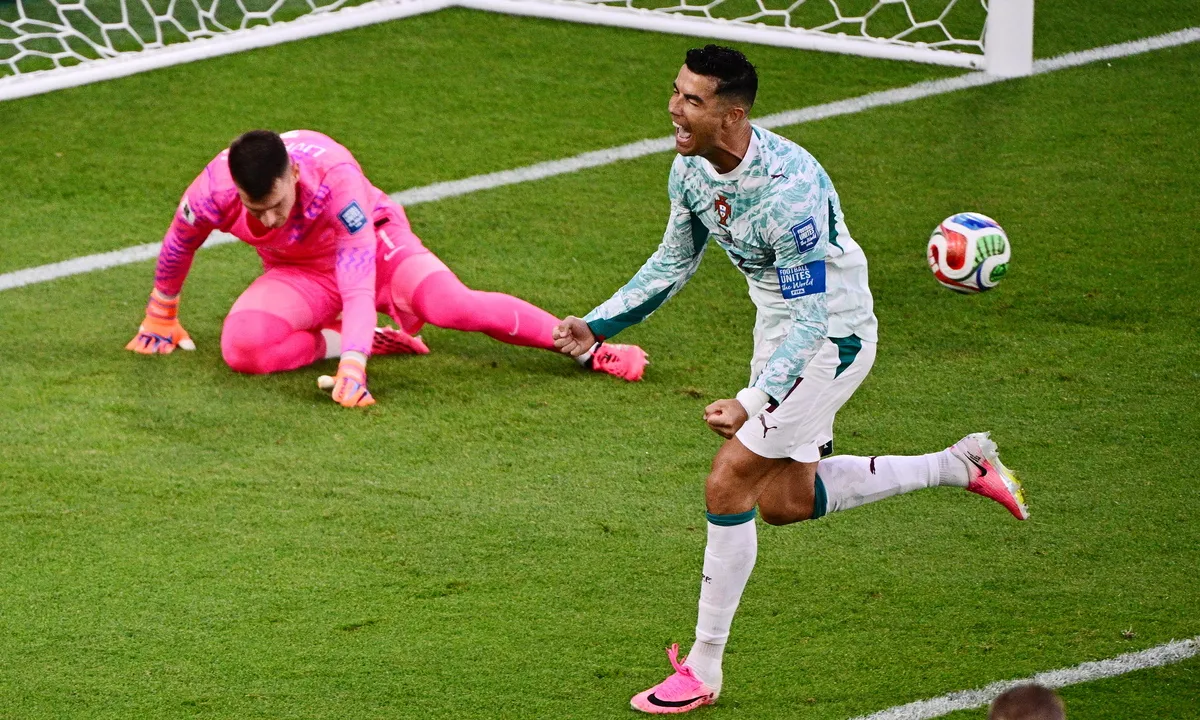 Messi: Siêu nhân, Ronaldo: Người Dơi – Quan điểm mới của Chicharito
Chicharito đưa ra quan điểm mới về Messi (Siêu nhân) và Ronaldo (Người Dơi), phân tích tài năng thiên bẩm của Messi và sự nỗ lực, kỷ luật của Ronaldo.
-
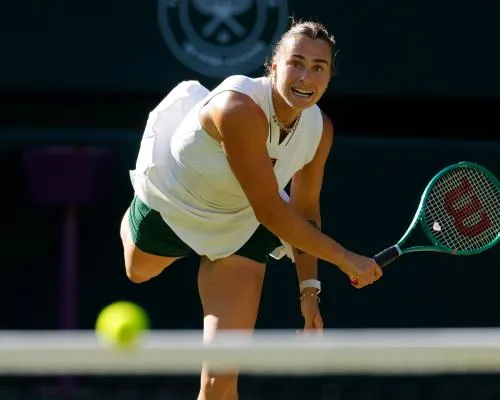 Sabalenka Demonstrates Growth with Victory Over Ostapenko at Wimbledon
Aryna Sabalenka’s game improvements at Wimbledon include serve and volley techniques, as seen in her straight-set win over Jelena Ostapenko. Her ranking could face a challenge if Elena Rybakina wins the title.
-
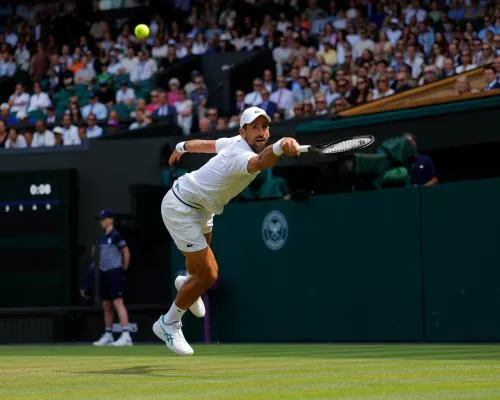 Djokovic Hangs On to Top Rinderknech and Stay Alive for Grand Slam No. 25
Novak Djokovic secured a narrow victory over Arthur Rinderknech in a highly competitive Wimbledon match, bringing him closer to tying Roger Federer's record of 105 men's singles match wins at the tournament.
-
 Khoản hỗ trợ từ FIFA: Chìa khóa biến Cape Verde trở thành hiện tượng World Cup
Cape Verde trở thành hiện tượng World Cup 2026 nhờ vào khoản hỗ trợ lớn từ FIFA giúp xây dựng hạ tầng và phát triển bóng đá.
-
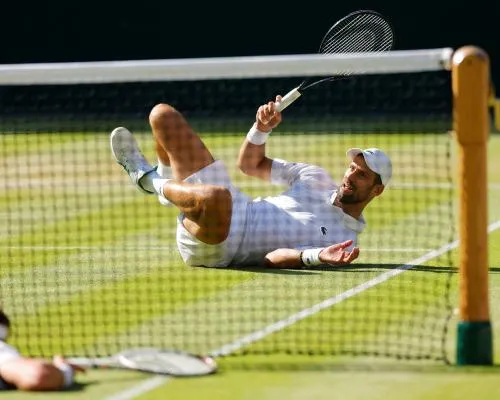 Wimbledon 2026: Highlights and Key Moments from Day One
Highlights from Wimbledon Day One include surprising upsets, top seed progressions, and thrilling matches that captured spectators' attention.


