
Are entrance exams required for admission to Italian universities?
Italy is home to some of the oldest and most prestigious universities in the world, attracting students from across the globe. With its excellent academic programs and culturally rich environment, Italian universities offer a variety of courses across disciplines. However, one question that often arises among prospective international students is whether entrance exams are required for admission. The answer depends on the program, university, and level of study. This article explores the role of entrance exams in securing admission to Italian universities.
1. General Overview of Entrance Exams in Italy
While many programs in Italian universities do not require entrance exams, some competitive and specialized courses mandate them to assess the applicant’s suitability and knowledge. The necessity of an entrance exam varies based on the following factors:
- Type of Program: Programs like medicine, architecture, and engineering often require entrance exams.
- Level of Study: Undergraduate programs may have more entrance exam requirements compared to postgraduate programs.
- Field of Study: Practical and professional courses are more likely to have entrance tests.
2. Programs That Commonly Require Entrance Exams
Medicine and Surgery
- Medicine is one of the most competitive fields in Italy. The International Medical Admissions Test (IMAT) is mandatory for students applying to medicine programs taught in English. It assesses knowledge in biology, chemistry, physics, and logical reasoning.
- Italian-taught medicine programs may have separate entrance exams conducted in Italian.
Architecture
- Architecture programs require applicants to clear the Architecture Admission Test, which evaluates skills in design, spatial reasoning, and general knowledge of architecture-related subjects.
Engineering
- Some universities may require entrance exams for engineering programs, particularly in high-demand fields like aerospace or civil engineering. These tests often cover mathematics, physics, and logical reasoning.
Arts and Design
- Universities offering arts and design programs often require a portfolio submission along with a practical entrance test to evaluate creativity and technical skills.
Music and Performing Arts
- Conservatories and performing arts academies typically require auditions or entrance exams to assess the applicant’s talent and technical proficiency.
3. Programs Without Entrance Exams

Many undergraduate and postgraduate courses, particularly in humanities, business, and social sciences, do not require entrance exams. Instead, admission is based on:
- Academic transcripts.
- Statement of Purpose (SOP).
- Letters of Recommendation (LORs).
- Language proficiency tests (English or Italian, depending on the program).
4. Role of Language Proficiency Tests
While not considered entrance exams, international students are often required to demonstrate language proficiency:
- For Italian-taught programs, a B2 level Italian proficiency certificate (such as CILS or CELI) is usually required.
- For English-taught programs, standardized tests like IELTS, TOEFL, or PTE are needed.
5. International Students and Pre-Enrollment
International students applying to Italian universities must go through the pre-enrollment process on the Universitaly portal. This process may involve specific university-level assessments in addition to academic qualifications.
6. Preparing for Entrance Exams
For students required to take entrance exams, preparation is crucial:
- IMAT Preparation: Online resources, practice tests, and preparatory books are widely available for students aiming for medical programs.
- Architecture and Design: Students should focus on problem-solving, general knowledge, and artistic skills.
- Engineering: Strengthen fundamentals in mathematics and physics to perform well in technical tests.
7. Scholarships and Entrance Exams
Some scholarships may require students to achieve specific scores in entrance exams or demonstrate exceptional performance in their academic records. Scholarships like the Italian Government Scholarships or region-specific grants often consider academic and competitive test scores as a criterion.
8. Alternatives to Entrance Exams
For programs without mandatory entrance exams, universities focus on holistic evaluation. This includes academic merit, extracurricular achievements, and personal essays. In some cases, interviews may also be conducted to assess the student’s motivation and goals.
Conclusion
Whether or not entrance exams are required for admission to Italian universities depends on the program, level of study, and university. Competitive programs like medicine, architecture, and arts are more likely to require entrance tests, while many humanities and social science courses rely on academic qualifications and personal documents. Understanding the specific requirements for your chosen program and preparing accordingly will ensure a smoother application process. For students aiming to study in Italy, thorough research and early preparation are key to securing a spot in one of the world’s most sought-after education systems.
RMC Elite
13 posts
-

Nước châu Á nào yêu cầu 60% đất phải được rừng bao phủ để bảo vệ môi trường?Bài viết này tập trung vào yêu cầu của một quốc gia châu Á về bảo vệ môi trường thông qua quy định về diện tích rừng chiếm lĩnh thổ. Điều này ảnh hưởng lớn đến quá trình hấp thụ khí CO2.
-

Tỷ lệ tuyển dụng cử nhân mới giảm mạnh 20% ở Mỹ: Ngành Kỹ thuật chịu ảnh hưởng nặngBáo cáo mới từ LinkedIn cho thấy 15 ngành học phổ biến nhất tại Mỹ đang chứng kiến sự sụt giảm đáng kể trong việc tuyển dụng cử nhân mới ra trường. Động thái này không chỉ tác động đến những ngành công nghệ cao mà cả
-

7 Trường Công an công bố điểm thi đánh giá năng lực: Xét tuyển 2.070 chỉ tiêu7 trường công an đồng loạt công bố kết quả bài thi đánh giá năng lực, là căn cứ xét tuyển vào năm 2026. Thí sinh có thể tra cứu điểm thi qua các website của các trường.
-

64 trường đại học công bố điểm sàn từ 15 đến 25 điểmBộ Giáo dục và Đào tạo yêu cầu các trường đại học đưa ra mức sàn điểm thi tốt nghiệp THPT để đảm bảo chất lượng đầu vào, với nhiều trường công bố điểm sàn từ 15 đến 25.
-

Phó Thủ tướng chỉ đạo giải quyết dứt điểm tranh chấp tại Đại học Kinh BắcBộ Giáo dục và Đào tạo nhận chỉ đạo từ Văn phòng Chính phủ yêu cầu giải quyết dứt điểm tranh chấp nội bộ tại Đại học Kinh Bắc, gây ra tình trạng gián đoạn đào tạo cho hàng nghìn sinh viên.
-

Nước Lào: Biệt danh 'đất nước hình lục lăng' từ hệ thống biên giới phức tạpĐất nước hình lục lăng là tên gọi đặc trưng của Nước Lào, nơi có phần lãnh thổ trung tâm giáp 8 quốc gia khác. Biệt danh này xuất phát từ hình dạng phong cách lãnh thổ độc đáo.
-

Lớp học ven biển xuất sắc với nhiều điểm 10 ToánLớp 12A6 của trường THPT Nguyễn Đình Liễn có nhiều điểm 10 Toán, trong đó 9 em đạt tuyệt đối, cao hơn điểm trung bình lớp và điểm chuẩn.
-

Đại học Luật TP HCM thưởng 180 triệu đồng cho giảng viên lấy bằng tiến sĩĐại học Luật TP HCM thưởng 180 triệu đồng cho giảng viên lấy bằng tiến sĩ nhằm tăng tỷ lệ tiến sĩ của trường.
-

15 tỉnh, thành phố thí điểm sáp nhập trường học và chuyển đổi hệ trung cấp sang trung học nghềBộ Giáo dục và Đào tạo thí điểm sáp nhập trường học tại 13 tỉnh, thành phố nhằm nâng cao chất lượng giáo dục, đồng thời chuyển đổi hệ trung cấp sang trung học nghề theo hướng hiện đại.
-
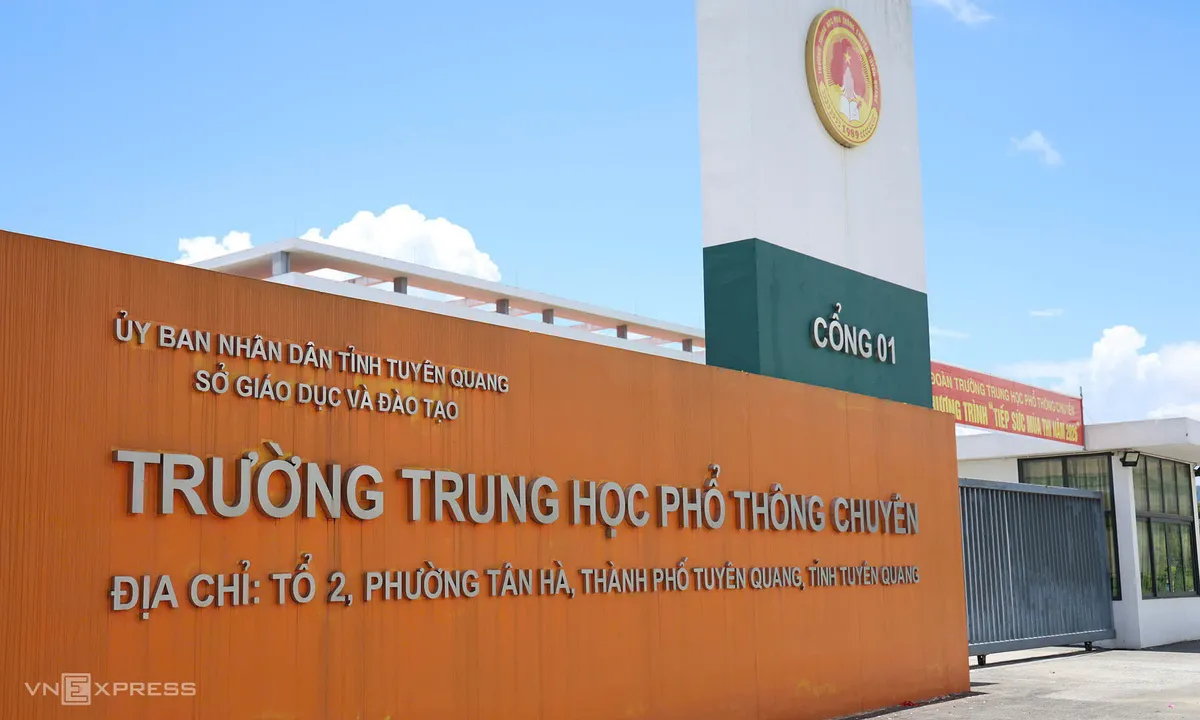
Tuyên Quang: Kiểm tra toàn bộ quy trình tổ chức thi với điểm thi, phòng thi có thí sinh đạt điểm caoTỉnh Tuyên Quang kiểm tra toàn bộ quy trình thi với bài toán đạt 10 điểm, đồng thời đối chiếu học bạ của các thí sinh.
-

Danh sách trường công bố điểm sàn thi tốt nghiệp THPT 2026: Xu hướng và dự báo điểm chuẩnViệc nhiều trường đại học công bố điểm sàn thi tốt nghiệp THPT 2026 cho thấy xu hướng tuyển sinh và dự báo về điểm chuẩn năm nay.


