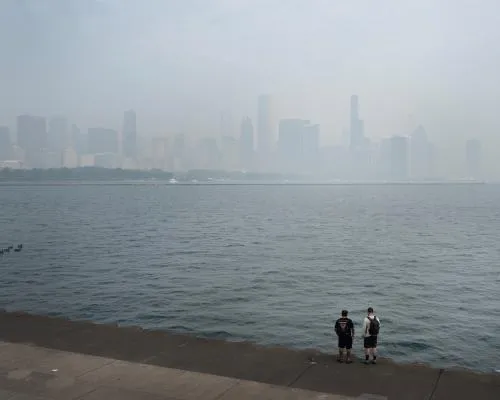
- Hazardous air quality has spread from Canada across the United States, impacting over 109 million people.
- Residents are facing dangerous decisions on whether to keep windows open for fresh air or closed to avoid smoke.
- The situation is prompting calls for increased government investment in wildfire response and mitigation efforts.
- Health concerns are escalating as smoke worsens asthma, heart disease, and other respiratory illnesses.
The air quality across North America has plummeted due to extensive wildfires in Canada, affecting tens of millions of people. Air quality alerts were issued for over 20 US states as smoke from hundreds of fires in central and northern Ontario drifted southward, impacting about 109 million Americans, particularly those in the Midwest, Mid-Atlantic, and Northeast regions.
Personal Accounts of Smoke's Impact
In Waterloo, Ontario, Tenille Bonoguore shared her experience: 'In a country where we get through winter by anticipating summer, we are locked indoors gazing at hazy streets visibly full of smoke.' She explained that families face the difficult choice between dealing with heat or smoke. For many, this is the second or third summer facing these abnormal conditions.
Self-employed carpenter Ted Brearley in Hamilton, Ontario, described how the smoke has forced him to reduce work hours and send employees home. 'My business has experienced a huge loss in production,' he noted. He questioned whether governments have adequately invested in wildfire response, citing worsening conditions year after year.
Student Zeff from Skokie, Illinois, highlighted the noxious air: 'The air stinks of burnt plastic, like it’s been poisoned.' Michelle Stiennon, a children's librarian in Farmington Hills, Michigan, moved an outdoor story time event inside as conditions deteriorated. She also mentioned the strain on local hospitals, noting that many patients were suffering from asthma or breathing issues.
Health Concerns and Government Response
Public health officials have repeatedly warned of the dangers of wildfire smoke, which can exacerbate respiratory illnesses such as asthma and heart disease. In Baltimore, Dr. Charlotte Watts observed that poor air quality due to Canadian wildfires has significantly affected her patients' respiratory health.
The situation is prompting calls for increased government investment in wildfire response and mitigation efforts. Ted Brearley asked, 'With wildfires getting worse and worse, year after year, why is our government not stepping up to the plate?' He expressed concern that free resources do little when people can't breathe or work.
Dr. Watts added, 'Maybe they all think that they’re going to go to outer space and live in sci-fi colonies,' but she believes corporations and governments don’t really care about public health.
Looking Ahead
The ongoing situation highlights the growing challenges posed by climate change and wildfire frequency. While immediate relief is sought, the long-term implications of these events on air quality and public health remain a pressing concern for communities across North America.
Source: The Guardian

Guardian News World
565 posts
-
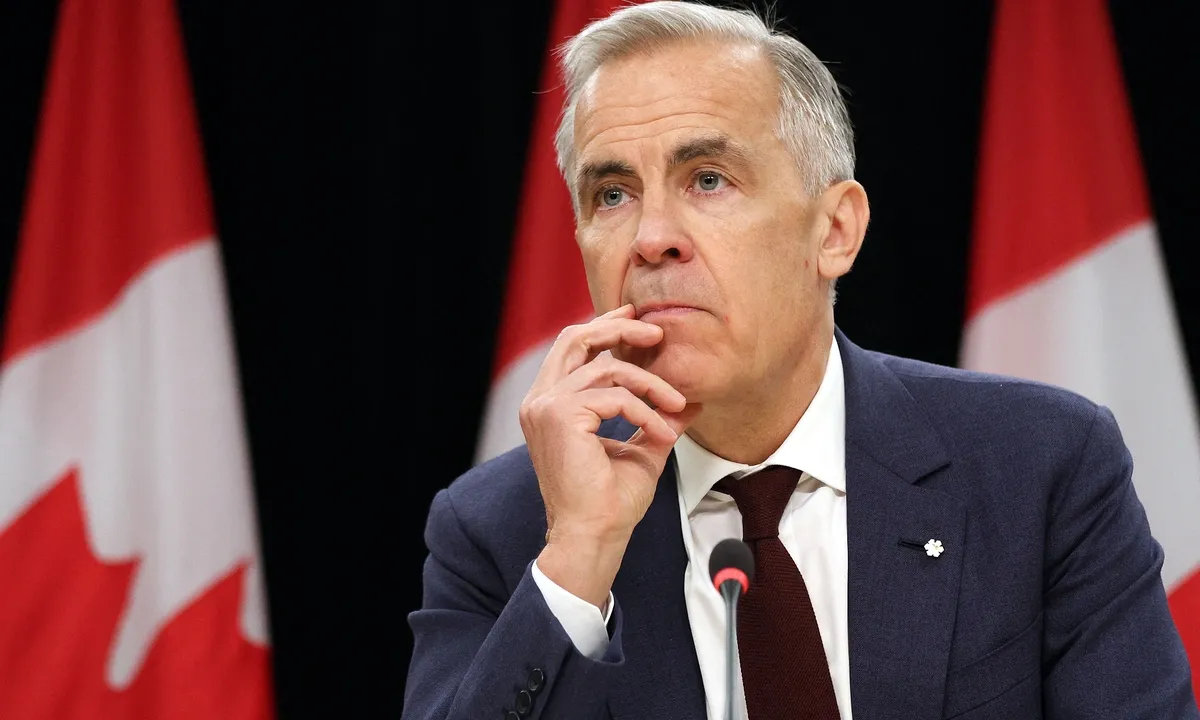 Lựa chọn khó khăn của Thủ tướng Canada trước đòn thuế từ Tổng thống Trump
Bài viết phân tích về những lựa chọn khó khăn mà Thủ tướng Canada Mark Carney phải đối mặt trước đòn thuế từ Tổng thống Donald Trump, ảnh hưởng đến cả kinh tế và chính trị.
-
 Ex-London Underground Cleaner Calls for Warnings Over Toxic Dust
A former London Underground cleaner is calling for passengers to be aware of the risks associated with toxic dust after being unfairly dismissed for whistleblowing.
-
 East London's beloved football pitch faces demolition for social housing
Campaigners fear losing access to a beloved football pitch in east London as Hackney council plans to build social homes, sparking concerns about community impact.
-
 Community fears loss of beloved football pitch as Hackney council builds social homes
Hackney council's plan to build social homes at the expense of a beloved football pitch in east London has sparked community concerns.
-
 Dodgers' World Series Triumph Sparks Mixed Feelings Among LA Fans
LA Dodgers' World Series win sparks mixed feelings among fans, particularly those from immigrant communities. The team's controversial ties to immigration detention centers complicate support, while the upcoming White House visit raises ethical questions.
-
 US Politics Live: Key Events and Developments
Key political developments in the US, including an Arizona governor race, trade tensions with Canada, and scrutiny of ICE vehicle assault claims.
-
 U.S. Continues Intensified Strikes Against Iran Amid Diplomatic Fears
The United States continues its military strikes against Iran amid growing tensions and new threats from President Trump targeting key nuclear sites.
-
 US intensifies military action against Iran amid renewed threats
The US military intensifies its operations against Iran while President Trump threatens further attacks on a key nuclear site, exacerbating regional tensions.
-
 Trung Quốc, Philippines chỉ trích nhau sau vụ đụng độ ở Biển Đông: Ai là bên khiêu khích?
Một vụ đụng độ giữa hải cảnh Trung Quốc và lực lượng Philippines tại bãi Cỏ Mây đã dẫn đến sự chỉ trích lẫn nhau của hai nước. Các bên cáo buộc hành động khiêu khích và bóp méo sự thật trong các tuyên bố.
-
 Ex-Conservative Minister Ann Widdecombe Charged with Murder
Ex-Conservative Minister Ann Widdecombe was found dead after being attacked with a hammer at her home in Devon. Joshua Kerry faces murder charges following an investigation that remains under scrutiny.
-
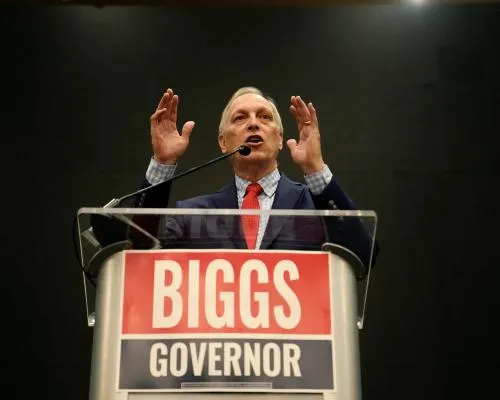 Arizona Republicans Nominate Andy Biggs for Governor in Contested Midterms
Republican Andy Biggs is set to challenge Democrat Katie Hobbs for governor in a highly contested race that reflects broader national trends and political climates.


