- Microsoft, Amazon and Google’s carbon emissions increased by nearly a fifth in the past year.
- The expansion of datacentre infrastructure is driving the increase in emissions.
- Despite the rise, all three tech giants still aim to achieve net zero emissions.
- Proposals for building more datacentres are increasing as demand for AI tools grows.
Key Findings from Annual Sustainability Reports
The latest annual sustainability reports from Microsoft, Amazon and Google reveal a significant rise in their collective carbon emissions. In the financial year ending March 2026, these tech giants emitted approximately 119 million metric tonnes of CO₂ equivalent (mTCO₂e), marking an increase compared to previous years. This figure is roughly a third of France’s total emissions for that period.
Impact of AI and Cloud Services
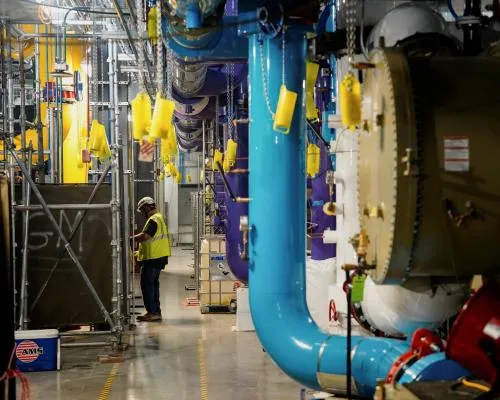
The surge in emissions is primarily attributed to the rapid expansion of datacentre infrastructure as these companies meet growing demand for cloud services, including training and operating chatbots and other AI products. According to Microsoft’s report, their carbon footprint increased by 25%, while Google reported an 18% rise, and Amazon saw a 16% increase in supply chain emissions.
Despite these developments, the companies remain committed to achieving net zero emissions. By 2030, both Google and Microsoft have set this as their target date, with Amazon aiming for 2040. However, Cecilia Rikap, an economics professor at University College London, warns that expanding carbon footprints could undermine these climate ambitions.
Global Datacentre Construction Boom
The construction of datacentres is part of a larger trend driven by the tech sector's growing investment in AI. The global push to build this infrastructure, which includes projects from Norway to North Tyneside and beyond, is expected to cost $765 billion this year alone.
While these investments are substantial, they come at the expense of rising carbon emissions. Shaolei Ren, a professor of electrical engineering at the University of California, Riverside, notes that Microsoft’s report indicates fewer available carbon credits on global markets to offset their emissions. He suggests that this could indicate a potential shortage in the carbon credit supply required to meet these tech giants' needs.
Future Projections and Challenges
The expansion of datacentres is projected to significantly impact energy consumption globally. The Uptime Institute estimates that projects announced last year would consume 1.3% of the world's electricity usage, nearly doubling current demand for datacentre power. Most of this new power will come from US-based projects.
Source: The Guardian

World News Today
511 posts
-
 Elon Musk's Father Reveals Family Foundation's Role in Transporting Far-Right Activist to Russia
Elon Musk's father confirms his family foundation took far-right activist Tommy Robinson to Russia for meetings with business figures.
-
 Dự luật mở rộng quyền sở hữu nhà ở trở thành luật dù không có chữ ký của Trump
Bài phân tích lý do Tổng thống Mỹ Donald Trump không ký vào dự luật Con đường sở hữu nhà ở thế kỷ 21, khiến nó tự động trở thành luật.
-
 Nigerian Army Reports Major Victory Against Bandits in Zamfara
Nigerian soldiers and local vigilantes carried out a two-day operation that eliminated over 300 bandits in Zamfara state.
-
 Yemen's Uncertain Future: Tensions Loom in Both Battlefield and Politics
Tensions rise in Yemen as conflicts escalate on multiple fronts.
-
 Pianist Loses Lawsuit Against Orchestra
Pianist Jayson Gillham lost a legal battle against an orchestra after they canceled one of his shows.
-
 Đội tuyển Ai Cập gây chấn động thế giới: Chiến thắng đầu tiên tại World Cup được chào đón rầm rộ
Đội tuyển Ai Cập gây chấn động thế giới với thành tích tốt nhất lịch sử tại World Cup, được người hâm mộ chào đón rầm rộ khi về nước. Sự kiện này đã đặt ra câu hỏi về tính công bằng của các quyết định trọng t
-
 Deadly Wildfire Ravages Spain; At Least 12 Killed
Wildfire in Spain kills at least 12, including four British citizens, as 23 more remain unaccounted for.
-
 London Underground Faces Heatwave Crisis Amid Rising Temperatures
London Underground faces extreme temperatures during recent heatwaves, with readings reaching 34°C on some lines. Passengers and staff are suffering while TfL works to adapt infrastructure.
-
 limousine nha trang đi đà lạt
Dịch vụ xe limousine nha trang đà lạt được nhiều người lựa chọn bởi khả năng mang lại không gian riêng tư và sự thoải mái trong suốt hành trình. Đặc biệt với những nhóm bạn, gia đình hoặc du khách muốn thư giãn trước khi bắ
-
 Trump-Backed Judge Rules in Favor of Dismissing Proud Boys Convictions
A federal judge appointed by Trump dismissed seditious conspiracy charges against Proud Boys leaders following an appeals court overturning of convictions.


