Stop Weltman, Weinberg & Reis Phone Harassment: A Comprehensive Guide to Protecting Your Rights

Receiving relentless phone calls from debt collectors can be an incredibly stressful and intimidating experience. When the calls are coming from a large and established law firm like Weltman, Weinberg & Reis (WWR), it can feel even more overwhelming, leaving you unsure of your rights and how to make the harassment stop. This comprehensive guide aims to empower you with the knowledge and strategies to effectively deal with Weltman, Weinberg & Reis phone harassment, protect your consumer rights, and ultimately find a resolution to your debt situation.
Understanding Weltman, Weinberg & Reis
First and foremost, it's crucial to understand who Weltman, Weinberg & Reis are. They are a legitimate, long-standing debt collection law firm, not a scam. Headquartered in Cleveland, Ohio, with multiple offices across several states, they represent a wide array of creditors, including major financial institutions, government agencies, and healthcare organizations. Their primary business is to recover outstanding debts on behalf of their clients, and they are known for their aggressive collection tactics, which can include initiating lawsuits.
While WWR is a legitimate firm, numerous complaints have been lodged against them regarding their debt collection practices. These complaints often cite tactics that allegedly cross the line, such as lying about debt amounts, attempting to collect on debts already paid or not owed, or engaging in deceptive communication. This underscores the importance of understanding your rights and being prepared to defend them.
Your Rights Under the Fair Debt Collection Practices Act (FDCPA)
The good news is that you are not powerless against debt collector harassment. The Fair Debt Collection Practices Act (FDCPA) is a federal law that strictly regulates the actions of third-party debt collectors like Weltman, Weinberg & Reis. It prohibits them from using abusive, unfair, or deceptive practices to collect debts. Knowing your FDCPA rights is your first and most powerful line of defense:
- Prohibited Communication Times: Debt collectors generally cannot contact you before 8:00 AM or after 9:00 PM local time, unless you explicitly agree to it.
- Workplace Contact: They cannot contact you at your place of employment if they know your employer prohibits such calls or if you tell them to stop contacting you there.
- Harassment and Abuse: Collectors are forbidden from harassing, oppressing, or abusing any person. This includes:
- Using or threatening violence.
- Using obscene or profane language.
- Repeatedly or continuously calling with the intent to annoy, abuse, or harass.
- Publicly revealing your debt (e.g., sending postcards, leaving messages visible to others).
- False or Misleading Representations: Debt collectors cannot lie or mislead you about the debt or their intentions. This includes:
- Falsely claiming to be attorneys or government representatives.
- Misrepresenting the amount you owe or the legal status of the debt.
- Threatening arrest or imprisonment for non-payment (which is illegal for consumer debt).
- Falsely implying that you have committed a crime.
- Unfair Practices: Certain unfair practices are also prohibited, such as:
- Collecting any amount greater than the principal, interest, and fees originally agreed upon or allowed by law.
- Depositing a post-dated check prematurely.
- Threatening to repossess property without a legal right to do so.
- Debt Validation: Within five days of their initial contact, a debt collector must send you a written "debt validation notice." This notice must include:
- The amount of the debt.
- The name of the creditor to whom the debt is owed.
- A statement that you have 30 days to dispute the debt in writing.
- A statement that if you dispute the debt in writing within 30 days, the collector will obtain verification of the debt and mail it to you.
- A statement that if you do not dispute the debt within 30 days, the collector will assume the debt is valid.
- Stopping Communication: If you send a written request to a debt collector asking them to stop contacting you, they must cease all further communication, except to inform you that they are terminating collection efforts or intend to take a specific legal action (like filing a lawsuit).
Strategies to Stop Weltman, Weinberg & Reis Phone Harassment

Now that you understand your rights, here's how to put them into action:
1. Document Everything
This is arguably the most crucial step. Every interaction with Weltman, Weinberg & Reis should be meticulously documented. Keep a detailed log that includes:
- Date and Time of Call: Precisely when the call occurred.
- Caller's Name: If they provide it.
- Phone Number: The number they called from.
- Content of Conversation: A summary of what was discussed, including any threats, abusive language, or false statements.
- Your Responses: What you said or did.
- Witnesses: If anyone else overheard the call.
This documentation will be invaluable if you need to file a complaint or pursue legal action.
2. Validate the Debt – In Writing!
Never assume you owe the debt simply because a collector says so. As per the FDCPA, you have the right to validate the debt within 30 days of initial contact. Send a certified letter, return receipt requested, to Weltman, Weinberg & Reis demanding validation of the debt. This letter should clearly state that you dispute the debt and require verification, including:
- Proof that you owe the debt.
- The original creditor's name.
- The original account number.
- An itemized breakdown of the amount owed, including principal, interest, and fees.
Sending this letter by certified mail provides you with legal proof that they received your request. Once they receive your validation request, they must cease all collection activities until they provide the requested verification. If they cannot validate the debt, they have no legal basis to collect it.
3. Send a "Cease and Desist" Letter
If the harassment continues after you've requested validation, or if you simply want all communication to stop, send a "cease and desist" letter. Again, send this by certified mail, return receipt requested. This letter should explicitly state that you demand they stop all communication with you regarding the debt.
Be aware that while a cease and desist letter will stop most direct communication, it does not make the debt go away. Weltman, Weinberg & Reis can still pursue legal action, such as filing a lawsuit, if they believe the debt is valid and collectable. However, they will generally be prohibited from contacting you directly by phone or mail once they receive your letter.
4. Know the Statute of Limitations
Every state has a "statute of limitations" (SOL) for how long a creditor or debt collector can sue you to collect a debt. If the SOL has expired, WWR may still be able to contact you, but they generally cannot sue you. However, it's crucial to understand that paying even a small amount on a time-barred debt in some states can "re-age" the debt and restart the statute of limitations, making you vulnerable to a lawsuit again. Research your state's specific statute of limitations for the type of debt you have.
5. Do Not Provide Personal Information
Be extremely cautious about providing any personal information over the phone, especially if you suspect the call might be a scam or if you haven't validated the debt. Debt collectors already have your contact information; they shouldn't need your Social Security number or bank details unless you are actively making a payment arrangement.
6. Consider Negotiating a Settlement
If the debt is legitimate and within the statute of limitations, and you are in a position to pay, negotiating a settlement can be a viable option. Often, debt collectors will accept a lower amount than the full balance owed, especially if the debt is old or if they believe you might file for bankruptcy.
- Make a Realistic Offer: Determine what you can genuinely afford to pay.
- Start Low: Begin with a lower offer to allow room for negotiation.
- Get Everything in Writing: Crucially, never pay anything until you have a signed, written agreement from Weltman, Weinberg & Reis stating that the agreed-upon payment will settle the entire debt and that they will report it as "paid in full" or "settled" to the credit bureaus. This prevents them from coming back for more or damaging your credit further.
7. Consult with a Consumer Rights Attorney
If you feel overwhelmed, if the harassment persists despite your efforts, or if Weltman, Weinberg & Reis files a lawsuit against you, immediately seek legal counsel from a consumer rights attorney. Many attorneys offer free initial consultations and work on a contingency basis, meaning you don't pay unless they win your case.
A consumer rights attorney can:
- Review your case and determine if WWR has violated the FDCPA or other state laws.
- Help you draft and send formal dispute and cease-and-desist letters.
- Defend you in court if a lawsuit is filed, potentially raising defenses like the statute of limitations or lack of debt validation.
- File a counterclaim against Weltman, Weinberg & Reis for FDCPA violations, which could result in the cancellation of your debt and even monetary damages awarded to you.
- Negotiate a fair settlement on your behalf, ensuring all agreements are legally binding.
8. File a Complaint
If you believe Weltman, Weinberg & Reis has violated your rights, you can file a complaint with:
- The Consumer Financial Protection Bureau (CFPB): The CFPB is a federal agency that protects consumers in the financial marketplace. They maintain a public database of consumer complaints.
- The Federal Trade Commission (FTC): The FTC also collects complaints about debt collectors and enforces consumer protection laws.
- Your State Attorney General's Office: Your state's attorney general may have a consumer protection division that handles complaints against debt collectors.
- The Better Business Bureau (BBB): While not a regulatory body, filing a complaint with the BBB can sometimes prompt a response from the company.
What Not to Do
- Ignore the Calls Entirely (Without Action): While frustrating, completely ignoring debt collector calls without taking any action (like sending a validation or cease and desist letter) can lead to a lawsuit and potential wage garnishment or bank account levies.
- Promise to Pay What You Can't Afford: Never agree to a payment plan or settlement that is beyond your financial means. This can lead to default, further damage to your credit, and renewed collection efforts.
- Give in to Threats: Do not let fear or intimidation drive your decisions. Remember your rights and seek professional help if needed.
- Discuss Your Debt with Third Parties: Debt collectors are generally prohibited from discussing your debt with anyone other than you (or your attorney, spouse, or parent if you are a minor). Do not provide them with contact information for friends, family, or employers.
- Engage in Abusive Conversations: While frustrating, maintain a calm and professional demeanor. Do not use abusive language yourself, as this can undermine your position.
Conclusion
Dealing with debt collection harassment from a firm like Weltman, Weinberg & Reis can be a challenging ordeal, but it is not a battle you have to face alone. By understanding your rights under the FDCPA, meticulously documenting all interactions, strategically using debt validation and cease-and-desist letters, and seeking legal counsel when necessary, you can effectively stop the harassment and work towards a resolution that protects your financial well-being. Empower yourself with knowledge, act decisively, and remember that consumer protection laws are in place to safeguard you from unfair and abusive debt collection practices.
Jack Happy
20 posts
-
 Cảnh sát vây bắt đường dây cá độ bóng đá và số đề 1.000 tỷ đồng tại Cần Thơ, Đà Nẵng
Cảnh sát Cần Thơ và Đà Nẵng triệt xóa các đường dây cá độ bóng đá, số đề với số tiền giao dịch lớn.
-
 Mẹo lái môtô nước: Bị bắt vì để con 8 tuổi một mình điều khiển trên biển
Người đàn ông bị bắt vì để con trai 8 tuổi tự lái mô tô nước trên biển Florida, vấp phải quy định pháp luật.
-
 Biểu tượng hip-hop Hàn Quốc Kim Sung-jae bất ngờ qua đời với 28 vết kim trên cánh tay
Nam ca sĩ hip-hop Kim Sung-jae ra mắt solo nhưng ngay một ngày sau đó được phát hiện tử vong với 28 vết kim trên cánh tay, gây ra nhiều nghi vấn về nguyên nhân tử vong và kết luận của tòa án.
-
 Cựu giám đốc Đại học Huế và đồng phạm lĩnh án 13 năm tù
Cựu giám đốc Đại học Huế Lê Anh Phương và đồng phạm bị tuyên phạt 13 năm tù về tội lạm dụng chức vụ chiếm đoạt tài sản từ việc thu phí cao hơn quy định.
-
 Caso buôn lậu kim cương quy mô lớn được lật tẩy qua livestream bán hàng tại Thanh Hóa
Công an Thanh Hóa phát hiện một chuyên án về buôn lậu kim cương qua livestream bán hàng, với 38 người bị khởi tố.
-
 Bắt giữ 16 thanh thiếu niên dùng dao phóng lợn cản trở cảnh sát
Nhóm thanh thiếu niên ở Đồng Nai bị tạm giữ vì dùng dao phóng lợn cản trở cảnh sát khi bị truy đuổi.
-
 Phản ứng gay gắt từ nữ tiếp viên karaoke dẫn đến vụ đánh thương tích
Vụ đánh nữ tiếp viên karaoke gây thương tích nghiêm trọng dẫn đến việc ông Hà Mạnh Dũng bị khởi tố và bắt giam.
-
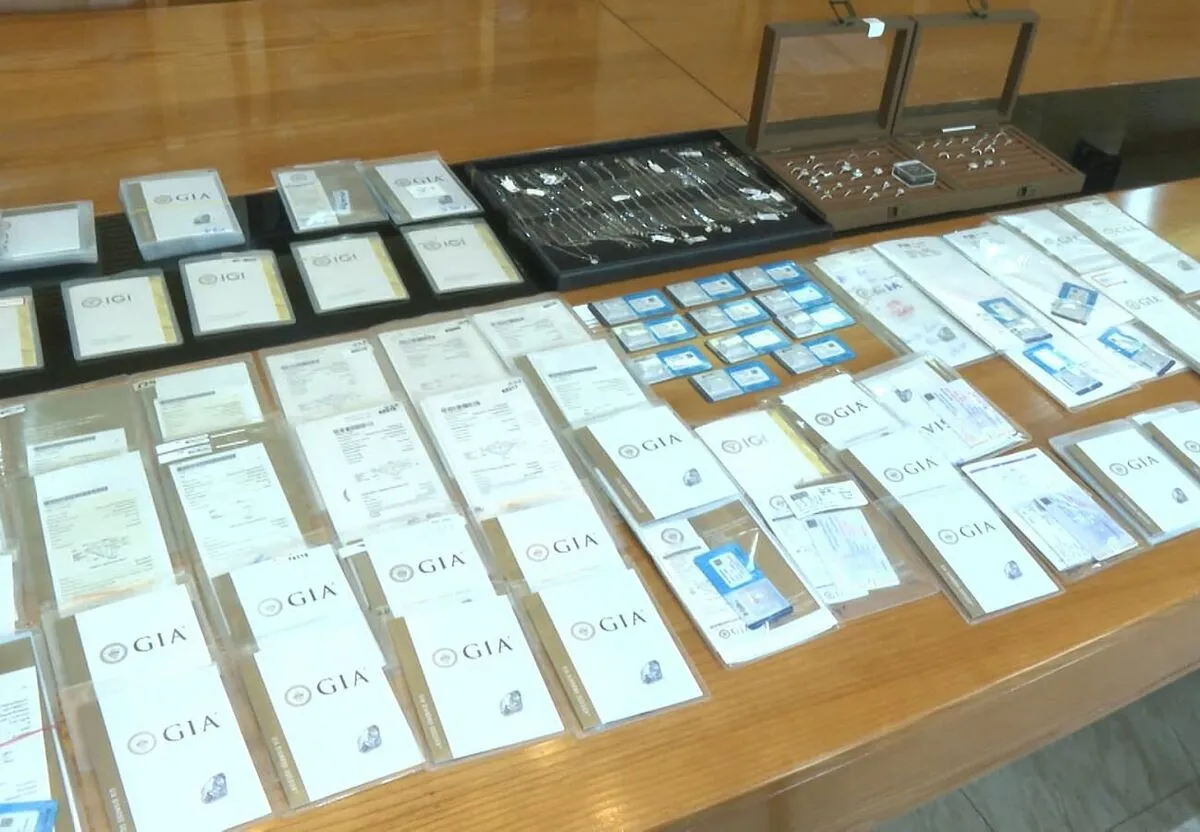 Triệt phá đường dây buôn lậu kim cương quy mô lớn
Công an tỉnh Thanh Hóa triệt phá đường dây buôn lậu kim cương từ Hong Kong vào Việt Nam với 22 nghi can bị khởi tố, thu giữ hơn 1.100 viên kim cương và doanh thu ước tính 280 tỷ đồng.
-
 Việc giao công việc ngoài giờ hành chính và quy định kỷ luật
Việc giao công việc sau giờ hành chính có thể dẫn đến kỷ luật lao động nếu người lao động không hoàn thành nhiệm vụ, nhưng không áp dụng nếu không thỏa thuận làm thêm.
-
 Người đàn ông bị bắn tử vong trước quán nước ở Đắk Lắk: Nghi vấn mâu thuẫn nợ nần
Người đàn ông 47 tuổi bị bắn tử vong trước quán nước ở Đắk Lắk, nghi vấn mâu thuẫn nợ nần; cơ quan điều tra đang truy bắt nghi phạm.
-
 Đánh nữ tiếp viên karaoke vì bị phản ứng: Vụ án Cố ý gây thương tích
Hà Mạnh Dũng bị khởi tố và bắt giam vì hành vi cố ý gây thương tích đối với nữ tiếp viên khi bị phản ứng sau hành vi đụng chạm thân thể tại quán karaoke Golden Bell.


