What is a VIN?
The Vehicle Identification Number (VIN) is a 17-character alphanumeric code that acts as a unique identifier for every vehicle. It’s used by manufacturers, authorities, and service centers to track, identify, and verify vehicles. The VIN is typically found on the dashboard near the windshield or inside the driver's side door frame on a label.
A VIN is designed to give precise details about a vehicle. The code is broken down into specific sections that reveal information such as the vehicle’s manufacturer, model year, engine type, country of origin, and more.
How Does a VIN Decoder Work?
A VIN decoder is a tool or service that takes the 17-character VIN and breaks it down into meaningful data. By entering a VIN into a decoder, you can access information about the vehicle’s history, specifications, and authenticity.
The decoder works by interpreting each segment of the VIN code, which is structured as follows:
Structure of a VIN
A VIN is composed of 17 characters, each with a specific meaning. These characters are grouped into sections, each of which represents different information about the vehicle.
First Three Characters: World Manufacturer Identifier (WMI)
- The first three characters identify the vehicle’s manufacturer and country of origin.
- Example: "1HG" indicates a Honda vehicle made in the USA.
- The first three characters identify the vehicle’s manufacturer and country of origin.
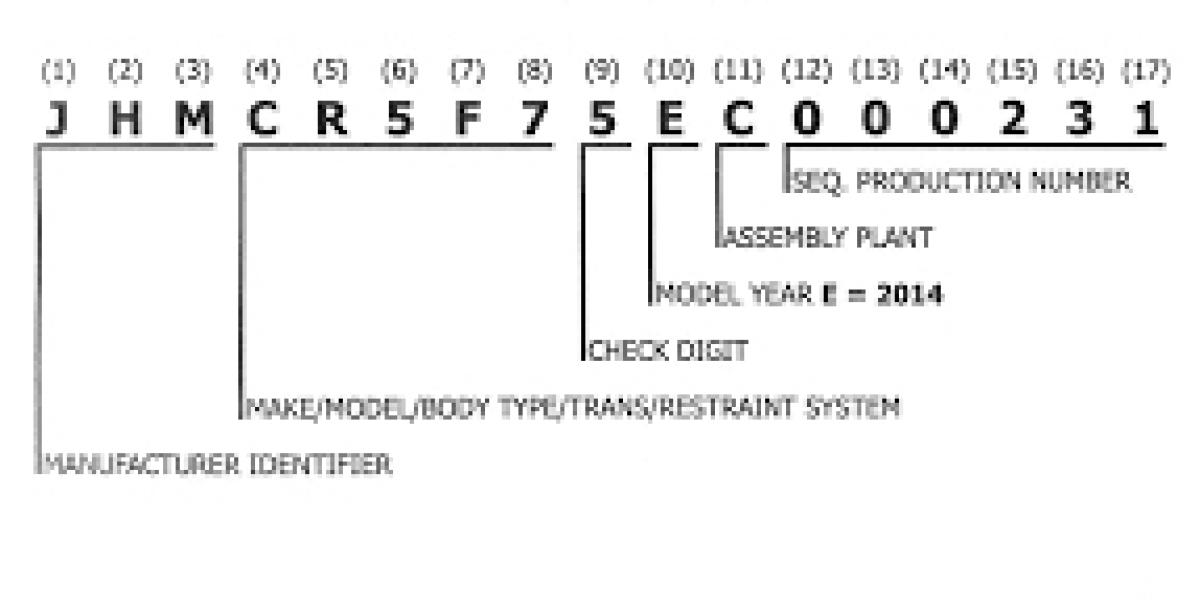
VIN Decoder: Understanding Your Vehicle's Identity and Specifications Characters 4–8: Vehicle Descriptor Section (VDS)
- This section describes the vehicle’s features, including the model, body style, engine type, and transmission.
- Example: “CIVIC” would represent a Honda Civic model.
- This section describes the vehicle’s features, including the model, body style, engine type, and transmission.
Character 9: Check Digit
- The ninth character is used to validate the VIN. It does not convey any specific vehicle information but serves as a verification tool.
Character 10: Model Year
- This character represents the year of manufacture of the vehicle. It is typically a letter or number.
- Example: "A" indicates the year 2010, while "B" represents 2011.
- This character represents the year of manufacture of the vehicle. It is typically a letter or number.
Character 11: Assembly Plant
- The eleventh character identifies the plant where the vehicle was assembled.
- Example: "A" could indicate a specific assembly facility in Michigan.
- The eleventh character identifies the plant where the vehicle was assembled.
Characters 12–17: Serial Number
- These characters are the unique serial number assigned to each vehicle and distinguish it from others of the same make and model.
- Example: "123456" could be the serial number for a particular vehicle.
- These characters are the unique serial number assigned to each vehicle and distinguish it from others of the same make and model.
Why Use a VIN Decoder?
There are several reasons why using a VIN decoder is beneficial, whether you’re buying, selling, or maintaining a vehicle.
1. Verify Vehicle Specifications
A VIN decoder provides an accurate breakdown of the vehicle’s specifications, such as the make, model, engine type, transmission, and trim level. This can help you confirm if the car you're buying matches the seller's description or if you're getting the exact specifications you desire.
2. Check for Recalls
Using a VIN decoder allows you to check for recalls associated with a vehicle. Manufacturers sometimes issue safety recalls to address issues like defective airbags or faulty brakes. By entering the VIN, you can see if the vehicle has been involved in any recall events and whether the necessary repairs have been made.
3. Verify the Vehicle’s History
Decoding the VIN can help verify the ownership history and track if the vehicle has been involved in accidents or insurance claims. If a vehicle has been previously damaged, flooded, or written off, a VIN decoder can help uncover this information, ensuring that you don’t buy a car with hidden problems.
4. Confirm Model Year
The VIN contains the model year of the vehicle, allowing you to confirm if the car matches the advertised year. This is particularly useful when dealing with used vehicles, as sellers may sometimes list the wrong year.
5. Check Title and Registration Status
A VIN decoder can also help you confirm the title status of the vehicle. It will let you know if the car has a clean title or if it has been marked as salvage, rebuilt, or flooded. This is important when purchasing a used car, as a vehicle with a salvage title might have significant underlying issues.
6. Track Ownership Records
Some VIN decoders provide details about the vehicle’s past ownership, including whether it was leased or rented, which could affect its condition or value. This can also give you peace of mind knowing how the vehicle was treated by previous owners.
7. Enhance Insurance and Registration Processes
Many insurance companies and registration authorities use the VIN to verify the vehicle’s identity and ensure it is properly documented. A VIN decoder can help confirm all the details required for these processes.
How to Use a VIN Decoder
Using a VIN decoder is simple. All you need to do is find your vehicle’s VIN (located on the dashboard, driver’s side door frame, or insurance documents) and enter it into a decoder tool. The tool will break down the 17-character code and provide you with a detailed report about the vehicle’s specifications and history.
Common VIN Decoder Information You Can Expect:
- Make and Model: The exact make (e.g., Ford, Toyota) and model (e.g., F-150, Corolla).
- Engine Type and Size: Information on the type and size of the engine.
- Transmission and Drive Type: Whether the vehicle has a manual or automatic transmission, and whether it’s front-wheel drive (FWD), rear-wheel drive (RWD), or all-wheel drive (AWD).
- Year and Manufacturing Location: The year the vehicle was produced and where it was assembled.
- Trim Level: The specific trim level of the vehicle, indicating its features and options.
Conclusion
A VIN decoder is an essential tool for anyone buying or selling a vehicle, as well as for current vehicle owners wanting to learn more about their car. Whether you need to verify a vehicle’s specifications, check for safety recalls, or track its history, a VIN decoder provides quick and reliable insights.
By decoding the 17-character VIN, you gain access to a wealth of information that can help ensure you're making an informed decision when purchasing a used car or ensuring that your current vehicle is safe and up-to-date with any necessary repairs.
Understanding how to use a VIN decoder is a simple yet powerful way to enhance your knowledge of any vehicle you’re considering or currently own.

Bmw vin Decoder
2 posts
-
 Redefining Luxury: The Iconic M3M Golf Estate, Sector 65
In the bustling landscape of Gurugram, few addresses command the same level of prestige and architectural grandeur as M3M Golf Estate, Sector 65. As one of the most prominent residential landmarks along the Golf Course Extension Road, this project has effectively transformed the concept of
-
 Redefining Ultra-Luxury: A Deep Dive into Whiteland Westin Residences, Sector 103, Gurgaon
In the heart of the rapidly evolving Dwarka Expressway corridor, a new benchmark for premium living has emerged. Whiteland Westin Residences, located in Sector 103, Gurgaon, isn't just a residential project—it is a landmark collaboration that brings the world-renowned hospitality o
-
 Green Engineering and Health Optimization at Whiteland The Aspen
To address this, Whiteland Corporation integrated specialized CTMA3 Air Purification technology into the core building systems. This central air infrastructure works continuously to treat, filter, and circulate air throughout enclosed common areas, double-height entrance lobbies, and tower
-
 Mastering the Asset: Technical Infrastructure, Micro-Market Value, and Structural Layouts at DLF Park Place
This deep dive focuses on the granular technical infrastructure, exact structural layouts, and macro-economic factors that explain why this specific project maintains a massive edge over its competition in 2026.
-
 Brand Identity and Tenant Experience: Cultivating Loyalty at Elan Empire Gurgaon
Securing high occupancy in a premium high-street asset is only half the battle. For long-term viability, property management and individual investors must shift their focus to building tenant loyalty and creating a distinctive brand identity.
-
 Master Review: Evaluating Godrej Nature Plus, Sector 33, Gurgaon
The layout uses a smart structural pattern where towers are angled away from each other. This creates a staggered footprint that gives corner apartments clear, unblocked views of the Aravalli foothills while ensuring optimal morning and afternoon sunlight. Inside the towers, the floor plan
-
 BPTP Downtown 66: A Masterpiece of Vertical Luxury in Sector 66
BPTP Downtown 66 has emerged as one of the most anticipated high-rise developments on the Golf Course Extension Road. Designed by the globally acclaimed architectural firm Aedas, this project is not just a residential complex but a vertical ecosystem where luxury meets functionality.
-
 Aesthetic Clinic in Australia | Beauty Clinic in Carolina | PM Aesthetics
Discover a trusted aesthetic clinic in Australia and a professional beauty clinic in Carolina. PM Aesthetics offers advanced skincare, cosmetic treatments, and personalized beauty solutions.
-
 The Masterful Synergy at Signature Global Tonino Lamborghini
Signature Global Tonino Lamborghini Residences represents a ₹2,890 crore synergy of Italian supercar aesthetics and Indian engineering excellence in Sector 71.
-
 Sidewalk Repair NYC: A Complete Guide for Property Owners
Sidewalks in New York City endure constant wear and tear due to heavy foot traffic, extreme weather conditions, and tree root growth. Over time, cracks, uneven surfaces, and potholes can develop. These issues not only create an unpleasant appearance but also pose serious safety hazards for
-
 Why Natural Stone Wall Panels Are Becoming the First Choice for Modern Interiors
Discover why natural stone wall panels are becoming a top choice for modern interiors and exteriors. Learn about their durability, aesthetic appeal, and versatile applications for residential and commercial spaces.


