- Software engineers are adapting by revisiting fundamentals and acquiring new skills.
- The rise of AI is leading to job insecurity among software engineers.
- Collective action is emerging as software engineers seek better protections.
- Cost considerations may balance out reliance on AI in the long term.
Adapting to a New Reality
Matt, a software engineer based in an unspecified location, spends his train commute thinking about his career. He is one of many engineers who are reassessing their skills as artificial intelligence (AI) increasingly handles coding tasks. 'I am trying not to leverage AI where I can,' Matt said, referring to his efforts to keep his programming skills sharp amidst the shift.

The advent of AI has significantly disrupted the software engineering profession. According to data from Layoff.fyi and the New York Fed, a large number of US tech workers have lost their jobs since the release of ChatGPT in 2022, while the unemployment rate for computer science graduates rose to an unspecified percentage in 2024. Moreover, US tech job postings on Indeed dropped by a significant margin from 2020 to 2025.
Engineers like George Dover of Portland, Oregon, are finding new paths. After being laid off, Dover turned to substitute teaching before taking on a software engineering role that focuses more on AI. He used AI-generated code as a learning tool, rigorously testing it for errors and vulnerabilities. 'The quality has to be rigorously tested,' Dover said, highlighting the importance of validating AI-written code.
In response to these changes, software engineers are organizing collectively. Kaitlin Cort, a veteran engineer with eight years of experience, quit her job and started a resource center for tech workers affected by industry disruption. 'I can see that the pace at which AI was getting better was faster than the pace at which I was getting better,' Cort said, emphasizing the anxiety among engineers as they adapt to their changing roles.
The story of Matt, George Dover, and Kaitlin Cort reflects the broader challenge faced by software engineers as they navigate the rapidly evolving landscape. Whether through personal projects or collective action, these professionals are adapting to a new reality where AI is transforming their roles in unexpected ways.
Experts agree that coding skills may be losing value. Bouke Klein Teeselink, an assistant professor at King’s College London, stated, 'AI is hugely augmenting what it means to be a software engineer.' The focus now lies in defining problems, designing systems, and effectively directing AI tools.
Source: The Guardian

Technology News Feed
143 posts
-
 Giải pháp lắp đặt camera quay đóng hàng shopee
Trong những năm gần đây, Shopee đã trở thành một trong những sàn thương mại điện tử lớn nhất Việt Nam với hàng triệu đơn hàng được xử lý mỗi ngày. Song song với sự tăng trưởng đó là áp lực trong việc quản lý quy trình đ
-
 Cách bảo quản và cất giữ Hioki 3280-70F để không bao giờ bị chảy pin
Xin chào quý bạn đọc! Có một khắc tinh thầm lặng mà rất nhiều anh em kỹ sư lẫn người dùng gia đình thường xuyên gặp phải, đó chính là tình trạng chảy pin. Hãy theo dõi hết bài viết này để biết thêm chi tiết nhé!
-
 Có nên lắp phun sương cho dàn nóng điều hòa?
Lắp phun sương cho dàn nóng điều hòa có hiệu quả không và có ảnh hưởng đến độ bền của điều hòa nói chung.
-
 Mẹo giặt sạch giày bằng máy giặt
Máy giặt có thể làm sạch một số loại giày nhưng cần chọn chế độ phù hợp như sử dụng nước lạnh, kết hợp khăn lau để tăng độ bền cho giày.
-
 Xác tàu ngầm hạt nhân rò rỉ phóng xạ dưới đáy biển Na Uy
Nghiên cứu mới cho thấy, tàu K-278 Komsomolets đắm 37 năm trước đang thải ra vật liệu phóng xạ vào vùng nước sâu dưới đáy biển Na Uy.
-
 Lý do thúc đẩy OpenAI đóng cửa Sora
Chi phí cao và nhiều đối thủ cạnh tranh được cho là lý do khiến OpenAI quyết định đóng cửa ứng dụng video Sora.
-
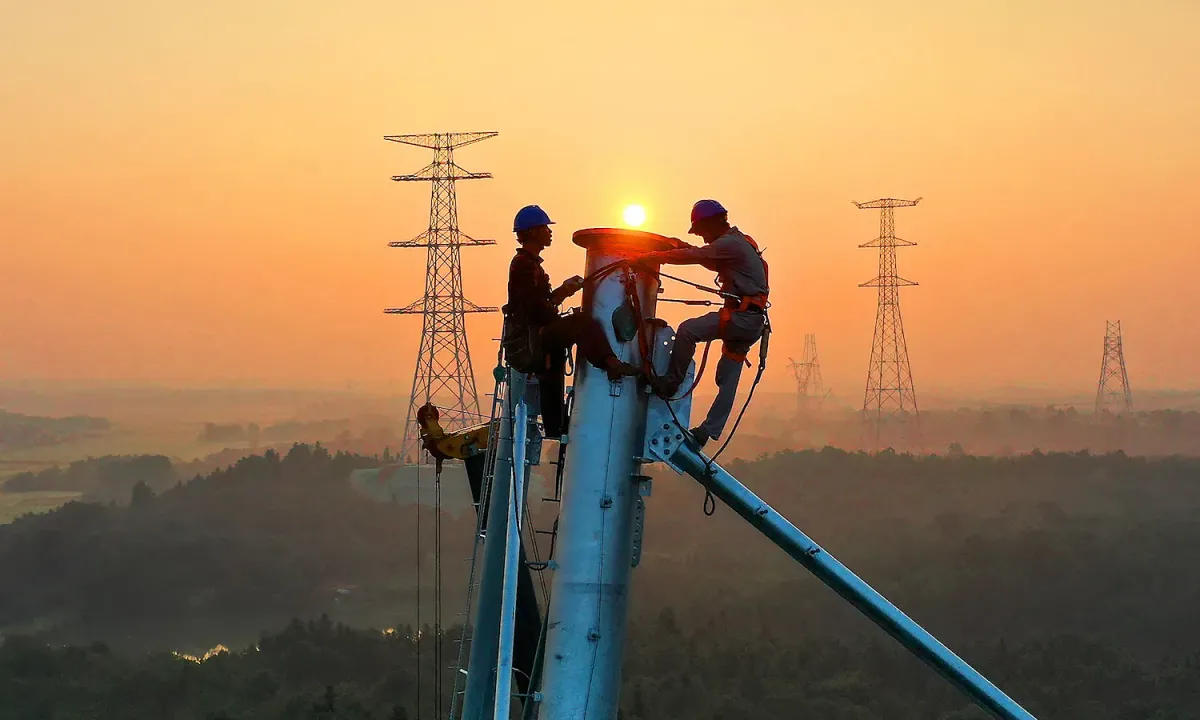 Năng lượng rẻ - 'át chủ bài' của Trung Quốc trong cuộc đua siêu AI
Trung Quốc được đánh giá đang nắm lợi thế lớn trong cuộc đua AI nhờ nguồn năng lượng dồi dào, đa dạng và giá rẻ.
-
 DXB APPS offers best App Development Dubai solutions by expert developers
DXB APPS offers advanced app development Dubai services that revolutionize businesses with cutting-edge digital technology. Our mobile app developers design feature-packed, scalable apps that achieve customer satisfaction and business expansion. Partner with DXB APPS, one of the best app d
-
 Hire Expert App Development Dubai experts for Cutting-Edge App Solutions at DXB APPS
Looking to find the best fitting app development Dubai solutions? DXB APPS is one of the leading mobile application development companies that offer unique Android applications, iOS applications, hybrid applications, and cross-platform applications. Our quality, secure and easy to use appl
-
 'Lựa chọn công trình khoa học xứng đáng dự Giải thưởng Hồ Chí Minh'
Thứ trưởng Bùi Hoàng Phương đề nghị các cơ quan, đơn vị lựa công trình xứng đáng tham gia Giải thưởng Hồ Chí Minh, Giải thưởng Nhà nước về khoa học, công nghệ lần thứ 7.
-
 DXB APPS offers best App Development Dubai solutions by expert developers
DXB APPS offers advanced app development Dubai services that revolutionize businesses with cutting-edge digital technology. Our mobile app developers design feature-packed, scalable apps that achieve customer satisfaction and business expansion. Partner with DXB APPS, one of the best app d


