Federal Judge Temporarily Halted Order for Trump to Turn Over Financial Records in BBC Libel Case

- Judge Roy Altman issued a temporary pause on an order requiring Donald Trump to turn over financial records.
- The pause is while the court considers Trump’s request to revise his libel lawsuit against the BBC.
- Trump argues the BBC documentary harmed his business interests, but the broadcaster disputes this claim.
Temporary Halt in Financial Record Turnover

A federal judge has temporarily halted an order requiring Donald Trump to turn over detailed financial information about his business empire to the BBC as part of a defamation lawsuit. US district judge Roy Altman issued this temporary pause while he considers Trump’s request to revise and narrow parts of his lawsuit against the BBC over a 2024 documentary that aired in the UK.
Trump's legal team sought to stop the discovery order that would have given the BBC access to extensive financial records, including information covering hundreds of businesses held by the Trump family trust. On August 1st, a Miami-based judge had ruled that Trump was required to begin producing these records. On Wednesday, Trump’s attorneys asked the court to temporarily suspend this order, arguing that the BBC's demand for “shockingly broad amount of information” was based on clearly political motivations.
In a four-page order signed and released publicly on Thursday, Altman said Trump’s effort to remove his claims that the documentary damaged his brand and businesses could reduce the BBC's need to obtain these financial records. The lawsuit centers around a scene from the BBC documentary Trump: A Second Chance, where an edited version of Trump's January 6, 2021 speech made it appear he had directly encouraged supporters to attack the US Capitol. The BBC has apologized for this edit but maintains that the defamation allegations lack merit.
This case is part of a larger series of legal actions initiated by Trump against various media organizations over coverage he says is defamatory or unfair. In a separate case, Trump’s attorneys argued that his $10 billion defamation lawsuit against the Wall Street Journal should proceed to trial after the newspaper reported on a “bawdy” letter the president was said to have contributed to a birthday book for Jeffrey Epstein in 2003. Trump's justice department issued subpoenas to New York Times journalists following the newspaper’s reporting on security concerns involving Air Force One before later withdrawing those subpoenas.
Source: The Guardian
World News Today
597 posts
-
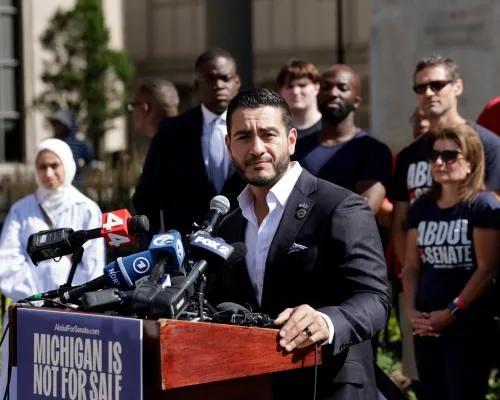 Democratic Victory for Progressive Abdul El-Sayed: Key for Senate Midterm Push
Democratic candidate Abdul El-Sayed has won the Michigan Senate primary, unifying Democrats and raising questions about their strategy for the upcoming midterms.
-
 UK's Small Boat Crossing Strategy: Has It Been Effective?
UK's strategy on small boat crossings has seen a 43% reduction this year, but the issue remains challenging with smugglers adapting their methods.
-
 Arrest Made After Four Men Stabbed in Covent Garden
A 47-year-old woman has been arrested after four men were stabbed in Covent Garden, London. The incident is believed to be linked to mental health issues.
-
 White House Confirms Redo of Helipad for Larger Marine One
The White House confirms it is redoing a helipad on South Lawn to accommodate larger Marine One helicopters, addressing issues with its appearance and slope.
-
 US Lawmakers Call for Regulating Wildfire Betting Amid Growing Concerns
US senators have called on government agencies to crack down on betting platforms that allow users to wager on wildfires, citing concerns over potential arson risks.
-
 White House Announces Redesign of Helipad for Larger Marine One Chopper
The White House confirms plans to redesign a helipad to accommodate a new, larger Marine One helicopter due to President Trump's dissatisfaction with the current landing pad’s appearance and lawn slope.
-
 Falmouth Docks Expansion Plan Sparks Controversy
Plans to expand Falmouth Docks for larger cruise ships are causing controversy among residents who worry about environmental damage and changes to their community.
-
 Teen Golfers Save Family from Drowning During Tryouts
Virginia teenagers Andrew Tuggle, Gavin Cain, and Jackson Castro saved a family from drowning during golf tryouts, earning spots on the Eastern View high school’s team.
-
 Florida Python Challenge Sees Record Participation and Removal
The Florida Python Challenge saw record participation and snake removals, with over 900 hunters capturing hundreds of Burmese pythons in an effort to protect native wildlife.
-
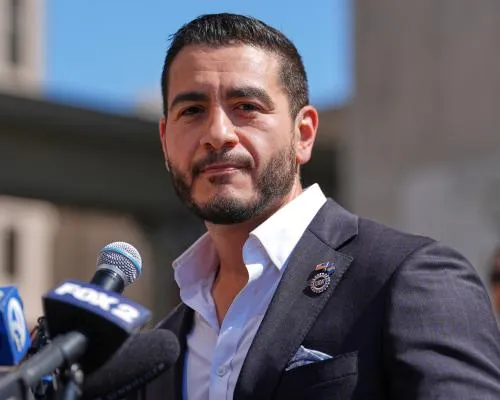 Progressive Nominees Gain Ground in Democratic Primaries: El-Sayed’s Victory and Sanders’ Caution
Michigan’s Abdul El-Sayed secures a crucial victory in the Democratic nomination, while Bernie Sanders expresses hesitancy towards endorsing Francesca Hong. Meanwhile, Canada’s Prime Minister Mark Carney mocks Trump at a Toronto event.


