- Abdul El-Sayed won the Democratic primary in Michigan, despite expectations.
- Democrats are now united behind his candidacy to challenge Republicans.
- His win signals a potential shift away from centrist candidates in swing states.
- The path for Democrats to retake the Senate includes several battleground races.
El-Sayed’s Victory: A Milestone for Progressives
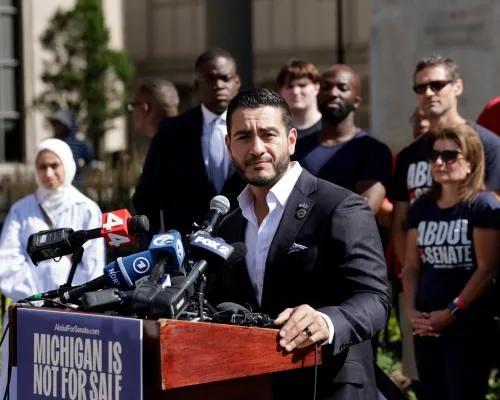
Good morning. The progressive candidate Abdul El-Sayed has won the Democratic primary for the US Senate in Michigan, marking a significant milestone for the progressive movement within the party. Despite many backing his opponent, Haley Stevens, in the race, El-Sayed’s victory reflects growing support among Democrats for more left-leaning candidates. This outcome contrasts with initial expectations favoring incumbent Representative Haley Stevens.United Front Among Democrats
The victory has energized the Democratic party, prompting leading members like Senate Minority Leader Chuck Schumer and Kirsten Gillibrand to express unity in their joint statement. They pledged to work with El-Sayed and other Democrats across Michigan towards a unified goal: taking back control of the Senate in November's midterm elections. 'Democrats are united by a common purpose: putting a check on Donald Trump by defeating his Republican enablers and taking back the Senate,' Schumer and Gillibrand stated, highlighting their determination to regain legislative power.Implications for Midterm Elections
The path forward involves holding onto key seats while targeting red states like Georgia, Maine, and three others. This strategy highlights the evolving approach among Democrats, who may increasingly favor candidates positioned further to the left in critical swing states. The current Senate makeup sees Republicans controlling with 53 lawmakers. The easiest path for Democrats to take back the Senate requires holding on to their seats in Michigan and Georgia while ousting Republicans from blue state Maine as well as three other red states.The implications of El-Sayed’s success extend beyond Michigan, influencing future Democratic primary contests across the country. His victory could serve as a revision to the political establishment’s prior playbook of requiring candidates to run from the center in swing-state politics. Some key takeaways include:- The race was highly competitive, with initial polls and expectations favoring Stevens.- El-Sayed has previously served as a public health official, bringing a unique blend of policy expertise and progressive values to his campaign.- The Democratic party now looks to leverage this momentum towards their broader goal of retaking the Senate in November’s midterm elections.Strategic Implications for Democrats
The strategic implications for Democrats are significant. Holding onto seats like Michigan is crucial, as it has historically been a competitive battleground state. Targeting red states such as Georgia and Maine also plays into a broader strategy of flipping traditionally Republican-leaning areas to blue. The Democratic party will need to focus on both maintaining their existing base while appealing to new voters.Challenges Ahead
The path towards reclaiming the Senate remains fraught with challenges, particularly in states like Georgia and Maine, where incumbent Republicans hold office. Additionally, retaining support among progressive voters who may have been skeptical of El-Sayed’s candidacy will be critical for success. The Democratic party must balance these challenges while maintaining their unity.Conclusion
El-Sayed's victory marks a significant shift in the dynamics of American politics and signals growing support for more left-leaning candidates among Democrats. As the race heats up for the November midterm elections, this win serves as a powerful reminder of the need to unite behind progressive candidates who can help achieve broader political goals. The upcoming election cycle will be crucial not only for Democrats but for the future direction of American politics.Source: The Guardian

World News Today
597 posts
-
 Federal Judge Temporarily Halted Order for Trump to Turn Over Financial Records in BBC Libel Case
A federal judge has temporarily halted an order requiring Donald Trump to turn over financial records as part of his libel lawsuit against BBC.
-
 UK's Small Boat Crossing Strategy: Has It Been Effective?
UK's strategy on small boat crossings has seen a 43% reduction this year, but the issue remains challenging with smugglers adapting their methods.
-
 Arrest Made After Four Men Stabbed in Covent Garden
A 47-year-old woman has been arrested after four men were stabbed in Covent Garden, London. The incident is believed to be linked to mental health issues.
-
 White House Confirms Redo of Helipad for Larger Marine One
The White House confirms it is redoing a helipad on South Lawn to accommodate larger Marine One helicopters, addressing issues with its appearance and slope.
-
 US Lawmakers Call for Regulating Wildfire Betting Amid Growing Concerns
US senators have called on government agencies to crack down on betting platforms that allow users to wager on wildfires, citing concerns over potential arson risks.
-
 White House Announces Redesign of Helipad for Larger Marine One Chopper
The White House confirms plans to redesign a helipad to accommodate a new, larger Marine One helicopter due to President Trump's dissatisfaction with the current landing pad’s appearance and lawn slope.
-
 Falmouth Docks Expansion Plan Sparks Controversy
Plans to expand Falmouth Docks for larger cruise ships are causing controversy among residents who worry about environmental damage and changes to their community.
-
 Teen Golfers Save Family from Drowning During Tryouts
Virginia teenagers Andrew Tuggle, Gavin Cain, and Jackson Castro saved a family from drowning during golf tryouts, earning spots on the Eastern View high school’s team.
-
 Florida Python Challenge Sees Record Participation and Removal
The Florida Python Challenge saw record participation and snake removals, with over 900 hunters capturing hundreds of Burmese pythons in an effort to protect native wildlife.
-
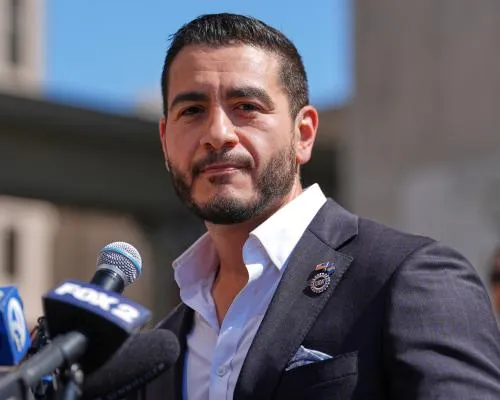 Progressive Nominees Gain Ground in Democratic Primaries: El-Sayed’s Victory and Sanders’ Caution
Michigan’s Abdul El-Sayed secures a crucial victory in the Democratic nomination, while Bernie Sanders expresses hesitancy towards endorsing Francesca Hong. Meanwhile, Canada’s Prime Minister Mark Carney mocks Trump at a Toronto event.


