- Jannik Sinner defeated Shintaro Mochizuki 6-3, 7-6 (0), 6-3 to advance to the quarter-finals.
- Mochizuki’s unique style of play, characterized by his exceptional volleying skills and small stature, showcased on Centre Court.
- Despite physical limitations, Mochizuki displayed remarkable skill and won the crowd’s admiration with his performances.
Match Outcome
In a closely contested match, Jannik Sinner emerged victorious over Shintaro Mochizuki with a score of 6-3, 7-6 (0), 6-3. This win secured Sinner’s spot in the Wimbledon quarter-finals and added to his momentum throughout the tournament.
Challenging Opponent
Mochizuki's performance against Sinner was nothing short of admirable, especially considering the vast physical disparity between them. At just 5ft 9in, Mochizuki faces significant challenges in a game dominated by power players. However, his unique style of play, marked by immaculate volleying skills and tactical net play, proved to be an engaging spectacle for spectators.
By the latter stages of the second set in their match, Shintaro Mochizuki twice found himself down a break point while trailing 3-4. He saved these points with cunning serves and volleys, showcasing his mastery on the net. Despite Sinner's efforts to claim the decisive break, Mochizuki managed to stay in contention.
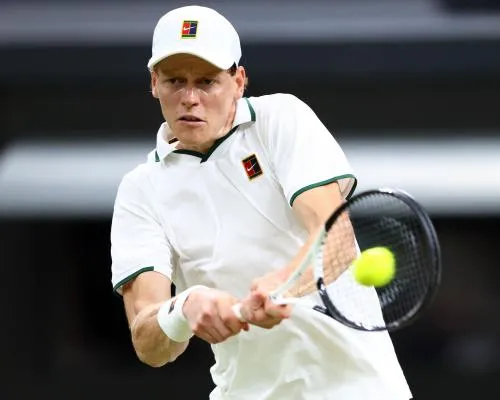
The headline from this match is another confidence-boosting victory for Sinner, who marched into the quarter-finals with a commanding 6-3, 7-6 (0), 6-3 win. The tension he betrayed in his narrow five-set opening round win against Miomir Kecmanovic, where he was erratic with his ground strokes, already feels like a long time ago.
He continues to serve at such a high level and is striking the ball with greater cleanliness off the ground. He is exactly where he wants to be in this tournament after four rounds. For those watching on Centre Court and BBC One, however, perhaps the most prevalent emotion at the end of this match was the utter joy of seeing such a resourceful, courageous opponent who has been the protagonist of one of the most endearing stories of this tournament so far.
Highlighting Mochizuki’s Talents
Mochizuki's physicality has long been his greatest impediment. Before the past week, Mochizuki had compiled a 7-31 record in ATP main draw matches in his career and a 0-6 record this year. A few solid results in the second half of last year had afforded him a top 100 ranking for the first time in his career at No 92, but once his ranking was finally high enough to compete more consistently against the best players in the world on the ATP Tour, he could barely win a match.
His unique style of play combines low centre of gravity, excellent movement, and immaculate hand-eye coordination. His two-handed backhand is by far his biggest weapon; he hits the ball with practically no spin, making it difficult for opponents to generate pace. On grass courts, where men's tennis tends to be a forehand-dominant sport, Mochizuki excels due to these attributes.
On his first evening on Centre Court or in any of the grand slam stadium courts, Mochizuki showed all of those layers to his skilful, instinctive style against an opponent several weight classes above him. His physicality has long been his greatest impediment; he was born just a month after Carlos Alcaraz in June 2003 and won the Wimbledon boys' title in 2019. He has now qualified for Wimbledon in three of his last four attempts, each time showing little more of his potential in the main draw.
Future Prospects
This year, Mochizuki's career best run to the fourth round included a remarkable performance against Rafael Jodar, one of the brightest young stars, to reach the fourth round. After facing off against the most devastating shotmaker in the world and generating a supreme highlight reel, Mochizuki departed Centre Court to a standing ovation.
By the second set, the Centre Court crowd was living and dying with every point he played, hollering with glee each time he found yet another new way to close down the net or threw all of his 70kg body weight into his two-handed backhand. He played a great match, but the vast physical gulf between them was particularly told in the quality of their serves. Mochizuki ended the match having landed 53% of first serves in the court, an endeavour that is complicated by being so much lower above the net.
His average and fastest first serve speeds were slower than those of both Naomi Osaka and Aryna Sabalenka in the prior match on Centre Court. His puffball 80 miles per hour second serves, meanwhile, were eviscerated by Sinner. No matter how much he improves his overall game, Mochizuki's serve will always be his great limitation.
Still, even in a straight-sets defeat, Mochizuki showed his 15,000-strong audience how talented and exciting a player he is and exactly how he intends to continue punching above his weight for years to come. On these lawns in particular, which his game is so perfectly suited to, he will be back.
Source: The Guardian

Sports Update
420 posts
-
 Na Uy và Neymar dự bị tạo sức ép, HLV Ancelotti lo Haaland quá hay
Na Uy chăm sóc cầu thủ chuyên nghiệp với thực phẩm tươi từ quê nhà, trong khi HLV Ancelotti lo ngại về khả năng ra sân của Neymar nhưng tập trung chuẩn bị cho Haaland.
-
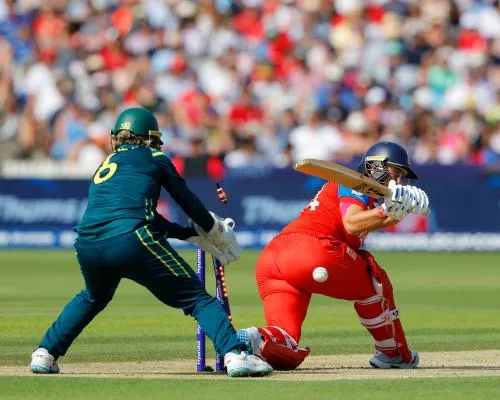 England Overcome Early Struggles to Reach 137 in T20 World Cup Final
England faces Australia in a closely contested Women's T20 Cricket World Cup Final at Lord’s. Early struggles for England are overcome by Sciver-Brunt, setting up an exciting conclusion.
-
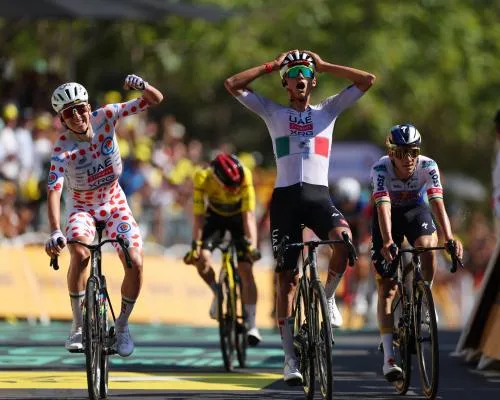 Tour de France 2026: Mexican Cyclist Isaac del Toro Claims Stage Two Victory
Mexican rider Isaac del Toro wins stage two of the 2026 Tour de France, defeating strong competitors like Tadej Pogacar.
-
 Ancelotti: Sir Alex Ferguson Là Người Đơn Vị Có Thể Dẫn Dắt Tôi
HLV Carlo Ancelotti khẳng định Sir Alex Ferguson là người duy nhất đủ kinh nghiệm để đưa ra lời khuyên về năng lực cầm quân của ông tại đội tuyển Brazil.
-
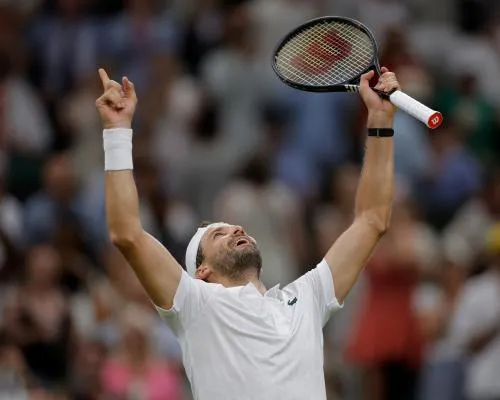 Wimbledon 2026: Unforgettable Matches and Surprising Upsets
Day six at Wimbledon sees Bublik outlast Tiafoe and Dimitrov secure his place in the fourth round amid several upsets.
-
 Paraguay - màn tra tấn thể lực và người thầy thích nhả chữ: HLV Gustavo Alfaro ép cầu thủ đến tận cùng sức lực
Các cầu thủ Paraguay miệt mài tập luyện dưới nắng gắt, trong khi HLV Gustavo Alfaro áp dụng bài tập ‘bứt tốc 15/15’ để tăng cường thể lực. Tây Ban Nha đã chia sẻ kinh nghiệm với Paraguay trước thềm vòng 32 đội World Cup 2026.
-
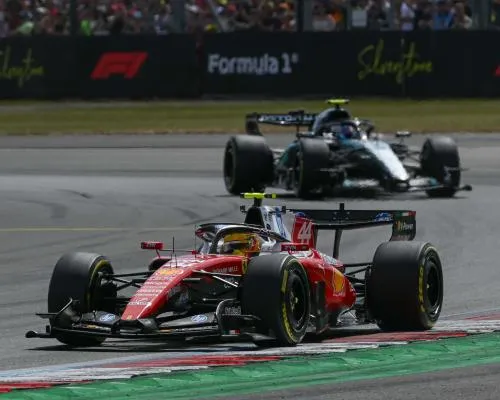 British GP Qualifying After Antonelli's Thrilling Sprint Race Victory
Antonelli won the sprint race at Silverstone, beating Hamilton and securing third place for British GP qualifying.
-
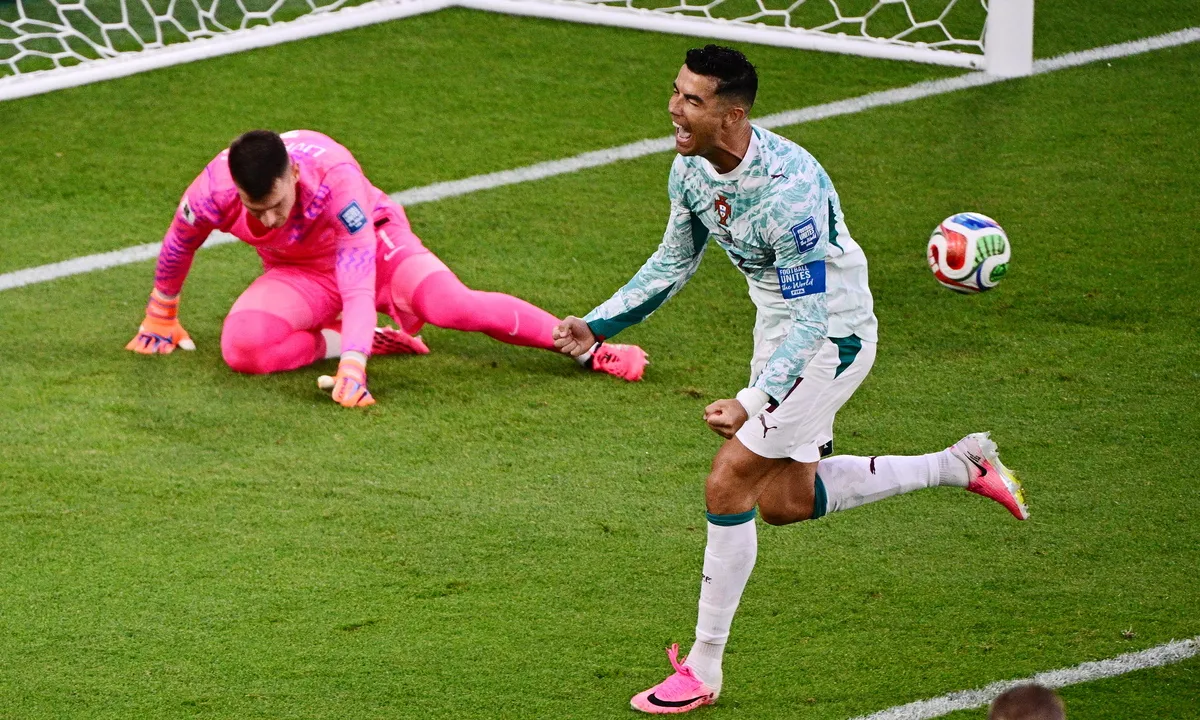 Messi: Siêu nhân, Ronaldo: Người Dơi – Quan điểm mới của Chicharito
Chicharito đưa ra quan điểm mới về Messi (Siêu nhân) và Ronaldo (Người Dơi), phân tích tài năng thiên bẩm của Messi và sự nỗ lực, kỷ luật của Ronaldo.
-
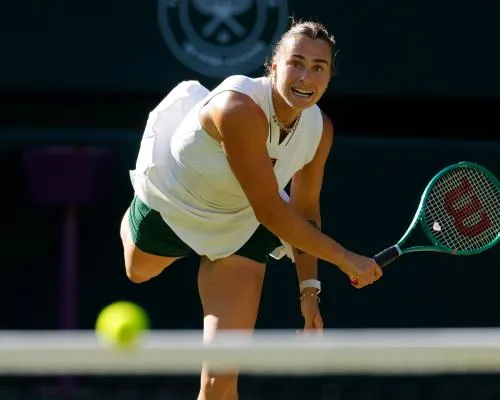 Sabalenka Demonstrates Growth with Victory Over Ostapenko at Wimbledon
Aryna Sabalenka’s game improvements at Wimbledon include serve and volley techniques, as seen in her straight-set win over Jelena Ostapenko. Her ranking could face a challenge if Elena Rybakina wins the title.
-
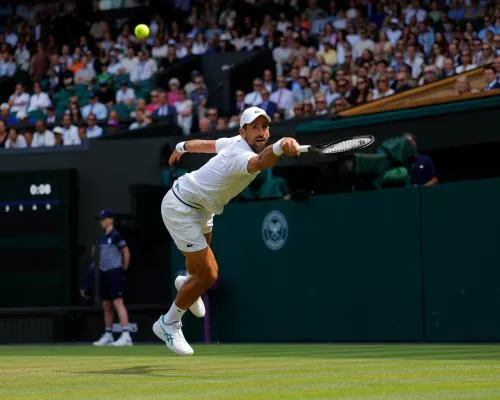 Djokovic Hangs On to Top Rinderknech and Stay Alive for Grand Slam No. 25
Novak Djokovic secured a narrow victory over Arthur Rinderknech in a highly competitive Wimbledon match, bringing him closer to tying Roger Federer's record of 105 men's singles match wins at the tournament.


