By Greg Wood at Wimbledon • July 2, 2026 • Sport
Czech former champion said she was ‘extremely proud’ after her victory on Centre Court
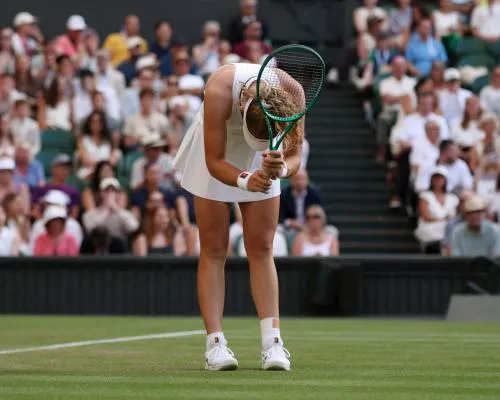
Four women in the post-1968 Open era have won singles titles on the slow red clay of Roland Garros and Wimbledon’s lightning-fast grass before their 20th birthdays. As Mirra Andreeva, the 19-year-old winner of last month’s French Open, walked on to Centre Court here on Wednesday to face Barbora Krejcikova – already a winner of both European grand slams – she had fair hopes of joining Maureen Connolly, Evonne Goolagong, Chris Evert and Steffi Graf on that list. Andreeva left with those hopes extinguished after a hard-fought three-set success for Krejcikova – the 2024 champion here – 4-6, 7-5, 6-4, but with her reputation as a scrapper and shot-maker much enhanced. She showed many of the attributes she will need to succeed here in the years to come. The midsummer switch from clay to grass is tricky enough at the best of times, although a run to the quarter-finals last year was evidence the surface should hold few fears for Andreeva. Against a player with a champion’s attitude to match her own, however, it proved more difficult still. This was a contest that remained in the balance until the final net-cord winner that got Krejcikova over the line after two-and-three-quarter hours. In an astonishing ninth game in the deciding set Krejcikova served for the win at 5-3. She had hauled herself back from a set down, having been largely outplayed by her younger opponent for the first set-and-a-half, before finding her rhythm and range on forehand to carve out the break required to level the match. With victory close enough to touch, she raced to 40-0, saw her first match point after offering up an easy overhead to Andreeva and then watched in despair as a forehand hit the cord, hit it again on the way back – and dropped on her side of the court. The double-fault that followed felt almost inevitable. Three more match points came and went as Andreeva threw caution to the wind and found the lines with a series of forehands, including one, on the evidence of the Close Call replay, that was a millimetre away from being her last shot of the match. Her resilience was rewarded as Krejcikova sent a weak second wide on the seventh advantage of the game. It felt like a potential turning point, with the final set now back on serve and surely heading for a 10-point tie-break, only for Krejcikova to summon a final effort and get the decisive break in the next game. Andreeva hurled her racket from the baseline to her chair as her desperate attempt to get the Czech’s net-cord back into play sailed long. “The atmosphere was great and we’ve been fighting for almost three hours,” Krejcikova said. “What a match. I think this is the fifth time I’ve played with Mirra and it’s always been a huge fight. She is such a young and unique player, she has everything in front of her. “I’m really happy that we were able to put on a great show and that we were fighting until the final point, and I’m extremely proud that I’ve managed to win on this beautiful Centre Court.” Krejcikova has dropped from a high of No 2 in the world in 2022 to a current ranking of 38, but will hope to build on Wednesday’s win to return closer to her previous lofty status. “It’s definitely very special,” she said. “I’ve been through a lot with injuries and also in my personal life in the last couple of months. It was really hard to get through with all the emotions and everything that happened. But I put in a lot of work and dedication every single day and try to go day by day.” Andreeva was in tears in the post-match media conference, still struggling to accept she had let the match slip. “It’s going to take some time,” she said, having needed 30 seconds to compose herself after being asked how difficult it is to process the emotions after such a narrow defeat. “She played well,” she said. “She’s a tricky opponent, especially on grass. She changes the rhythm a lot. The slices and drop shots, here they stay low, they don’t bounce. I’ve had some trouble with that, as well, [and] a lot of mistakes today. She played well, but I felt like I could have also played better. “I felt as soon as I won that [ninth] game, I had a lot of great chances to make the score even with my serve. I felt like yes, it could have been a turning point. As you can see, it didn’t work and it wasn’t the turning point in the end.”
Source: The Guardian

Sports Update
390 posts
-
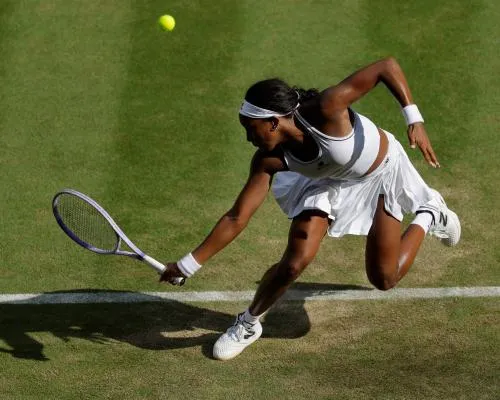 Gauff digs deep and Sabalenka channels Nadal in dramatic second-round wins
Coco Gauff was twice within two points of defeat against Solana Sierra of Argentina but won 6-3, 3-6, 7-6 (7) while Aryna Sabalenka advanced with a 6-3, 7-6 (9) victory over McCartney Kessler
-
 View balls please: England football fans at Wimbledon find attention wanders from the tennis
Phones and earpieces aplenty as football supporters find World Cup thriller against DR Congo hard to ignore
-
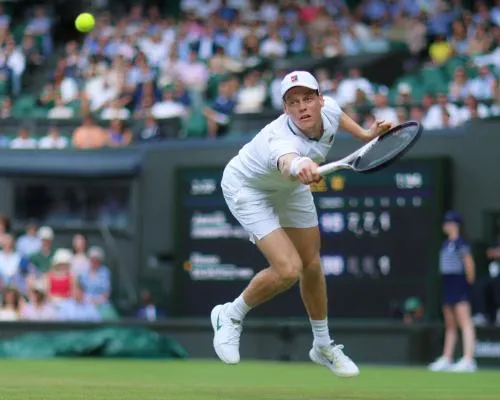 Sinner battles past Borges as tough start to Wimbledon title defence continues
Defending champion Jannik Sinner admitted many aspects of his game need to improve after setting up a third-round clash with Jenson Brooksby at Wimbledon
-
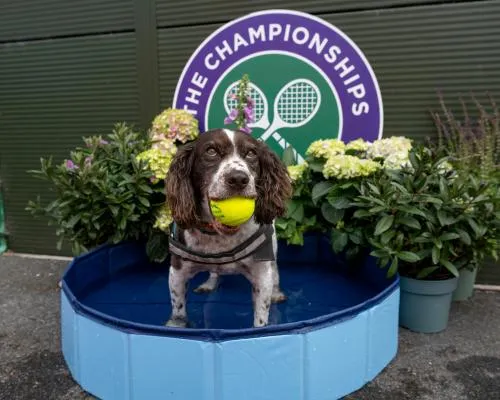 Wimbledon diary: Sabalenka’s dog plea, Rufus the Hawk and strawberry towels
Canines are not allowed at SW19 – but security and guide dogs can enjoy a secret paddling pool on Henman Hill
-
 England v India: first men’s T20 international – live
Will England or India come out on top? Join James Wallace to find out
-
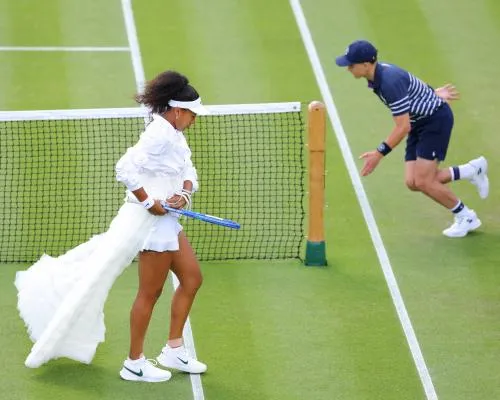 Naomi Osaka tones down the jellyfish but Wimbledon entrances help soothe nerves
The contrast between her fashion choices and naturally reserved personality has become a fascinating subplot
-
 ‘One of those pinch-me places’: Silverstone’s school facilitating a fast-track into motor sport
Partnerships with Aston Martin, Red Bull and Haas mean students have a rare opportunity to make it in F1 after graduation
-
 Tour de France 2026: stage-by-stage guide to this year’s race
The team time trial returns as this year’s Tour starts in Barcelona for the first time in its history
-
 Joe Root stands alone after old mate Ben Stokes runs out of road
Root and Stokes have been friends since they were children – now England’s leading Test runscorer must go on even as Bazball comes to its end
-
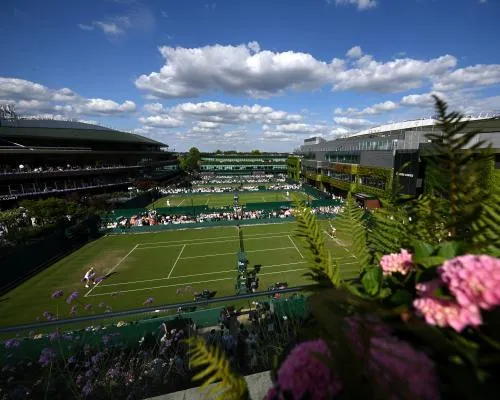 Wimbledon 2026: Osaka, Sinner and Sabalenka in action on day three – live
Rolling report: Join our writers for all the latest from SW19 on day three of the championships


