- Historian argues that symbols like daisy wheels are not 'witches’ marks', but stonemasons' training tools.
- English Heritage claims to have found numerous such symbols, but an academic disputes their mystical significance.
- New research highlights the practical and educational purposes behind these marks, suggesting they were used for teaching geometry.
Rejection of 'Witches’ Marks'
A leading architectural historian has challenged longstanding claims that symbols like daisy wheels are evidence of historical witchcraft. Jennifer Alexander, a professor at Warwick University, argues that these marks, often found on medieval churches and houses, have no mystical significance and were merely practical tools used by stonemasons.
Historic England's Claims
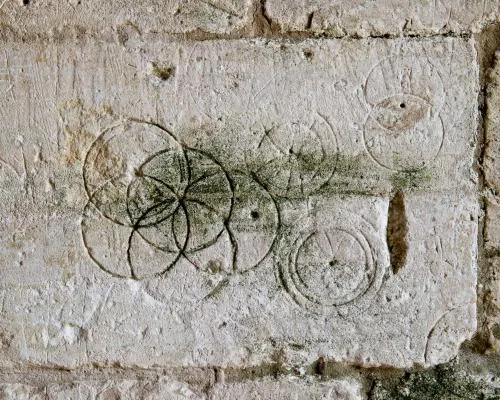
In 2024, English Heritage announced research at Gainsborough Old Hall in Lincolnshire had revealed a “staggering array of carved ritual protection, or apotropaic marks – sometimes called ‘witches’ marks’ – the most identified at any of our 400 sites.” These included simple circles, overlapping V’s, and pentangles, believed to trap demons. Alexander contends that these designs were merely practical exercises used by apprentices or masons to develop their skills.
Practical Geometry Training
Alexander's research, detailed in her book Stonemasons’ Marks, reveals that such symbols were common training aids. She states, 'Do you remember at school when you were first given a pair of compasses and you made a daisy wheel? It’s that.' Alexander emphasizes that these marks were practical exercises for drawing on stone surfaces, using tools like compasses to practice geometry.
Implications for Architectural Study
The debate over the nature of these symbols has significant implications for how we understand and interpret historic buildings. English Heritage noted in a statement that such research adds depth to our understanding of the people who created and used these spaces, highlighting both the practical and symbolic elements present.
Alexander concludes that rather than being magical marks, these symbols are part of the broader narrative of how buildings were constructed and maintained. She argues, 'There’s no evidence that these are witches’ marks. What they’re telling us is that when that barn wasn’t needed for farm produce, it was either a schoolroom or a mason’s training shop.'
Both English Heritage and Historic England acknowledge the value of such research in providing new perspectives on historical buildings. As Alexander's work continues to influence discussions around these symbols, her findings challenge our traditional interpretations of history.
Source: The Guardian

Culture News
94 posts
-
 Journalist Dermot Murnaghan Passes Away at Age 68 After Announcing Stage Four Prostate Cancer Diagnosis
Former journalist Dermot Murnaghan has died at 68 after revealing his battle with advanced prostate cancer.
-
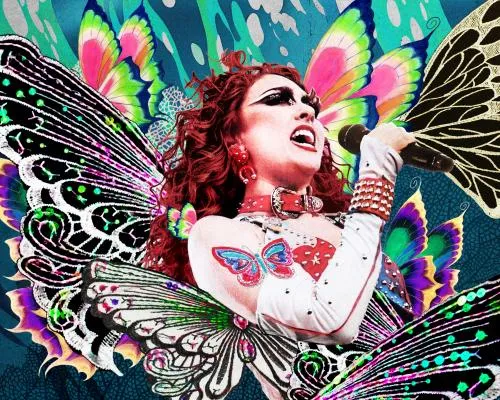 How Chappell Roan’s ‘Casual’ Song Helped Me Navigate Ambiguous Relationships
An intimate look at how revisiting Chappell Roan's song 'Casual' led to a personal epiphany about relationships and the importance of recognizing reality over fantasy.
-
 Top Boy Actor Michael Ward Acquitted in Rape Trial
Actor Michael Ward is found not guilty in a rape case after arguing that the encounter was consensual.
-
 Pitbull Fans Break Guinness World Record in Largest Gathering of Bald Caps
More than 22,000 Pitbull fans gathered at Hyde Park to set a Guinness World Record by wearing bald caps. The event combined music, community spirit, and grassroots fan culture.
-
 Sam Fender and Olivia Dean Set New Record in UK Charts
Sam Fender and Olivia Dean's 'Rein Me In' sets a new mark as the longest-charting number one single by a British artist.
-
 Football Shirts Go Mainstream Among Music Fans
Music festivals across genres now offer football shirts as part of their merchandise, reflecting a broader trend of fashion trends merging with sports culture.
-
 Bayeux Tapestry Returns to UK for Historic Exhibition
The Bayeux Tapestry to be exhibited in the UK after a long absence, showcasing history of the Norman Conquest.
-
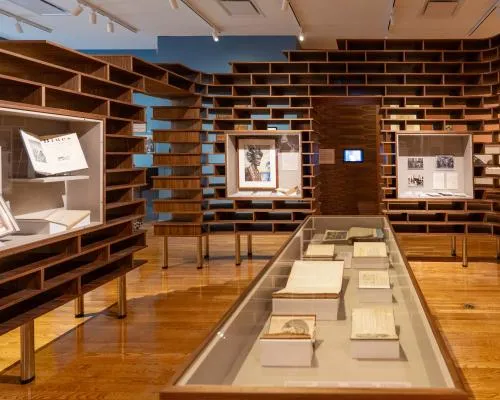 Schomburg Center Celebrates 100 Years Through its Historic Collections
The Schomburg Center for Research in Black Culture marks 100 years by showcasing its vast historical collections and ongoing curatorial work.
-
 Greg James Reveals Wedding Details with Celebrity Guests
DJ Greg James discusses Taylor Swift’s wedding on his Wednesday morning show after flying to New York City for the event.
-
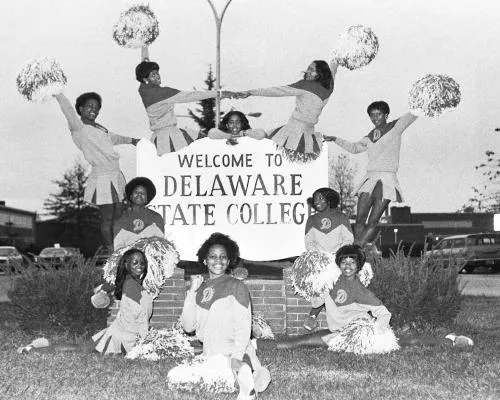 HBCUs Partner With Getty Images to Digitize Historical Archives
HBCUs partner with Getty Images to digitize historical archives, bringing significant financial benefits and enhancing accessibility.


