‘I can still hear the children’: Canada’s residential schools survivors welcome chance to reclaim sites

By Olivia Bowden in Brantford, Ontario • July 2, 2026 • World news
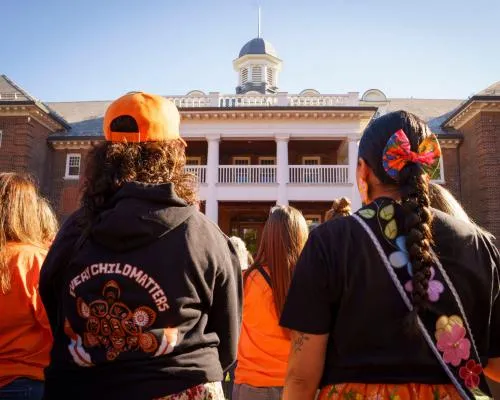
Former Mohawk Institute in Ontario latest to become a museum, as survivors hope preserving sites will prevent horrors they witnessed from being forgotten
In the foyer of the former Mohawk Institute residential school, a plaque makes a request to visitors: help us identify unnamed survivors. “We do not know the names of some of the people in the photos used in the exhibition. If you recognize someone, please share that information.” Similar requests are dotted throughout the museum, near photographs of the First Nations children who attended the school. Some show the youngsters labouring outdoors in identical colourless clothing; others show them back home with family members. For most of its existence – from 1828 to 1970 – the building in Brantford, Ontario, about 100km south-east of Toronto, was part of a network of institutions set up under a policy to “eliminate” First Nations in Canada as a distinct cultural group. Conditions were brutal: children were punished – and sometimes beaten with a strap – for speaking Indigenous languages. Meals consisted of watery oatmeal; one survivor described being beaten for picking an apple to eat. Those who tried to escape were kept in solitary confinement for days. Sexual abuse by school staff was rampant. Last year, the building reopened its doors as a museum, with the mission of documenting both the realities of the residential school system and the long shadow cast by Canada’s colonial structures. During the 140 years the school was in operation, thousands of children passed through its doors. The museum is still attempting to identify those who appear in the photographs in its collection, but it is likely that many will go unnamed. Across the country, survivors of the residential schools continue to make decisions on what to do with the physical spaces where horrific events took place. That question has been raised all over the world, from Poland – where the former Nazi death camp Auschwitz-Birkenau has been transformed into a museum and memorial – to Cambodia, where a notorious interrogation centre has been turned into a museum on the Khmer Rouge genocide. In Brantford, survivors voted in 2013 to reclaim the school site. “I am really grateful that the decision was made to keep the building,” said Heather George, the executive director of the Woodland Cultural centre, an Indigenous education centre that owns the school site. George says everything the centre does – from Indigenous art and languages, to social dancing and opening the school as a museum is a form of protest against the goals of the residential school system. Most days, students from local schools visit the centre to learn about what happened at the institute. The metamorphosis of the Mohawk Institute is all the more notable for coming amid what academics and activists describe as a “backsliding” in reconciliation: residential school deniers downplay the abuses of the residential schools, arguing that the institutions benefited Indigenous children. Meanwhile, the sovereignty of First Nations has come under increasing threat from new fast-tracked infrastructure legislation. Indigenous groups complain that they have not been properly consulted by federal and provincial governments over major construction projects. Sean Carleton, an Indigenous studies professor at the University of Manitoba, said commemoration could be used as a tool of public education. “If we look at other contexts of genocide, commemoration has played a really important role in facilitating that public awareness to combat things like denialism,” he said. Canada has close to 140 former residential school sites across the country – the last one closed only in 1997. Another site in Ontario, the Shingwauk residential schools centre, has also become an education centre. But at other former school sites, such as the Lower Post residential school on the Yukon-BC border, survivors have voted for the building to be torn down. Doug George-Kanentiio, now in his early 70s, is a member of the Akwesasne Mohawk nation and a survivor of the Mohawk Institute. In 1967, he was kidnapped from his home by federal employees, made a ward of the state without his parents’ consent, and confined in the school for more than a year. Today, he works at the museum as an educator, talking to visitors about his experience. He recalls playing with the asbestos wrapped around the heating ducts with other boys. The water they drank flowed through lead pipes. They were malnourished because of the oatmeal diet, and would often get sick. Behind the boiler room in the school, and also sometimes in the headmaster’s office, children were sexually assaulted. George-Kanentiio argues that to understand the residential school system people need to be immersed in what he calls “the horrors of what human beings do to each other”. “That way there’s understanding, it gives us the best facility to enlighten people,” he said. “Why do I keep coming back? The basic reason is, inside the confines of that building, there are still remnants. There’s still children that are held, their spirits imprisoned,” he said. In 2021, ground penetrating radar used at the sites of former residential schools in British Columbia and Saskatchewan identified more than 1,000 “anomalies” that some experts suspect could indicate unmarked graves. Both church and government records, alongside the testimony of survivors of the schools, have long shown that children died at the sites across Canada and their remains have been left behind. Communities are debating whether to excavate those sites. In 2007, the Canadian federal government asked survivors to come forward and recount their experiences at the schools, if they wanted to receive compensation. It was called a Common Experience Payment. But survivors like George-Kanentiio say people were often denied compensation due to a lack of “proof”. Speaking of the Mohawk Institute, George-Kanentiio said: “How do you expect an 11 or 12-year-old kid to have evidence that they were sodomised?” Displaying what happened inside the museum makes these stories harder to erase, he says. “I can still hear the echoing of the children as they go up the stairwell. And I can still hear the remnants of the predators who used that same stairwell,” he said.
Source: The Guardian
Guardian News World
457 posts
-
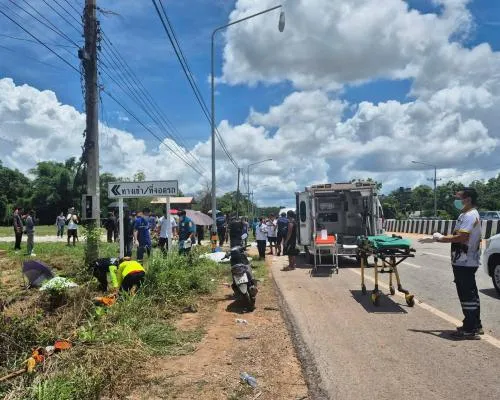 At least nine monks killed in Thailand after boy drives truck into procession
Charges yet to be filed over incident in Mukdahan involving 11-year-old, as police seek to establish circumstances
-
 Decision not to jail two teenagers for rape was wrong, court of appeal rules
Trial judge found to have erred by giving boys youth rehabilitation orders for rape of two girls in Hampshire
-
 FDA issues most serious recall alert for potato chip brands over salmonella risk
An estimated 650,000 bags of potato chips are affected as US agency upgraded recall of several popular brands
-
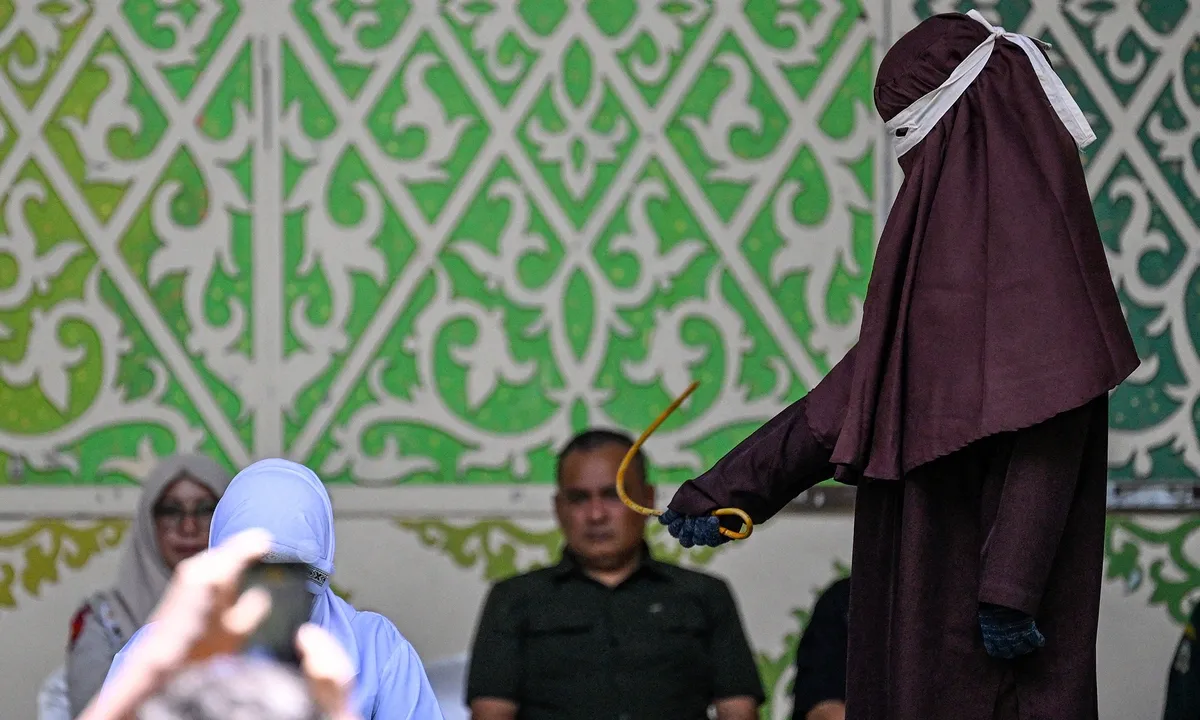 Bị phạt roi vì video hôn nhau trên TikTok ở Aceh, Indonesia
Aceh, tỉnh duy nhất áp dụng luật Sharia tại Indonesia, phạt cặp nam nữ chưa kết hôn 21 roi mỗi người vì video hôn nhau trên TikTok.
-
 ‘King Trump’ is stronger than ever after US supreme court bolsters his agenda
Birthright citizenship ruling only a surface level setback, with the court granting president’s multiple power grabs
-
 At least 18 dead as Russia launches massive drone and missile attack on Kyiv
Ukraine capital targeted as Russia faces fuel shortages following long-range strikes against its oil refineries
-
 Convicted people smuggler reportedly living in UK should be deported, Tories say
Man once called ‘godfather’ of Calais migrant camps lives in Leicestershire and is said to be trying to claim asylum
-
 Forecasters warn of record-breaking US summer heat amid intense El Niño
More than 100 million people could be affected in week leading to 4 July, with increased risks of droughts and wildfires
-
 Nga triển khai Su-57 với mục tiêu đối phó UAV, tên lửa Ukraine
Nga đã triển khai Su-57 với hai tên lửa bên ngoài để đối phó UAV và tên lửa Ukraine, gây xôn xao trong giới quân sự.
-
 Vatican excommunicates all members of ultra-conservative rebels SSPX
Schism caused by ordaining of four bishops without papal consent presents first crisis for Pope Leo


