Ethnicity pain gap: the epidural failed and no one believed me – I could feel everything

By Tobi Thomas Health and inequalities correspondent • July 2, 2026 • World news

Women from minority backgrounds are less likely to receive adequate pain relief during childbirth
Julie Hammond, a 35-year-old mother of three from Kent, believes that the “excruciating” pain she experienced during the birth of her second child was not well managed by the medical professionals caring for her. “It’s difficult to put into words just how traumatic it was,” Hammond says. “I could just feel myself panicking throughout the whole procedure, while also trying to tell myself to calm down.” Following a difficult vaginal birth for her first child, Hammond had decided to have an elective caesarean for her second. But due to complications, her son was delivered by emergency caesarean at 35 weeks. Hammond was administered a spinal block, but remembers that at the time, she was still able to move her legs. “I mentioned this to my anaesthetist at the time, who told me not to worry, and just to relax,” Hammond says. “I definitely felt like I was being dismissed.” Despite Hammond raising the alarm that her anaesthetic hadn’t worked properly and she could still feel her legs and abdomen, no changes were made to the amount of anaesthetic she received. “I can’t describe how painful it was, and what a feeling it was to feel exactly everything that was happening,” Hammond says. “I could feel someone cutting through each layer of my skin, fat, and muscle, and I could feel when they’re manipulating my body [to get to the baby], because they’re pulling your muscles apart. I could literally feel every single part of what was happening to me.” Hammond’s experience of having her pain dismissed during childbirth is not as unusual as it should be. A Guardian investigation has found that women from minority ethnic backgrounds are less likely to receive adequate pain relief during labour compared with their white counterparts, building on a growing body of evidence that shows an “ethnicity pain gap” in how pain experienced by people of colour is minimised and left untreated. Although Hammond knew at the time that something had gone wrong with her pain relief, it wasn’t until she had another caesarean for her third child that she fully understood the extent to which her experience had not been normal. “With my most recent pregnancy, I told the consultant about what happened [during my last caesarean] and she confirmed to me that it wasn’t a normal experience and should not have happened at all.” On reflection, Hammond believes that her ethnicity was a factor in her being made to feel that she was exaggerating the pain. She had not thought this to be possible at first, as the medical professional treating her was also a person of colour. “My anaesthetist was an ethnic minority, too, so at the time when I had my experience, I thought it can’t be racism because I was treated by another doctor, and told myself I was just unlucky,” Hammond says. “It was only later on that I realised, even regardless of your skin colour, even if you’re from a global majority background, you can still internalise systemic racism. We are all taught this Eurocentric idea of how pain manifests.” A 2016 study found that a substantial number of medical students and residents held false beliefs about biological differences between black and white people, beliefs that predict racial bias in pain perception and treatment recommendation accuracy. Laypeople and medical staff were both found to hold beliefs such as “Black people’s skin is thicker than white people’s skin” or that “Black people’s nerve endings are less sensitive than white people’s”. People who held more false beliefs consistently rated black patients’ pain as lower than white patients’ pain, the study also found. Adewole Adamson, associate professor at Dell medical school at the University of Texas, said: “There has been progress in awareness which is commendable. However, the recent research points to the fact that the gap still persists and is slow to close. “Studies have revealed that even standardising pain management assessments does not lead to equal treatment for people from different ethnicities.” A 2023 study revealed that even when a standardised treatment plan for addressing postpartum pain, aimed at reducing overall postpartum opioid use, was introduced, it did not eliminate ethnic disparities in how this pain was managed. Gabriella Sarpong, a 39-year-old public health professional from Ilford, also feels that the pain she experienced during her labour in 2023 was repeatedly dismissed by healthcare professionals. Sarpong, who was in labour for 16 hours, had to be induced. When the medical professionals explained what types of pain relief would be available to her, she decided to have an epidural. It was when the anaesthetist began attempting to administer the epidural that Sarpong became concerned. “He kept asking me lots of questions, such as: ‘Do you think it’s in the right place,’” Sarpong says. “I remember thinking: if you’re an anaesthetist and you’re putting something in my back, how am I supposed to know? I remember looking at my husband, who looked so worried despite trying to remain composed.” For some reason that remains unclear to Sarpong, the epidural failed, leaving her in “immense” pain. “I was expressing that the epidural was not working but I wasn’t being taken seriously,” Sarpong says. “I was in horrendous pain … I remember the [anaesthetist] coming in and saying: you’re going to have to wait until the morning [to have it sorted], and I was left like that for 10 hours.” As a result, Sarpong was left without adequate pain relief throughout the whole night, and due to the failure of the epidural she wasn’t able to sleep or rest. “I was just in constant pain. Staff were coming in and out but nothing was done.” Sarpong, who was diagnosed with PTSD as a result of her experience, feels that being from a minority background was a contributing factor in her pain not being taken seriously. “I felt ignored and it was honestly the worst thing I’ve ever experienced,” Sarpong said. “I know that black women face worse outcomes when it comes to maternity care, so to experience that first-hand was really scary.” Chinasa Ezugha, 35, an arts professor from London, gave birth to her third child in 2025. “I was in a lot of pain, but I felt prepared and had an understanding of what pain medication was available to me. I requested an epidural because I understood that my labour was progressing really quickly,” Ezugha said. Despite having the right to ask for an epidural, Ezugha was denied one. Instead, the midwife kept telling her: “You don’t need it, you’re doing well without it.” “It was so condescending; I was in so much agony,” Ezugha said. “I felt humiliated because I was screaming, and I was in so much pain. I can’t describe to you how belittling the experience was.” Ezugha’s negative experience during her labour was not just because of being denied the pain relief she wanted, but also due to the way her midwife interacted with her. “When I was in excruciating pain, she was acting standoffish and didn’t even hold my hand or rub my back,” Ezugha said. “I remember reaching my hand out and the midwife just stood there.” Ezugha, who has an ongoing complaint with the hospital due to her experience, believes her ethnicity played a factor in her treatment. “I was already aware of the extra risks black women face during childbirth,” Ezugha said. “As a black mum we’re in a vulnerable position because we’re dealing with all the stereotypes already. It’s really important for black mothers to be heard, to be respected, and to be treated with dignity.” Fiona Gibb, the director of midwifery at the Royal College of Midwives, said that “any suggestion that women’s pain is not taken seriously, or that access to appropriate pain relief differs by ethnicity, is completely unacceptable”. “More consistent data collection is essential. Without robust data on pain relief, interventions and outcomes broken down by ethnicity, it is harder to identify where inequalities exist and to hold systems to account for addressing them,” she said.
Source: The Guardian
Guardian News World
463 posts
-
 AFP assessing allegation of Gaza war crimes committed by Australian citizen serving in IDF
Claims against Israel Defense Forces battalion include deliberate targeting and destruction of residential buildings in 2023 and 2024 without military justification
-
 US Olympian indicted after Trump alleged ‘vandalism’ at DC reflecting pool
Canoeist David Hearn was arrested in June after touching a peeling piece of liner in the pool from renovation project
-
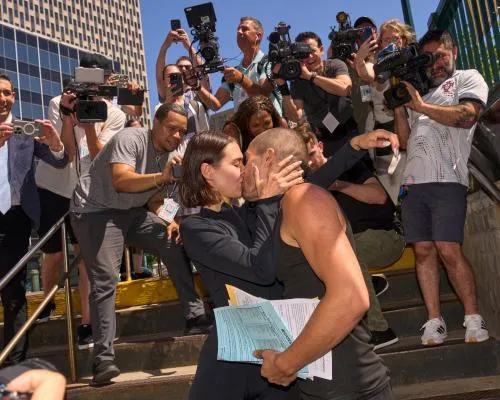 Couple who staged apparent proposal atop Empire State Building faces slew of charges
‘Rooftopers’ Angela Nikolau and Ivan Kuznetsov were arrested after allegedly scaling the New York skyscraper
-
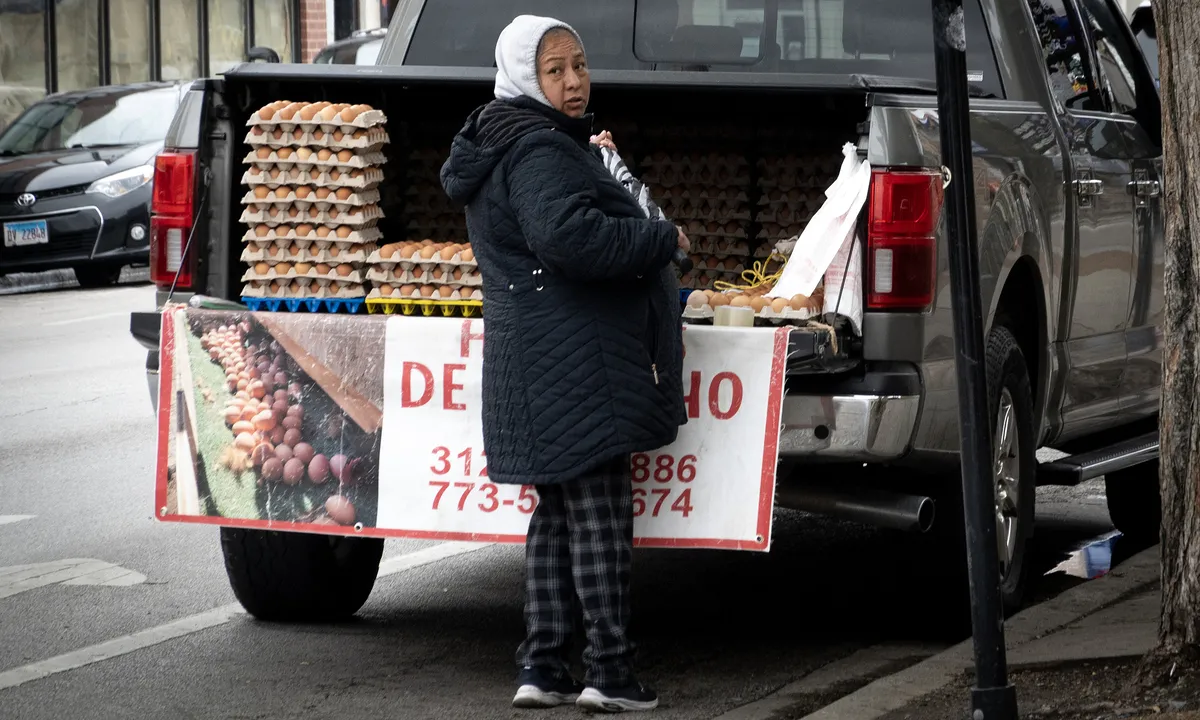 Thao túng giá trứng ở Mỹ: Cú bắt tay của ba công ty gây giá kỷ lục
Ba công ty ngành trứng tại Mỹ bị cáo buộc hợp tác để thao túng giá, đẩy mức giá lên kỷ lục trong bối cảnh nguồn cung khan hiếm.
-
 Tell us about a local animal celebrity in your area
We would like to hear about the animals who have attained star status where you live
-
 ‘Why is your cat blue?’: Wilbur, the pet who changed colour, puzzles owners
Family find answers via social media after their furry friend returned home with an unusual makeover
-
 AOC endorses progressive Democrat in closely watched Michigan race for US Senate seat
El-Sayed, backed by Bernie Sanders, leads polls ahead of Haley Stevens and Mallory McMorrow in primary
-
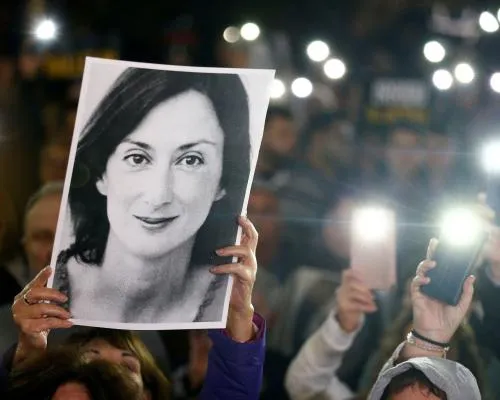 Man accused of ordering Daphne Caruana Galizia murder paid hitmen’s legal fees, court hears
Yorgen Fenech said to have spent €400,000 on fees for men convicted of car bombing that killed investigative journalist
-
 Married at First Sight UK cast member arrested on suspicion of rape
Anonymous individual arrested after claims of sexual misconduct on reality TV show and police calls for contact
-
 Outrage over ‘cruel’ Florida move to ban undocumented students from college
Critics condemn decision by education board aligned with hard-right Ron DeSantis to block access to college system


